Download Loopback for macOS
Loopback 2.5.0 is here with full support for macOS 27, meaning no more launch warnings and a smoother setup right from the start. The ARK plugin, which handles the heavy lifting behind the scenes, also got bumped to version 13.5.
| Developer | Current Version |
|---|---|
| Rogue Amoeba | 2.5.0 |
| macOS | 11 to 27 |
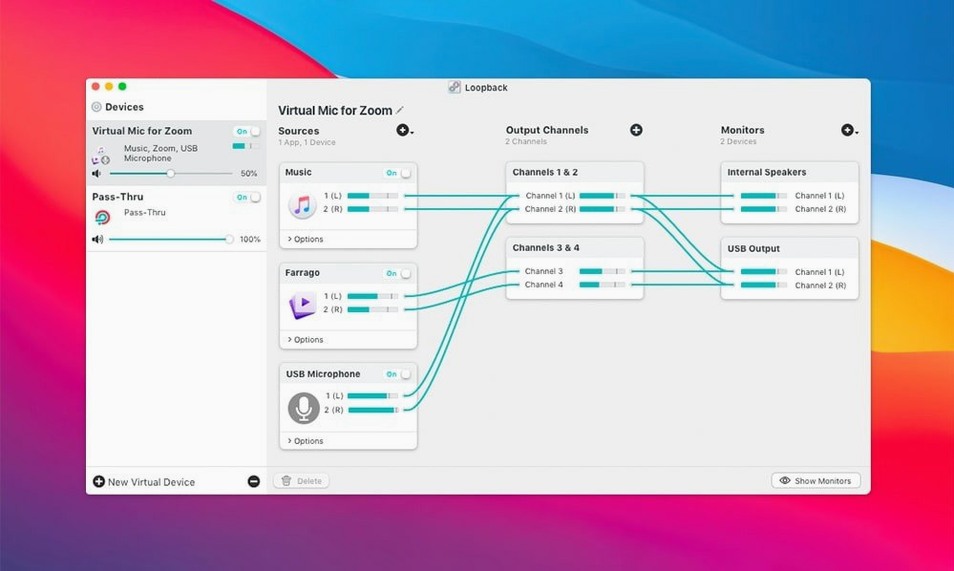
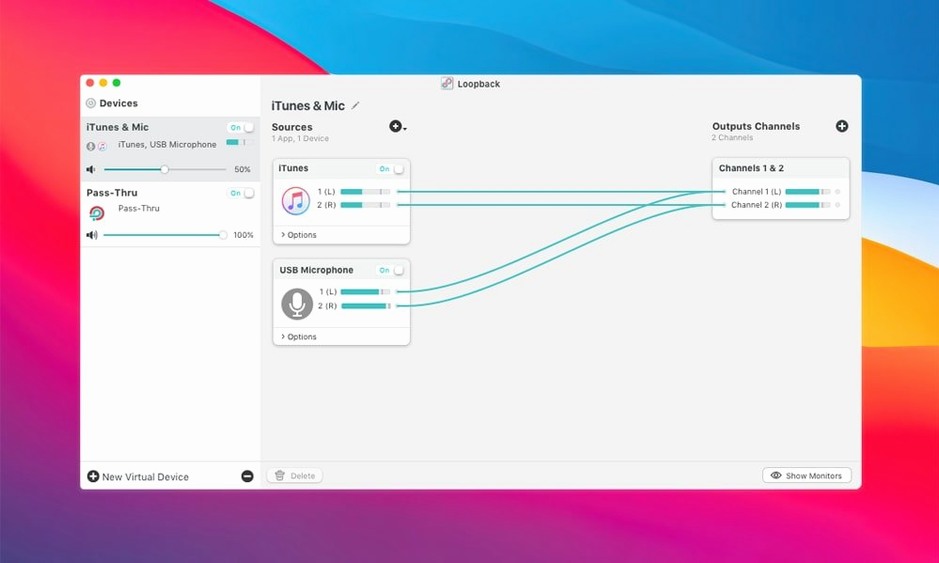
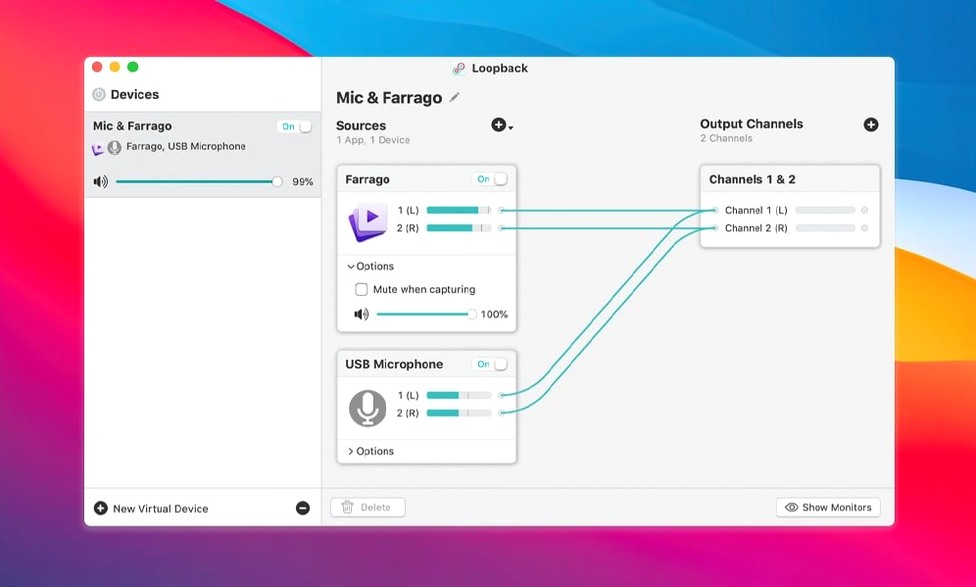
People hunting for a loopback mac torrent usually have one question: can I combine my mic with my music app and sound like I'm in a radio booth on a Discord call? You can, and that’s just scratching the surface. Loopback uses a simple wired interface to merge physical devices and app audio into a single virtual input. You might patch your podcast guest from Skype, background music from Spotify, and your XLR microphone into one clean source that OBS sees as a single mic. It pairs beautifully with Audio Hijack, but it stands perfectly on its own whenever you need to move sound where macOS doesn’t normally let it go.
Silence When You Expected Audio
Loopback generally hums along quietly once it’s set up, but a couple of stumbling blocks trip up enough people that they’re worth mentioning upfront. The most frequent one is silence where you expected audio — usually because a source app hasn’t been launched after the virtual device was created. Loopback hooks into apps at the system level, and many programs only publish their audio streams when they start up. If you build a new Pass-Thru device and Spotify was already playing, just quit and reopen Spotify. Nine times out of ten, the meters spring to life.
Another classic: macOS privacy prompts burying the microphone permission Loopback needs. After a fresh install, you might open the app, wire up a microphone source, and see flatlined meters. Head into System Settings > Privacy & Security > Microphone and make sure Loopback has a tick. While you’re there, check that any app you’re routing into — OBS, Zoom, QuickTime — also has permission to access the Loopback virtual device as a mic. No permission, no signal, no matter how neat your wiring looks.
If you’ve grabbed a Loopback cracked copy and things feel glitchy, erratic audio dropouts or disappearing virtual devices are often something you can smooth out by double-checking that the virtual device’s permissions are fully enabled in System Settings, which helps the app settle into the background without fuss. Once set, the virtual devices stick around in your Sound preferences even after a reboot.
Negligible Delay Through the ARK Plugin
Does Loopback add latency I’ll notice on a live stream? The processing happens at the system level through the ARK plugin, so the added delay is negligible — typically a handful of milliseconds. Your mic won’t drift out of sync with your face on camera, and real-time monitoring through headphones stays tight. If you’re already dealing with a USB interface that introduces its own latency, Loopback isn’t the part of the chain you’ll need to worry about.
Will this mess up my existing audio setup? Virtual devices only appear when Loopback is running, and they vanish from the system the moment you quit the app. Your built-in speakers, mic, and any external interfaces stay exactly as they were. You can experiment wildly, hate the result, quit Loopback, and your Mac won’t remember a thing. That also means you need the app open whenever you want your custom routing active — it doesn’t bake devices into macOS permanently.
Can I record system audio without a loopback mac app? Not easily. macOS deliberately isolates app audio from capture tools, and the built-in screen recorder grabs mic input only. To pull Chrome audio, a game’s output, and your voice into a single recording track, you need a virtual audio bridge. That’s the whole reason tools like this exist.
Rename Virtual Devices for OBS Clarity
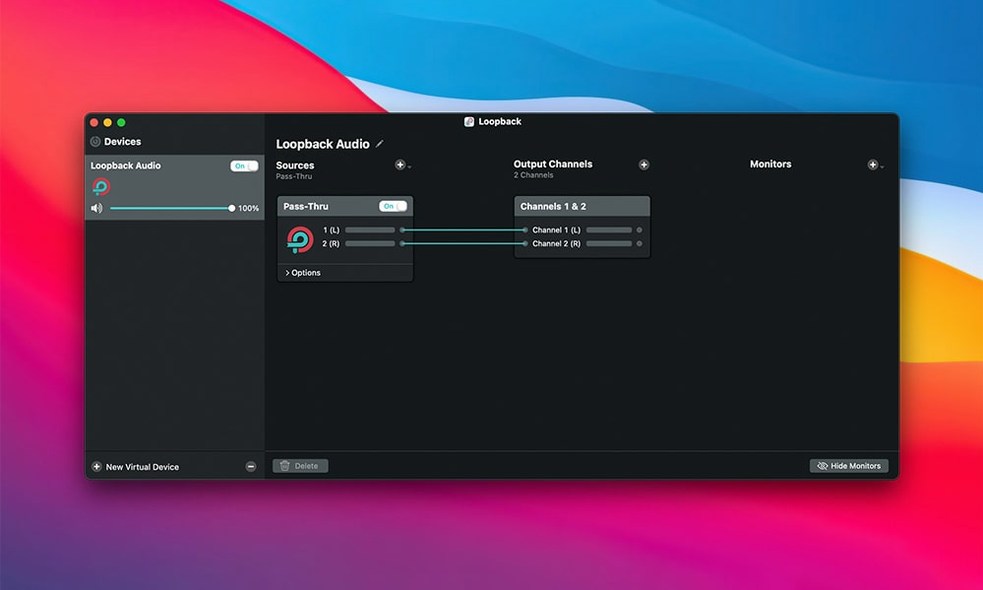
Out of the box, Loopback creates a basic virtual device when you hit the plus button, but a few tweaks make daily use much smoother. First, rename your virtual devices to something meaningful — “Loopback Audio” tells OBS nothing, whereas “Podcast Mix” or “Stream Mic + Music” means you’ll never select the wrong input mid-recording. Double-click the device name at the top of the wiring canvas and type away.
Next, pay attention to the volume sliders on each source block. By default, they’re set to 100%, and if your music app runs quieter than your mic, the mix will sound lopsided. Lower your microphone source to around 70% and bring the app audio down to 30–40%, then adjust by ear with all sources playing at once. The meters on each block give you a quick visual reference, but your own headphones are the real judge.
If you’re routing audio into older apps that only recognize physical hardware, toggle on “Use as default audio output” in the device inspector panel (the small “i” button). This pushes the virtual device higher in the system’s priority list, and some stubborn programs finally see it. It’s a niche setting, but when you need it, you need it.
For anyone who found their way here via a Loopback torrent search and is using the app to capture game audio alongside a headset mic, also check the sample rate of your virtual device. Matching it to your hardware — 48 kHz for most gaming headsets and capture cards — avoids the occasional crackle that mismatched rates can cause.
Barely a Blip in Activity Monitor
On both Apple Silicon and Intel machines running macOS 11 through 27, Loopback barely registers in Activity Monitor. With a moderately complex device pulling from three apps and two physical mics, the process hovers around 0.2–0.5% CPU and sips under 100 MB of RAM. It’s the sort of utility you set up once and forget is running, which is exactly what you want during a two-hour podcast recording where every glitch burns editing time.
The ARK plugin that ships with version 2.5.0 smooths out a handful of edge-case crashes that plagued earlier builds on Apple Silicon — particularly when hot-plugging USB interfaces while a virtual device was active. I’ve yanked a Scarlett 2i2 mid-recording, plugged it back in, and watched Loopback reconnect the routing within two seconds without spiking the CPU or dropping the other sources. That kind of resilience makes it feel like part of the operating system rather than an add-on.
Stability across macOS versions is a strong point. The removal of the launch warning on macOS 27 is a small quality-of-life win, but the fact that the same build runs smoothly from Big Sur to the current release means you aren’t forced to update Loopback just because your Mac wanted the latest OS. Virtual devices persist through sleep and wake cycles reliably, and I’ve yet to see one disappear mid-stream unless an app feeding it crashes entirely — and even then, the device itself stays intact and simply passes silence until the source returns.
- Added support for macOS 27 without launch warnings.
- Updated the ARK audio plugin to version 13.5.
- macOS 11 or newer
- Works natively on both Intel and Apple Silicon Macs
Also on readers' docks
Sign in or create an account to leave a comment.
No comments yet. Tell me how it got on with your other devices.