









Download SwitchResX for macOS
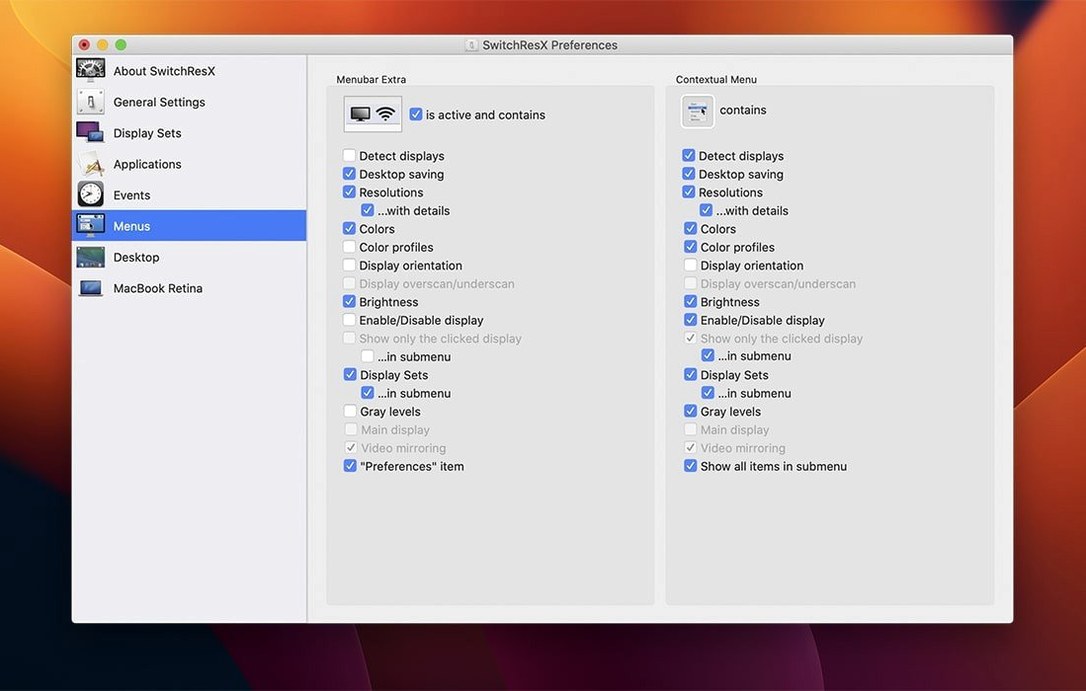
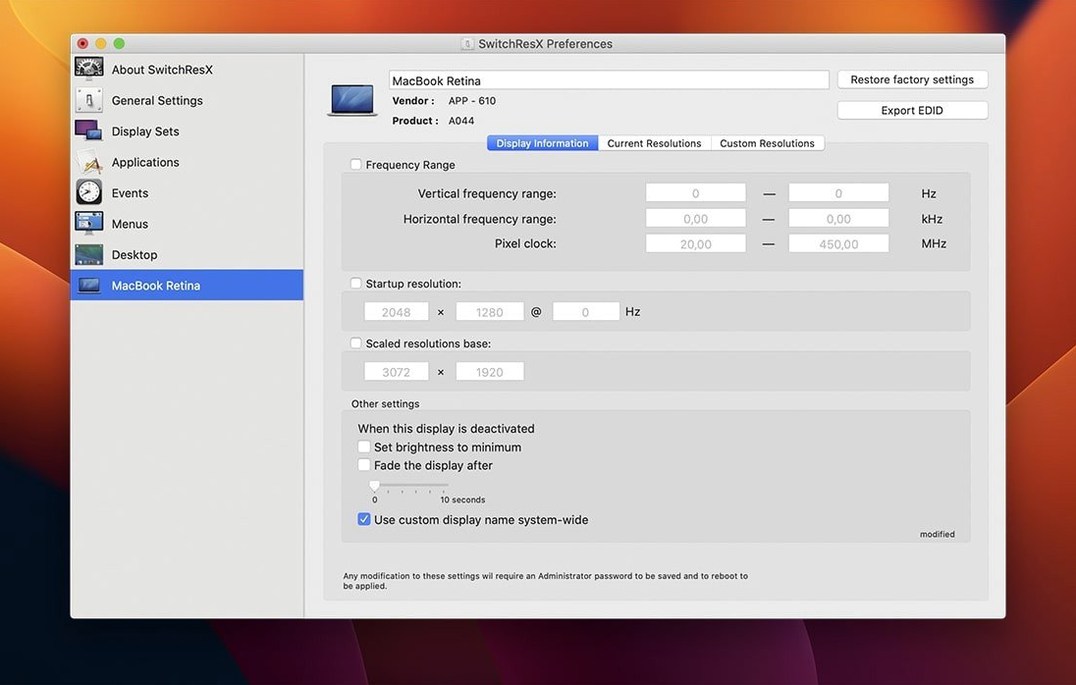
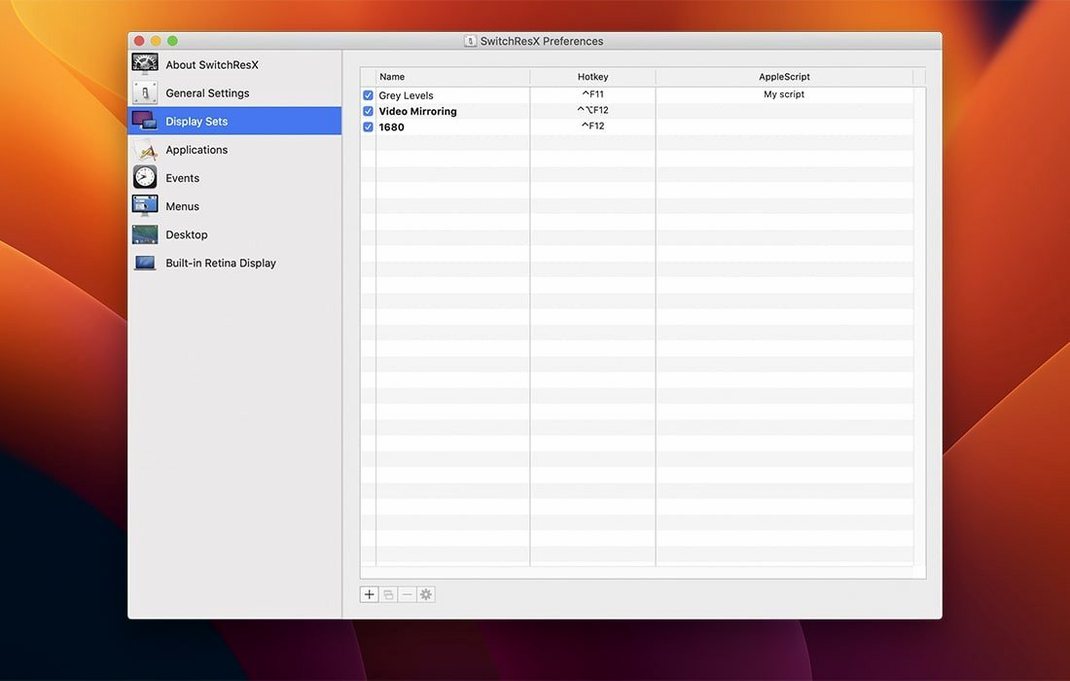
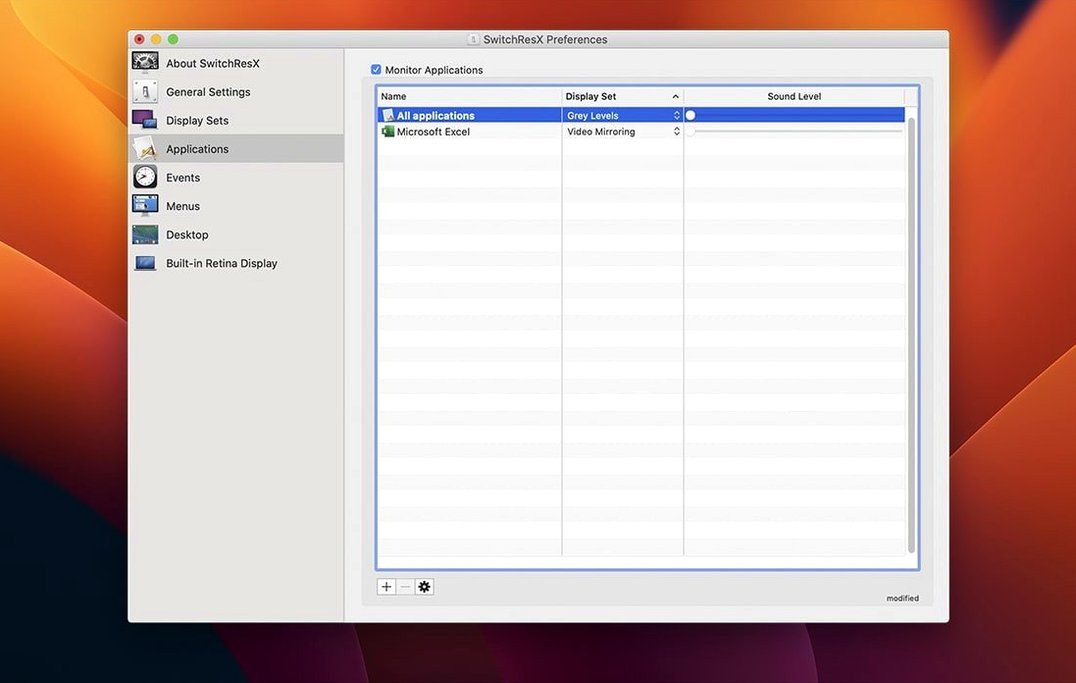
Graphic designers, video editors, and anyone who juggles a multi-monitor setup will immediately see the appeal of SwitchResX. It steps in where the built-in macOS Display settings stop, giving you real control over how your screens behave, even the ones macOS struggles to recognize properly.
Can I create my own monitor resolutions?
Absolutely, and that’s the core reason many people go looking for a SwitchResX download. MacOS offers a tidy list of scaled resolutions, but it doesn’t let you define a completely custom one. SwitchResX does. You can build resolutions your monitor technically supports but that Apple decided not to show you. It’s a lifesaver for matching odd-sized projectors or getting a particular pixel-perfect workspace for a finicky design tool.
Native Apple Silicon support and fixing nameless displays
Yes, it runs natively on both Apple Silicon and Intel Macs. One of its quiet superpowers is handling displays that show up in macOS with no name—a bug fixed in version 4.14.2. The app can assign specific resolutions to launch with specific applications, so your code editor always opens on a monitor set to a tight 1920x1080 while your color-grading panel flips to its native 4K. It’s also AppleScript-friendly for those who like to automate their workspace. If you’ve ever had a display that just wouldn’t behave, this is the utility that speaks its language.
A photographer's morning with two mismatched screens
Lena runs a small product-photography studio from her spare room. Her setup includes a 27-inch 4K LG and an older 24-inch Dell that, on paper, tops out at 1920x1200. macOS offers her 1080p and a few blurry-scaled options for the Dell, none of which feel right when she’s retouching high-res files. She needs the Dell to run at 2048x1152—a resolution the panel supports but macOS hides. After a SwitchResX download Mac users in similar dual-screen predicaments have quietly relied on for years, she creates the custom resolution once. The Dell wakes up sharp, text lands without fringing, and she can drag a full Capture One workspace across both screens without squinting. The resolution sticks through reboots and sleep cycles, something she’d never managed with override files.
Lena's Capture One rule flips the Dell to a custom resolution
Imagine Tuesday morning. Lena sits down with coffee, wakes the Mac, and both displays light up. She opens Capture One. Because she’s already set up an application rule inside SwitchResX, the Dell automatically flips from its desktop resolution of 2048x1152 to a tightly tuned 2560x1440 HiDPI mode she created just for pixel-level retouching. The rule fires the moment Capture One becomes the active app. She spends forty minutes cloning dust off a necklace shot, the extra pixel density making the difference between guessing and knowing. When she switches to Safari to upload proofs, the Dell slips back to its standard 2048x1152. No menu-bar clicking, no System Settings trips. Later, she plugs in a client’s aging projector for a preview. SwitchResX detects it and loads a Display Set she saved months ago: 1024x768 at 60Hz, mirroring enabled, color profile set to sRGB. The whole switch takes about three seconds.
Fixing a black screen after a rejected custom resolution
One common headache is a flickering black screen after trying a custom resolution. That’s usually the monitor rejecting the timing. Force-quit the app if you’re stuck, reboot into safe mode—hold Shift at startup—and reset the settings file manually. Back in SwitchResX, increase the horizontal or vertical porch values by a few pixels; panels can be fussy about signal timings even when the raw pixel count is within spec. Another snag: after a macOS update, custom resolutions sometimes vanish. They’re still in the app’s database. Open SwitchResX, go to the display tab, and simply reapply the resolution. If a Display Set fails to trigger, check that the display’s EDID hasn’t changed—some docks rewrite it—and reassign the set to the updated display entry. A few folks hunting for a quick solution might try a SwitchResX crack or a SwitchResX cracked build shared on forums; if you go that route, just make sure you grab a version that includes the Apple Silicon fixes from 4.14.2 and check that the preference daemon launches properly afterward. A clean install straight from the disk image avoids that entirely.
Menu bar switcher that leaves Night Shift and True Tone alone
SwitchResX plays nicely with the macOS menu bar, putting a resolution switcher right alongside the clock. It doesn’t hijack the system’s display pipeline—it extends it, so Night Shift, True Tone, and color profiles all keep working. Designers pairing it with BetterSnapTool or Magnet for window management get the full benefit: custom real estate plus quick window tiling. The AppleScript support means you can trigger a Display Set from a Shortcuts workflow or a Keyboard Maestro macro; I’ve seen people bind a Stream Deck button to “podcast recording layout,” and it flips both monitors, sets the audio interface, and launches Logic Pro in one go. If you use f.lux, you’ll notice the color adjustments layer on top without conflict. The only thing worth knowing: in clamshell mode on a MacBook, SwitchResX respects the closed-lid behavior exactly as macOS does—it won’t force an external display to stay active if the system puts it to sleep. That’s the kind of thoughtful integration that keeps the app feeling like a native macOS feature rather than a bolt-on utility.
Version 4.14.2 is a stability-focused update that cleans up a few stubborn bugs. It stops the app from repeatedly re-saving its own settings when no external display is connected, which previously caused unnecessary background activity. It also resolves a problem with displays that appeared in macOS without a proper name, and fixes an error when deleting a Display Set that was used after another one. On Apple Silicon Macs, quitting the Dock is now permitted when disabling a display.
- macOS 10.10 or newer
- Apple Silicon and Intel Macs
Questions people ask
Will SwitchResX let me assign resolutions to specific apps?
Yes, you can link custom monitor resolutions to particular applications so your display automatically switches when you launch that app.
Also on readers' docks
Sign in or create an account to leave a comment.
No comments yet. Tell me how it got on with your other devices.
More in Mac Apps
See all TablePlus
6.8.0 Mac Apps
91 MB
TablePlus
6.8.0 Mac Apps
91 MB
 SuperDuper!
4.0.7 Mac Apps
10 MB
SuperDuper!
4.0.7 Mac Apps
10 MB
 Updated TechSmith Snagit
2026.4.0 Mac Apps
195 MB
Updated TechSmith Snagit
2026.4.0 Mac Apps
195 MB
 Updated Super Vectorizer Pro
2.3.3 Mac Apps
8 MB
Updated Super Vectorizer Pro
2.3.3 Mac Apps
8 MB
 Techtool Pro
20.1.7 Mac Apps
318 MB
Techtool Pro
20.1.7 Mac Apps
318 MB
 Subtitle Studio
1.5.11 Mac Apps
31 MB
Subtitle Studio
1.5.11 Mac Apps
31 MB
 Tenorshare UltData
9.5.0 Mac Apps
29 MB
Tenorshare UltData
9.5.0 Mac Apps
29 MB
 Sublime Text
4.0 Build 4215 Mac Apps
54 MB
Sublime Text
4.0 Build 4215 Mac Apps
54 MB