Download Raycast Pro for macOS
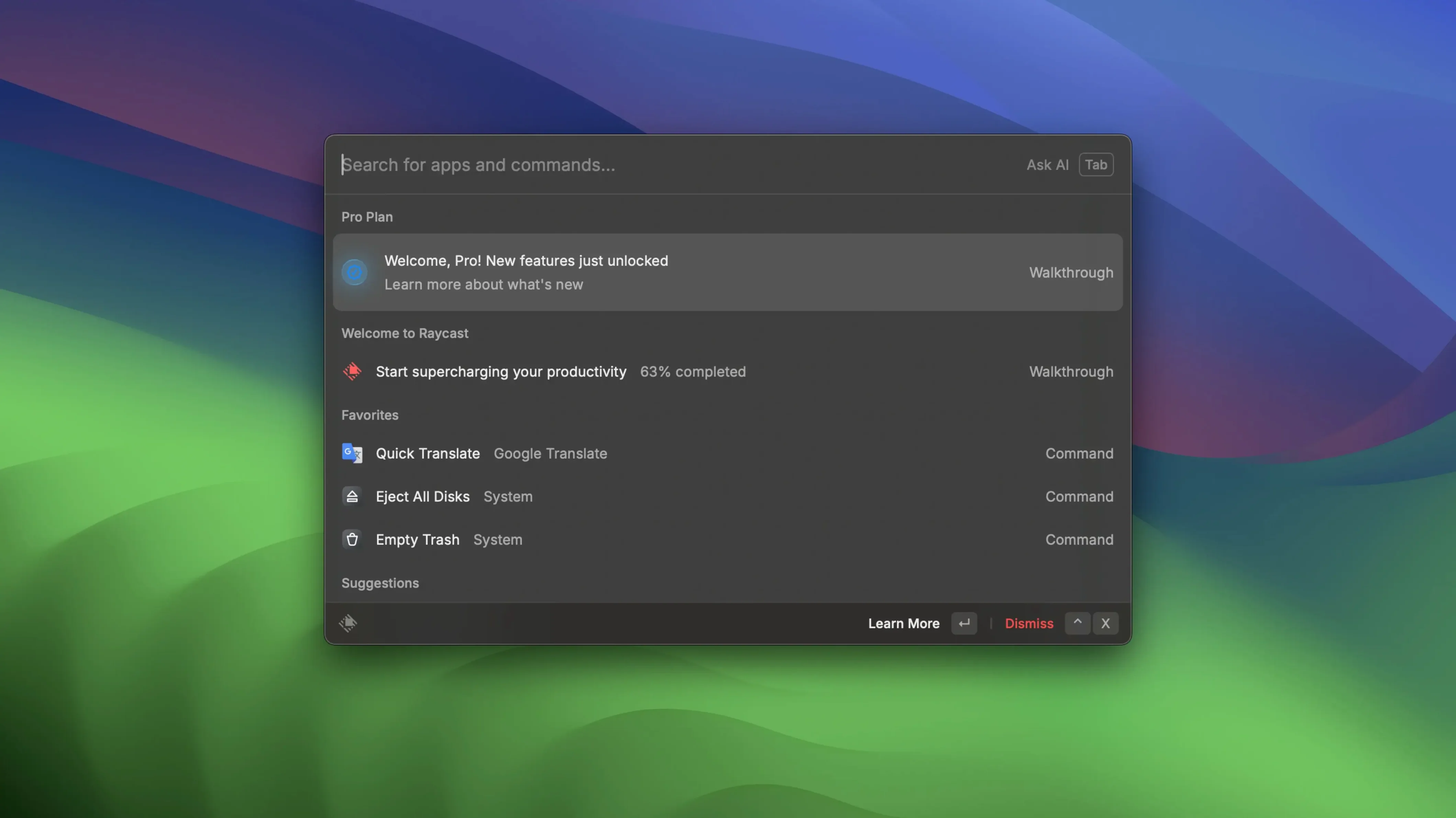
Raycast is an extensible launcher that adds a fast command palette to macOS, replacing the friction of digging through folders and menus with a keyboard-first workflow.
raycast torrent — a search people run when they're curious about the tool but want to poke around before committing. It's a launcher that grows into a collection of productivity tools, from clipboard history to window management, all triggered from a single bar.
raycast crack — another way the same curiosity shows up. The real draw isn't dodging a payment; it's figuring out whether the extensions and quick links are worth reorganizing your habits for. You can copy notes straight to the clipboard, fire them off in iMessage, or drop them into Apple Notes without leaving the keyboard.
Raycast Pro crack — some searches hint at wanting the deeper integrations without the friction of setup. Raycast connects with Zoom, Google Drive, Google Docs, and a growing list of third-party apps. Community-created scripts extend it further, and quick links let you open any web page in your chosen browser or app.
raycast cracked — what people often miss is that even the base experience ties together local files, custom commands, and system actions in a way that feels native to macOS 12 and newer. Version 2.6 quietly fixed a memory leak that grew the longer Raycast stayed open, and each extension process now uses about 30% less memory at startup.
Living Peacefully Alongside Your Spotlight Shortcut
Will it clash with Spotlight? They sit next to each other peacefully. Raycast uses Option+Space by default, leaving Spotlight's Command+Space alone. Some folks remap it to Command+Space and push Spotlight to a secondary shortcut after a week of muscle memory kicks in. Others keep both — Spotlight for quick arithmetic and dictionary lookups, Raycast for everything else.
Does it phone home constantly? The offline build works fine without an internet connection for local file search, notes, clipboard history, and most built-in commands. Extensions that pull data from the web won't update, but your Mac doesn't become a paperweight if the Wi-Fi drops.
Is it going to eat my battery? The memory fixes in recent builds help — each extension process starts leaner, and the leak that used to grow over long sessions is gone. On Apple Silicon machines the impact stays low enough that most people forget it's running until they need it.
Can I bring my Alfred workflows over? Not directly. The scripting model is different, though the community has ported a surprising number of popular workflows. If you've invested years in complex Alfred setups, expect a transition period rather than a drop-in replacement.
Swapping the Launch Hotkey in Fifteen Seconds Flat
The default launch shortcut might conflict with apps that already claim Option+Space. Switching it to Command+Space (and nudging Spotlight elsewhere) or to a rarer combo like Option+Shift+Space takes fifteen seconds and saves frustration later.
Under Extensions, disable anything you won't use. Raycast ships with a generous set, and trimming it down keeps the command list snappy. The search results feel tighter when only the tools you actually reach for show up.
Turn on clipboard history if it didn't grab you during setup. The default retention period is reasonable, but bumping it to a month or longer turns it into a genuine safety net for text you thought you'd remember.
The window management commands are off by default for some layouts. Enable them, then memorize the halves and thirds shortcuts — they replace a lot of manual resizing once they're in your fingers.
Quick links deserve a few minutes of setup. Create shortcuts for the sites you visit five times a day, then assign each one a browser or app. Opening your task manager in a dedicated window instead of a crowded tab bar feels surprisingly clean.
Where Alfred Still Wins on Workflow Precision
Alfred has been the gold standard for years, and it still excels at precision. Its workflow editor gives you fine-grained control that Raycast's extension model doesn't quite match. But Alfred's interface feels more utilitarian, and its clipboard manager and snippet tools are separate purchases rather than built-in. If you love crafting intricate automations piece by piece, Alfred rewards that patience. Raycast leans toward discoverability — you can browse extensions from inside the app and install them with a click.
LaunchBar operates on a different philosophy. It learns your abbreviations and adapts to how you type, which makes it feel almost invisible after a few weeks. Its file browsing is deeper, letting you drill into folders with a few keystrokes. But the extension ecosystem is smaller, and the design language hasn't changed much in years. Raycast feels more modern and social — the shared script commands and constant community contributions give it a liveliness that LaunchBar's lone-wolf approach lacks.
Spotlight itself keeps getting better with each macOS release. It's free, it's already there, and it handles natural-language queries well. Where it falls short is customizability. You can't chain commands, you can't install extensions to pipe data between apps, and the clipboard is separate. Raycast builds on Spotlight's foundation and adds layers that Apple's launcher simply doesn't aim to provide. The two coexist rather than compete.
Raycast 2.5.1.0 brings the very latest polish and under-the-hood fixes to keep your command bar snappy.
- macOS 12 (Monterey) or later
- Works natively on Apple Silicon and Intel 64-bit Macs
Also on readers' docks
Sign in or create an account to leave a comment.
No comments yet. Tell me how it got on with your other devices.