
Download ForkLift for macOS
Before you go looking for a ForkLift 4 license key, let's talk about what it actually runs on. This is an Intel-native app that requires macOS 12 (Monterey) or newer. If you're on an Apple Silicon Mac, it runs under Rosetta 2 just fine, but you should know it hasn't been rebuilt as a universal binary yet.
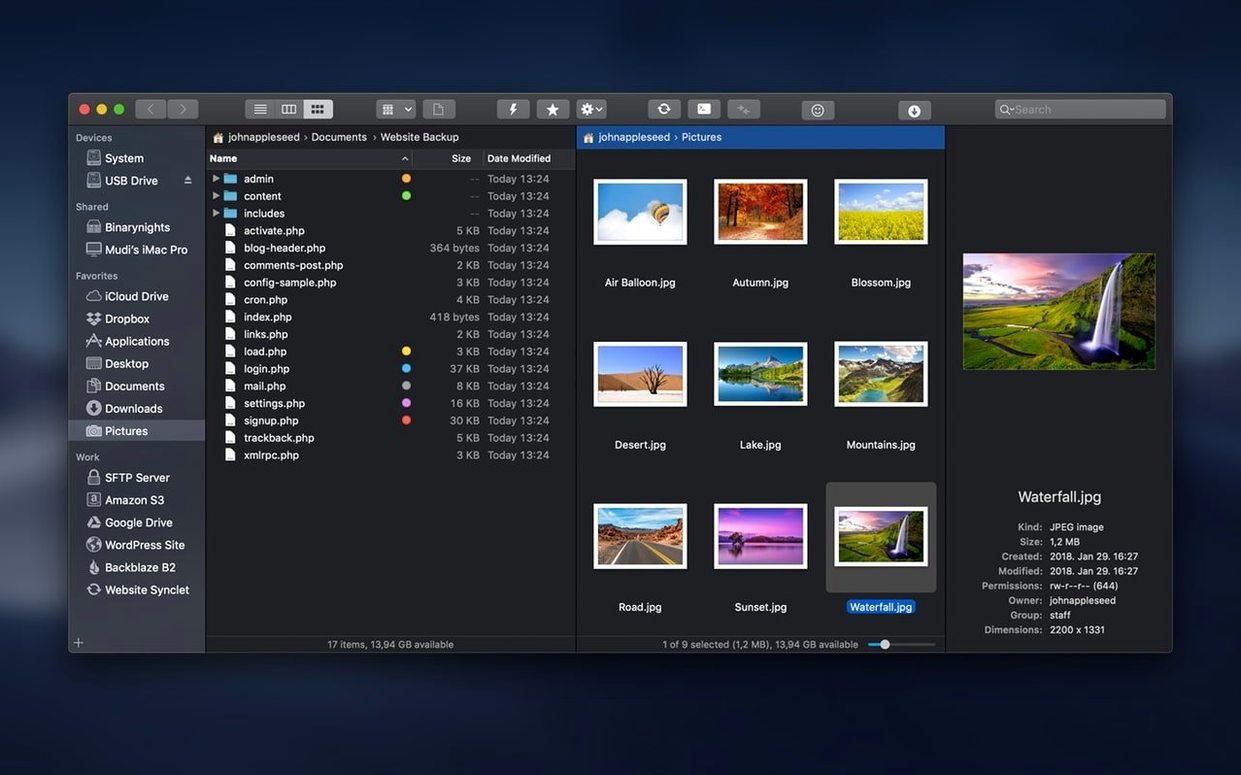
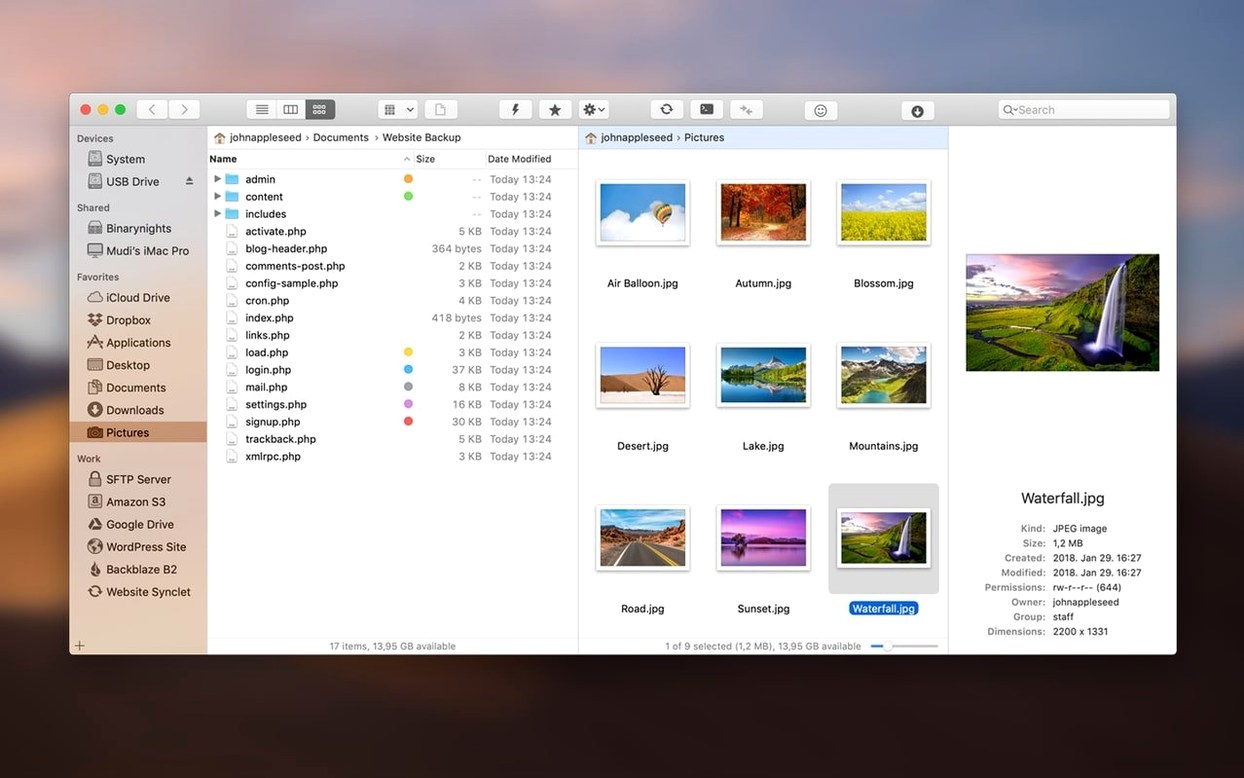
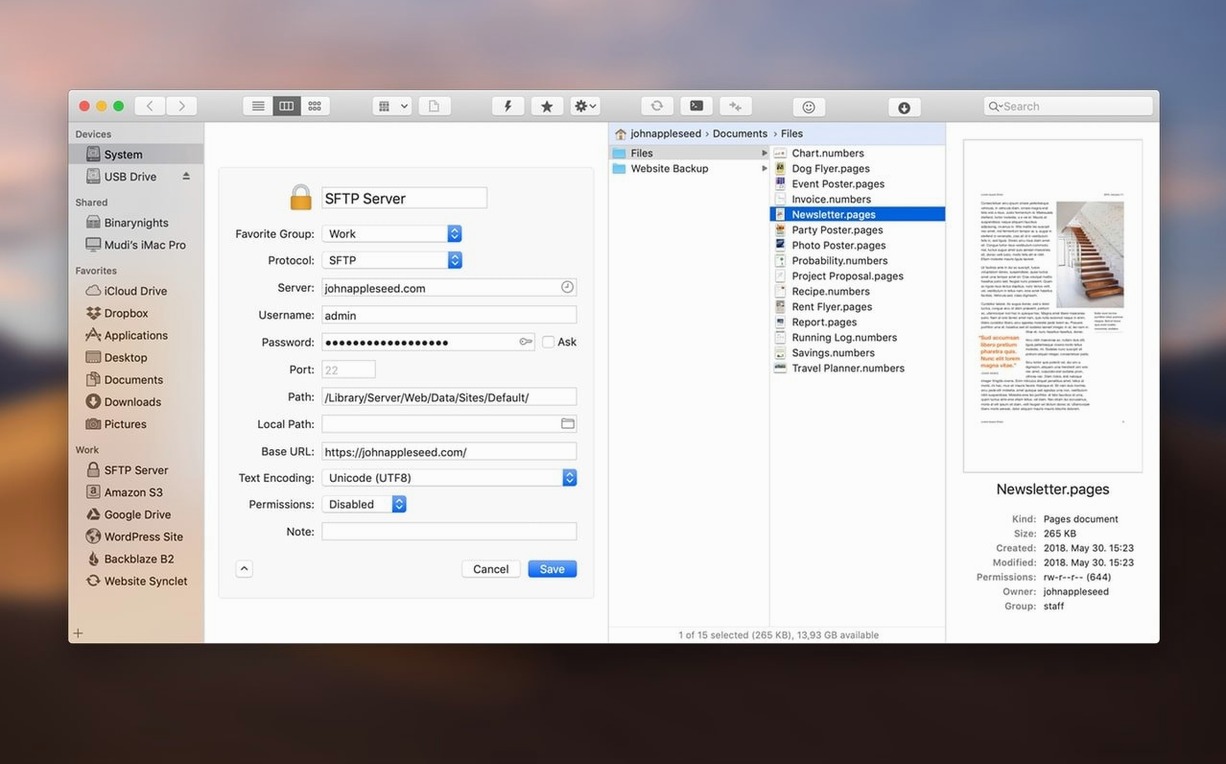
People tend to search for a ForkLift torrent or a ForkLift 4 crack when they hear "Finder replacement," and honestly, that label fits. It puts two file panels in front of you—stacked vertically or set side by side—and suddenly moving things between folders stops feeling like a chore. The real kicker is what happens when you connect to a server. ForkLift is a proper FTP client that can talk to multiple servers at once, and it treats remote folders just like local ones. You can edit a text file sitting on a web server, compare a local folder against its remote twin, and sync changes in either direction without opening five different tools.
Another thing that comes up in the "ForkLift Mac" curiosity is whether it plays well with a developer's workflow. It does. You can pop open Terminal, iTerm, or Hyper right from the current folder, which is one of those small touches that makes you wonder why Finder never bothered. Search works across local and remote sources by name, extension, text content, or tags, and the sync tool covers both one-way mirroring and two-way merge scenarios without drama.
If you spend half your day wrangling files across servers, or you just want a file manager that shows you two places at once without fuss, this is the kind of app that earns its keep within the first hour.
How ForkLift Stacks Up Against the Competition
Put ForkLift next to Transmit and you notice the split personality right away. Transmit is Panic’s famously polished FTP client—gorgeous, fast, and laser-focused on transfers. ForkLift does that too, but it refuses to stay in its lane. The dual-pane layout doubles as a local file manager, so you're not switching to Finder every time you need to shuffle things between folders on the same Mac. Transmit handles remote connections beautifully; ForkLift handles them while also letting you browse archives as folders and preview files without launching another app.
Then there’s Commander One, which takes heavy inspiration from the classic Norton Commander two-panel design. Commander One offers a free tier and built-in cloud service connectors, but its remote protocol support leans on a paid upgrade pack. ForkLift ships with FTP, SFTP, S3, WebDAV, SMB, NFS, and AFP baked in from the start. The interface feels less retro, too—preview pane, archive browsing, and that handy Terminal shortcut give it a more modern Mac feel without sacrificing the dual-pane muscle.
Path Finder is the other obvious comparison point. It’s a Finder replacement first, with tabs, shelf features, and deep customization. What Path Finder doesn’t do natively is treat remote servers as first-class citizens. ForkLift stays practical: two panes, server bookmarks that connect as easily as local volumes, and sync tools that actually make sense when you’re comparing a staging folder to a production server.
Syncing a Website Staging Folder to a Live Server
Here’s a workflow I fall into all the time. Let’s say you’ve been editing a static site locally—tweaking HTML, swapping out images, adjusting a CSS file. The staging folder sits in ~/Sites/client-site, and the live server runs on shared hosting via SFTP.
- Open ForkLift and set the left pane to the local
client-sitefolder. - In the right pane, connect to the server using a saved SFTP bookmark and navigate to
/public_html. - Hit Commands > Compare (or ⌘D). ForkLift scans both sides and highlights what’s newer, what’s missing, and what’s changed.
- Filter the view to show only modified and new files. Spot-check a couple of diffs—maybe that CSS file and one image.
- Select everything you want to push and run a one-way sync from local to remote. ForkLift uploads only the differences, not the entire site.
- Glance at the preview pane on one of the uploaded files just to confirm the live version looks right.
The whole thing takes maybe ninety seconds, and you never touched Terminal or a separate diff tool. If you needed to edit a stray config file on the server, you could do it inline right there in the remote pane—ForkLift’s built-in text editor handles that without downloading, re-editing, and re-uploading.
Dual-Pane Sync for Devs and Admins
Web developers and server admins are the obvious crowd. When you’re constantly pushing files to staging environments, pulling down backups, or comparing what’s on a client’s server with what’s in your local repo, the dual-pane-plus-sync combo stops being a luxury and starts being the reason you keep the app pinned to your Dock.
Photographers and designers who juggle large file collections across NAS drives and cloud buckets get a lot of mileage too. The archive browsing alone—opening a .zip or .tar.gz right in the pane and dragging files out without unpacking the whole thing—saves clicks and disk space. And anyone who’s ever waited for Finder to finish searching a mounted SMB share will appreciate ForkLift’s search, which actually feels like it was built for people who know what they’re looking for.
Even if you’re not a server-touching power user, the two-pane local workflow wins converts. Moving files between external drives, reorganizing project folders, or just keeping a clean desktop without opening five Finder windows—once you get used to seeing both source and destination at once, going back to single-pane browsing feels like tying one hand behind your back.
- Smoothed out several interactions when moving and managing files, so things feel more responsive day to day.
- Squashed two bugs that cropped up specifically on macOS 27 Golden Gate.
- macOS 12 (Monterey) or newer
- Intel processor (runs on Apple Silicon via Rosetta 2)
- Languages: English, German, Hungarian
Also on readers' docks
Sign in or create an account to leave a comment.
No comments yet. Tell me how it got on with your other devices.