Download FontLab for macOS
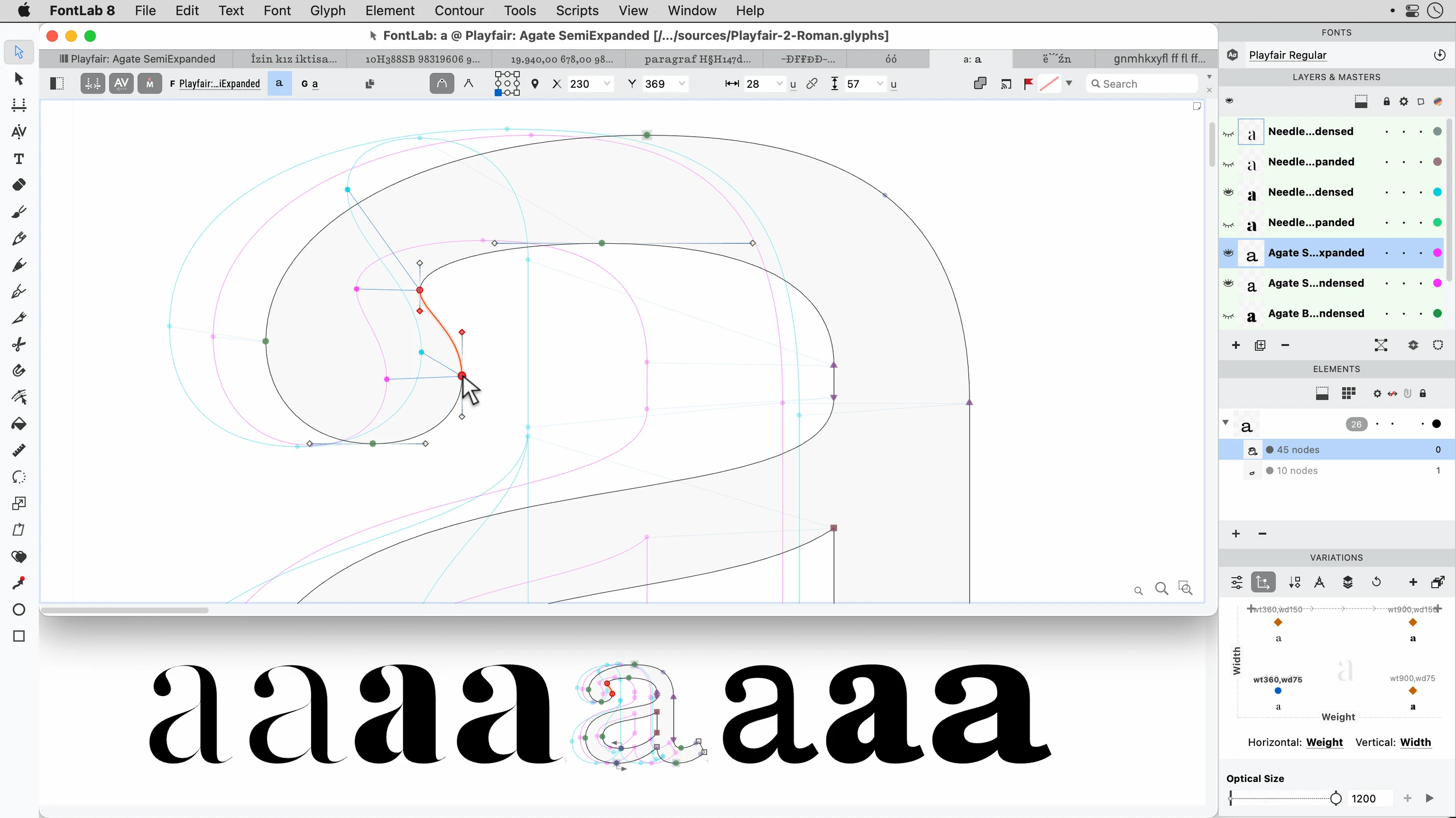
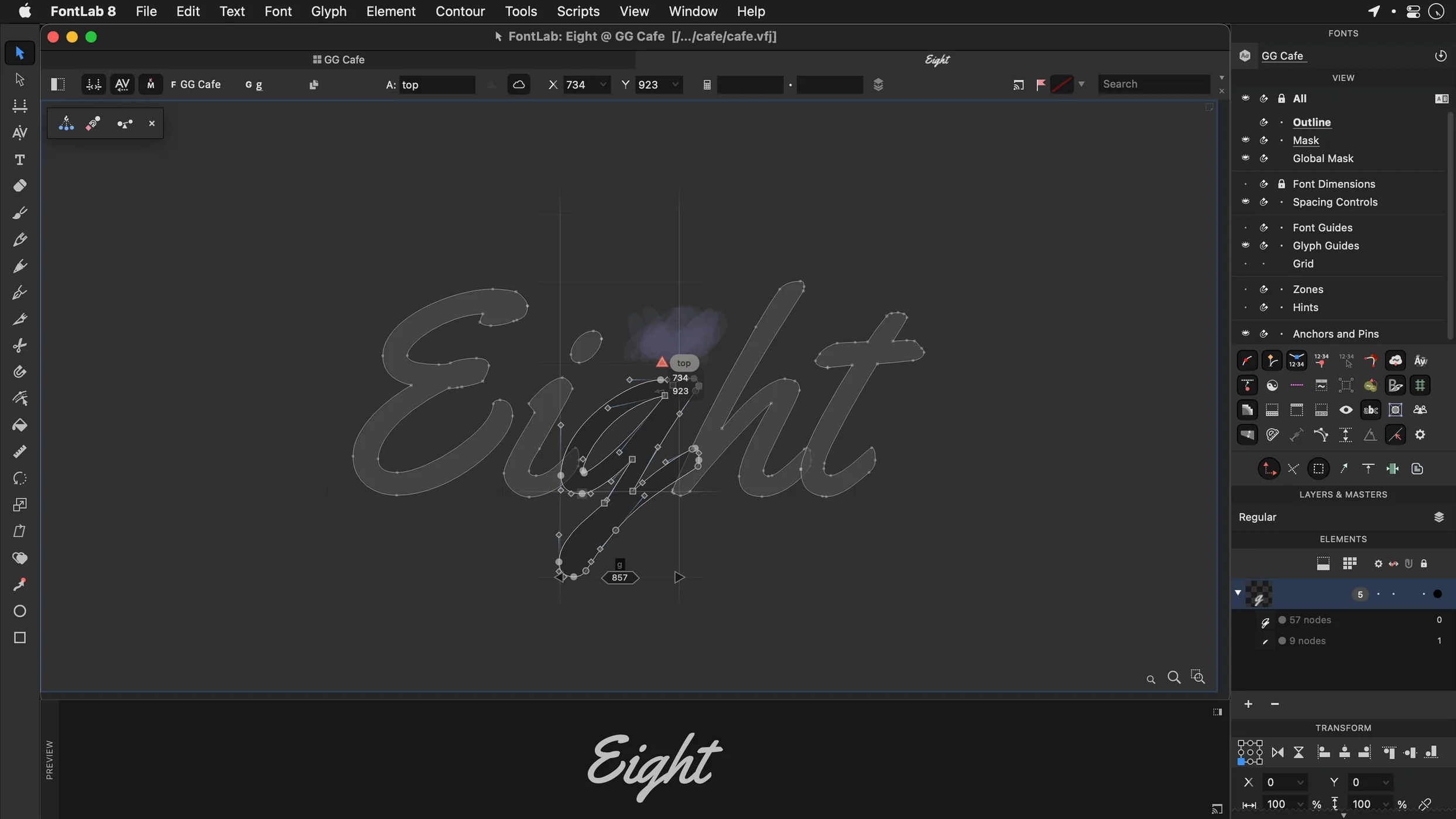
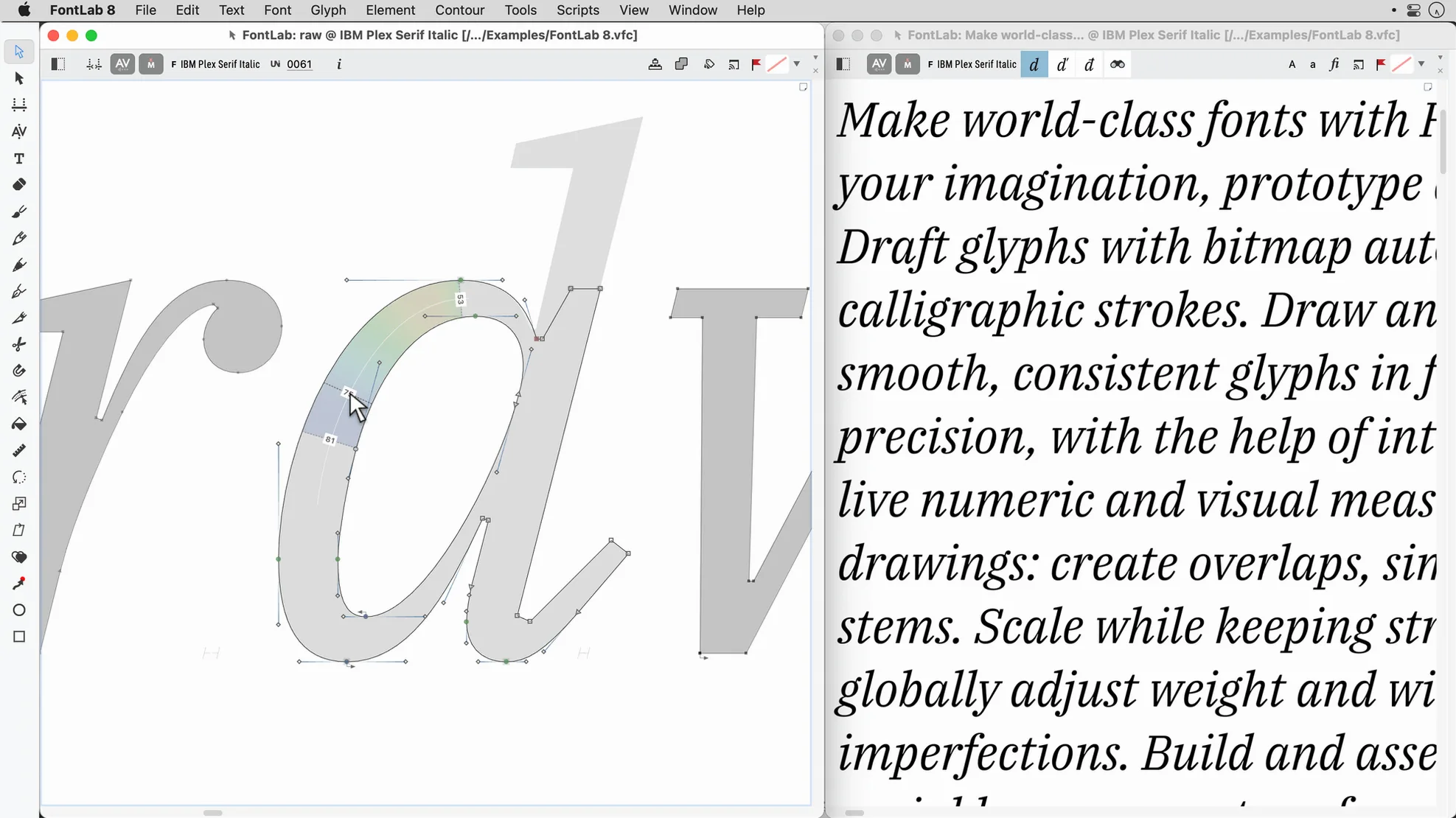
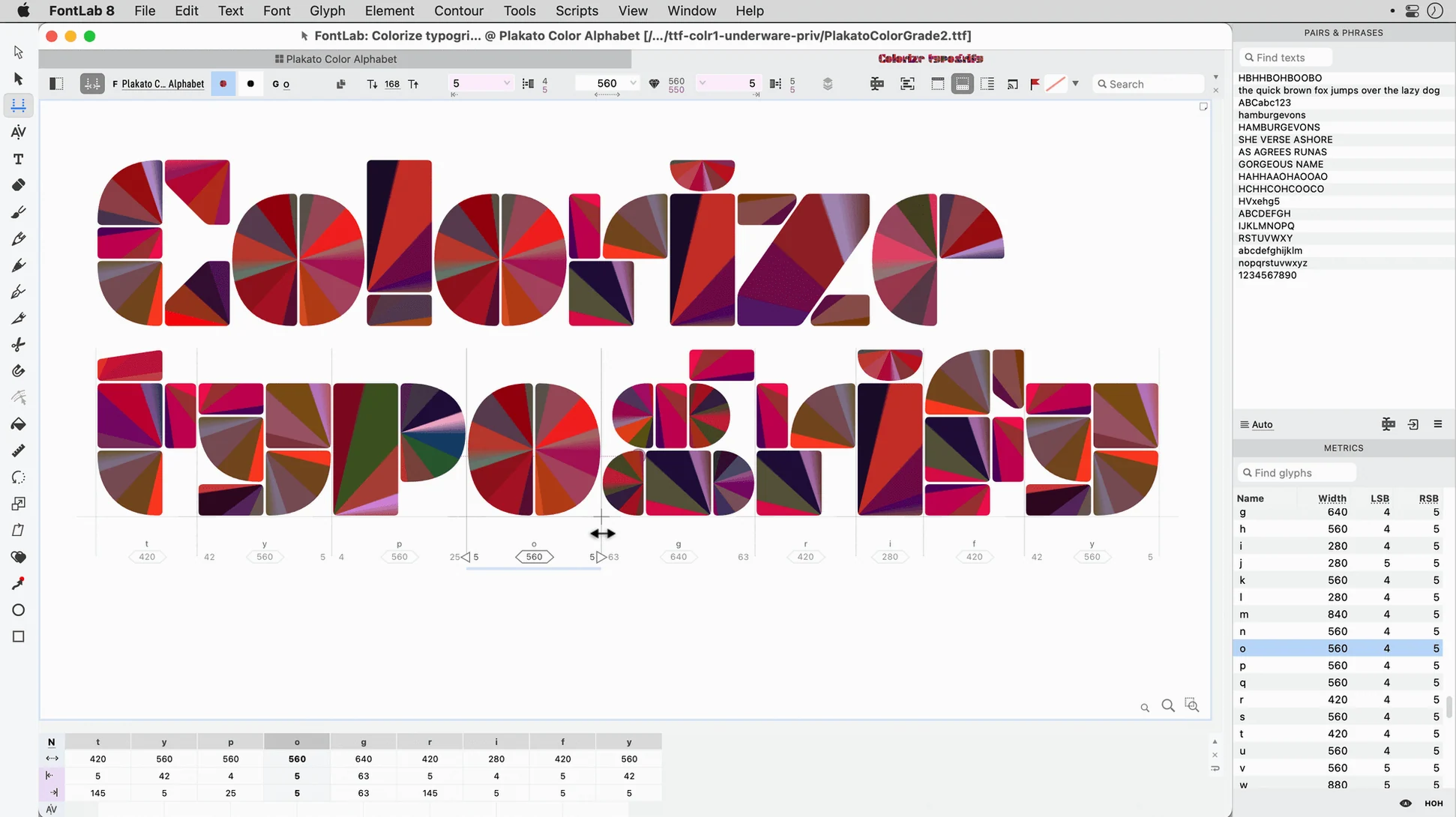
FontLab 8 supports OpenType, TrueType, and Unicode — the formats that matter when you're building fonts that have to work everywhere. As the successor to FontLab Studio 5, it brings the whole workflow into one integrated editor for Mac and Windows.
Will FontLab 8 run on my Mac?
You need macOS 10.14 or later, and an Intel processor. The requirements are modest by current standards, so older Intel machines still have a place at the font-design table.
What can I edit with it?
OpenType and TrueType fonts are the core, but FontLab 8 also handles Mac TrueType, TrueType AAT, and ASCII/Unix Type 1 fonts. Editable code pages and encodings give you control over how characters map across systems.
What else is built in?
A font viewer and editor are included, along with programmable font transformations for batch-level changes. It's an integrated tool, not a collection of separate utilities.
Type Designers Who Want Precision Control, Not Presets
Build Your Sidebearing System Before Drawing a Single Curve
New FontLab users often jump straight into drawing before setting up a proper glyph skeleton. Skipping the metrics and spacing early on means you'll spend hours nudging sidebearings later — and the results rarely feel cohesive. Build your core spacing as soon as the first dozen glyphs exist, not after the full character set is drawn.
Another common slip is ignoring the Font window's layers. Beginners sometimes flatten everything onto one layer, then realize they've lost the ability to compare weight variants or language-specific alternates. Use layers to stack sketches, test bold interpolations, or keep a backup of a working design before you push it further.
Lastly, many newcomers treat the 200 undo levels as a crutch. While the undo stack is generous, it won't save you from a broken contour that's been copied across twenty glyphs. Make a habit of running the Font Audit panel early and often — it catches open paths, incorrect point types, and overlapping issues before they become invisible headaches during export. As you gain confidence, you might look for resources like fontlab 8 serial number discussions to understand how other users handle activation, though the app itself runs without interruption once installed.
Two Toggles That Turn the Canvas into a Measured Workspace
Before you draw a single bezier, open Preferences and head to the Glyph Window section. Switch on Show sidebearing measurements and Show node coordinates — these two toggles turn your drawing canvas from a blank sketchpad into an informed workspace. You'll see exactly how far a stem sits from the advance width edge, which matters more than most beginners realize.
Next, visit the Font Info dialog (Cmd+I) and lock in your family naming. FontLab populates several fields automatically, but the Style name and Weight class values directly affect how your font appears in macOS Font Book and Adobe apps. A mismatched weight class is why a "Medium" weight sometimes shows up as "Regular" in menus. Set it once, and every export stays consistent.
If you work with Arabic or Hebrew, enable Right-to-Left preview mode in the Text panel preferences. Without it, testing Arabic shaping feels like driving blind. The setting doesn't affect the font data — it only changes how the editor displays sample text — but it makes proofing bidirectional scripts infinitely faster. Some users who grab a fontlab torrent find these configuration steps especially rewarding because diving into the documentation unlocks the full shaping preview; taking ten minutes here saves days later.
Drag Vector Outlines Straight from Illustrator into a Glyph Cell
FontLab 8 plays well with Adobe's ecosystem. You can drag AI or EPS outlines directly onto a glyph cell, and the vector paths retain their bezier structure. TIFF and BMP imports work as background references — drop a scanned pencil sketch into a glyph layer, lock it, and trace over it with the built-in drawing tools. The import pipeline means you don't need to redraw work that already exists in Illustrator.
macOS integration goes deeper than file formats. The app respects system-wide font activation, so fonts you install through Font Book or a manager like RightFont appear in FontLab's preview panels without manual refreshing. When you export a font and double-click the result, macOS's built-in Font Book takes over for quick installation and preview. It's a round-trip workflow that keeps the operating system in the loop rather than treating it as a separate step.
For batch work, the programmable transformations hook into a scripting layer that can shuffle glyph data between FontLab and external tools. Some designers pipe UFO files into Python scripts for automated weight interpolation, then pull the results back into FontLab for final spacing and hinting. It's not a walled garden — the app reads and writes formats that other foundry tools understand. If you're setting up a workflow from scratch, even a FontLab 8 crack search might lead you to community forums where users share transformation scripts and UFO-handling tips, and the app itself is ready to go from the moment you open the downloaded disk image and drag it into Applications.
Type designers and anyone who needs professional-level font control. The built-in viewer makes it practical for managing font libraries too.
Version 8.4 brings 500 improvements over the original FontLab 8 release, and 900 when compared with FontLab 7. It's a significant point update rather than a small patch.
- macOS 10.14 or later
- Intel processor
- Interface language: English
Also on readers' docks
Sign in or create an account to leave a comment.
No comments yet. Tell me how it got on with your other devices.