Download Carbon Copy Cloner for macOS
With version 7, Carbon Copy Cloner drew a line in the sand. Bombich Software dropped support for Catalina, Big Sur, and Monterey, so the app now demands macOS 10.15 Catalina or newer on Intel or Apple Silicon Macs. If your machine is still on one of those older releases, CCC 6 remains the path forward — but for everyone on a current system, this is the clean, focused version you’ll want.
Compatibility at a glance
- macOS: 10.15 Catalina and later
- Architecture: Intel and Apple Silicon
- Languages: English
Pick source and destination, then schedule the rest
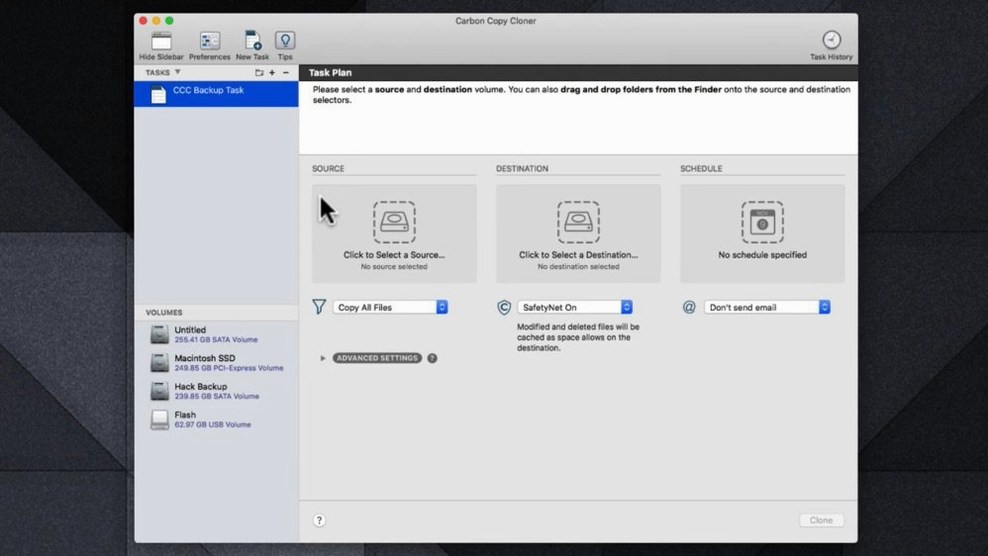
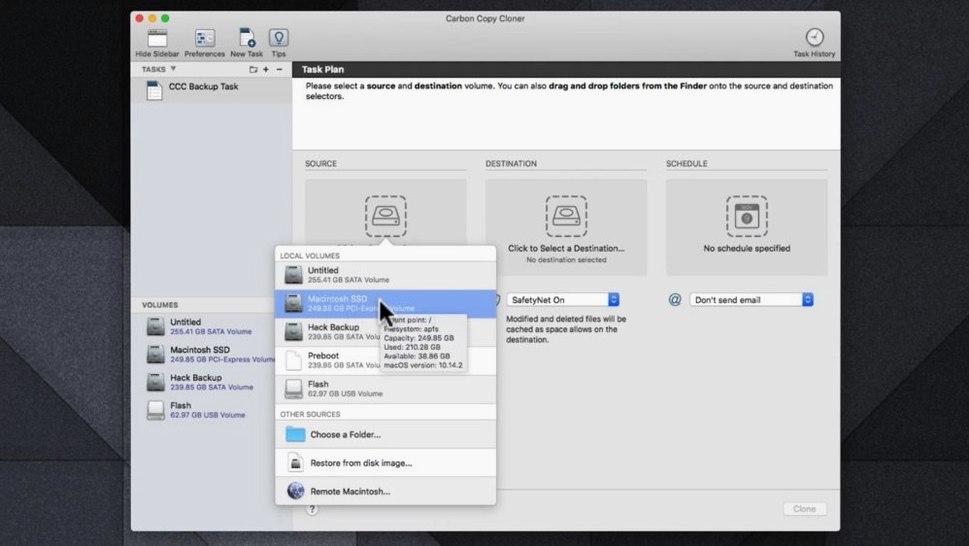
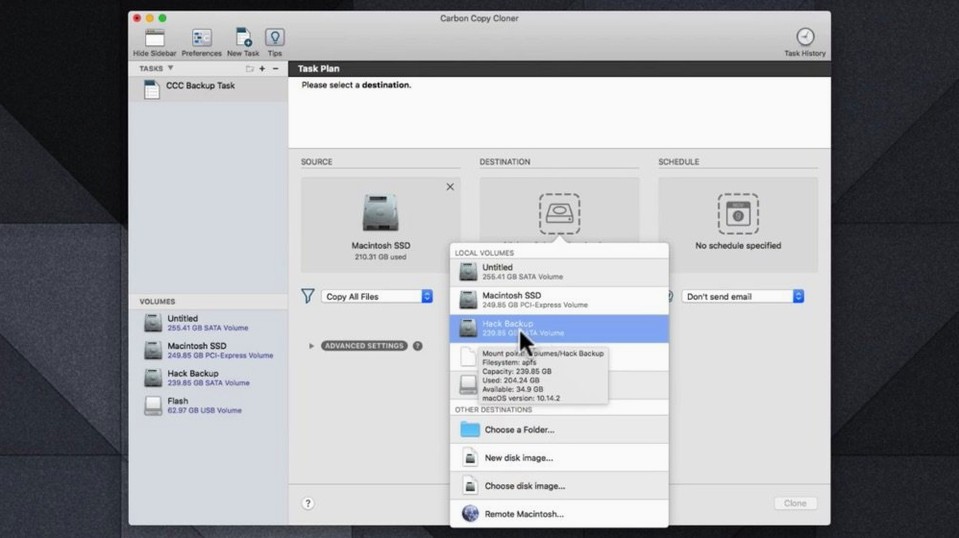
Carbon Copy Cloner is a macOS backup and file-copying utility built around a straightforward interface. You pick a source — a whole disk or specific folders — then choose a destination disk for the backup. Automatic scheduling keeps things ticking along without you babysitting it, and the cloning tools let you make an exact, bootable duplicate of your drive. It’s the kind of utility that feels at home in a setup where you just want to know your data is safe, without drama.
Bootable clones on Apple Silicon still work with a manual step
One of the first things people ask is whether CCC 7 can still make a bootable clone now that Apple has changed how the system works. The short answer is yes — with a footnote. On Intel Macs, a full clone remains bootable without extra steps. On Apple Silicon machines, you can still create a bootable backup, but the process leans on Apple's own tools in the background, and a cloned external drive needs that first boot while holding the power button to pick the startup disk. It works, it's just a different dance than the old days of holding Option at startup.
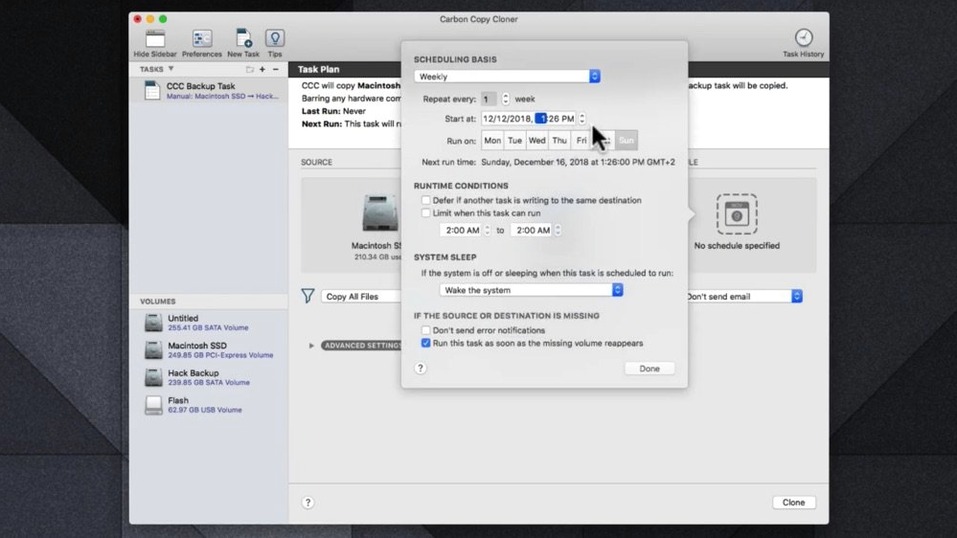
Another common worry is whether the scheduler actually runs when the Mac is asleep. CCC uses Power Nap support where available, so a scheduled task can wake the machine, do its work, and let it go back to sleep. On laptops running on battery, you can tell it to skip tasks below a certain charge level — useful if you've been burned by a dead MacBook at a coffee shop. The scheduling engine is smarter than a simple cron job; it knows the difference between "the Mac was off" and "the Mac was sleeping," and it will run missed tasks as soon as it can, or you can set a window where it should not attempt anything.
People also wonder about the safety net. CCC keeps safety snaps — snapshots on the destination that let you step back to earlier versions of files if something goes wrong. That's not quite the same as Time Machine's hourly history, but it means a corrupted file today does not have to overwrite the good copy you backed up yesterday. And yes, you can run CCC alongside Time Machine without them tripping over each other. They play in different sandboxes.
Deliberate folder picking versus hands-off versioning
Put CCC next to Time Machine and the differences jump out fast. Time Machine is the set-it-and-forget-it cousin — it versions everything, fills up drives, and handles restoration through a space-themed interface. CCC is the deliberate tool. You decide exactly what gets copied, when, and how often. There's no magic cleanup of old backups unless you configure retention policies yourself. For someone who wants a clone they can boot from in a crisis, Time Machine simply cannot do that; CCC can. They complement each other more than they compete.
SuperDuper is the comparison most Mac users make, and it's a fair one. Both create bootable clones, both offer scheduling, both keep things straightforward. The interface philosophies differ: SuperDuper aims for minimalism with a single-window, few-buttons approach, while CCC surfaces more — task history, snapshot management, and a detailed scheduler panel are front and center. CCC's safety snapshots and its task grouping feature give it an edge for someone juggling multiple backup routines, but SuperDuper's simplicity wins if you just want a nightly clone and nothing else. In daily use, CCC feels like the tool that grew with its users; SuperDuper feels like the tool that stayed small on purpose.
Then there's ChronoSync, which casts a wider net — syncing between Macs, cloud storage, and network volumes. It's less a cloning tool and more a synchronization engine. CCC is focused on the disk-to-disk copy, and it does that job with fewer moving parts. If your world is Mac backups and bootable clones, CCC is the tighter fit. If you need multi-directional sync across devices and services, ChronoSync earns its keep.
Cloning for a system migration, step by step
Say you just unboxed a new Mac and you want everything from the old one — apps, settings, stray files on the Desktop — brought over exactly as they were. Here's a workflow that works smoothly.
Start on the old Mac. Connect an external SSD with enough room for the entire internal drive. Open CCC, click the source selector, and pick the internal disk — usually named "Macintosh HD." For the destination, pick the external SSD. In the middle panel, leave it set to "Standard Copy" for now. Click "Clone" and let it run. CCC copies every sector it needs, and when it finishes, you have a bootable duplicate on the external drive.
Now shut down the old Mac, unplug the external SSD, and connect it to the new Mac. On an Apple Silicon machine, press and hold the power button until the startup options appear, then select the external drive. The new Mac boots from your clone. From here, open CCC again — it's right there in your Applications folder on the cloned drive — swap source and destination, and clone the external drive back to the new Mac's internal storage. When that finishes, reboot from the internal drive and everything is where you left it. The whole process takes time based on drive size and connection speed, but the thinking part is minimal.
A tip: before starting the clone back to the new Mac, take a moment in CCC's sidebar to exclude folders you don't need — maybe old iPhone backups in ~/Library or cached builds if you develop software. The exclusion list saves time and space, and CCC makes it easy to drag folders into the skip list.
Menu bar click to yesterday’s Thunderbolt snapshot
Tuesday evening, the MacBook Pro is on your desk, lid open, connected to a Thunderbolt drive that lives there. You have not thought about backups since the weekend.
You click CCC's menu bar icon — the little circular arrow sits quietly near the clock — and it shows "Last run: 2 days ago." That's fine; your nightly task is set for 2 a.m., but you closed the lid before midnight on Monday. You open the main window. The task list shows three entries: "Nightly clone to Thunderbolt," "Weekly Documents-only to NAS," and "Photos library to external SSD."
The nightly clone is green — it ran Sunday night and succeeded. You right-click it and choose "Run task now." CCC snaps into action. The progress bar fills steadily, the bytes-copied counter ticks up, and down at the bottom a small graph shows read and write speeds hovering around 800 MB/s over Thunderbolt. Nothing stutters. Safari stays responsive, Music keeps playing, and you carry on reading while CCC does its job. About twelve minutes later the task finishes with a quiet notification. The destination volume now has a fresh safety snapshot dated today, sitting alongside snapshots from Sunday and last Friday. If a file went sideways between Sunday and now, you can pull it back from the Sunday snapshot without touching the rest of the backup.
Before closing the app, you glance at the "Weekly Documents-only" task. It's set for Saturday morning, but you were traveling last Saturday and the Mac was off. CCC's scheduler caught the miss and ran the task Monday afternoon when you opened the lid at home. The log confirms it — one line, time-stamped, no drama. You close the window and let the menu bar icon fade into the background again.
Zero CPU at idle, under 60 MB footprint
In daily use, CCC 7 is unobtrusive. An idle task with no backup running sits at zero CPU and a small memory footprint — usually under 60 MB on a modern system. When a clone is in progress, CPU usage depends on whether you've turned on the file verification option. With verification off, the work is mostly I/O, and the Mac stays cool and responsive. Turn verification on and CCC reads every copied file back to compare checksums; that adds CPU time, but even then it rarely spikes beyond what a web browser tab might use.
Stability across weeks of scheduled tasks is where CCC earns its reputation. Tasks do not silently fail without logging the reason. If a destination disk is not mounted, the scheduler notices, logs it, and can optionally send a notification. If the source drive has filesystem errors, CCC pauses and tells you rather than copying corrupted data forward. In months of letting nightly clones run unattended, the kind of failure that requires human intervention is rare — usually a cable unplugged or a drive that died, things no software can fix.
On Apple Silicon, the Universal build runs natively and takes advantage of the faster I/O paths. Cloning from the internal SSD to a fast Thunderbolt enclosure can saturate the connection, and the app does not introduce a bottleneck of its own. One small detail that matters over time: CCC's snapshots use APFS space-saving tricks, so keeping a week of daily safety snaps on the destination does not balloon storage usage the way full separate copies would. The space overhead is modest — mostly the changed blocks between runs.
For anyone who has watched backup software slowly grow sluggish after months of incremental runs, CCC avoids that trap. The task history stays snappy, the snapshot browser opens instantly even with dozens of snapshots on the destination, and the interface does not bog down under its own record-keeping. It is a tool that stays out of the way until you need it, and when you do, it answers quickly.
- macOS 10.15 Catalina or later
- Intel or Apple Silicon Mac
Questions people ask
Which macOS versions does Carbon Copy Cloner 7 support?
CCC 7 requires macOS 10.15 Catalina or newer. Support for Catalina, Big Sur, and Monterey was removed in version 7.
Also on readers' docks
Sign in or create an account to leave a comment.
No comments yet. Tell me how it got on with your other devices.