









Download AnyTrans for iOS for macOS
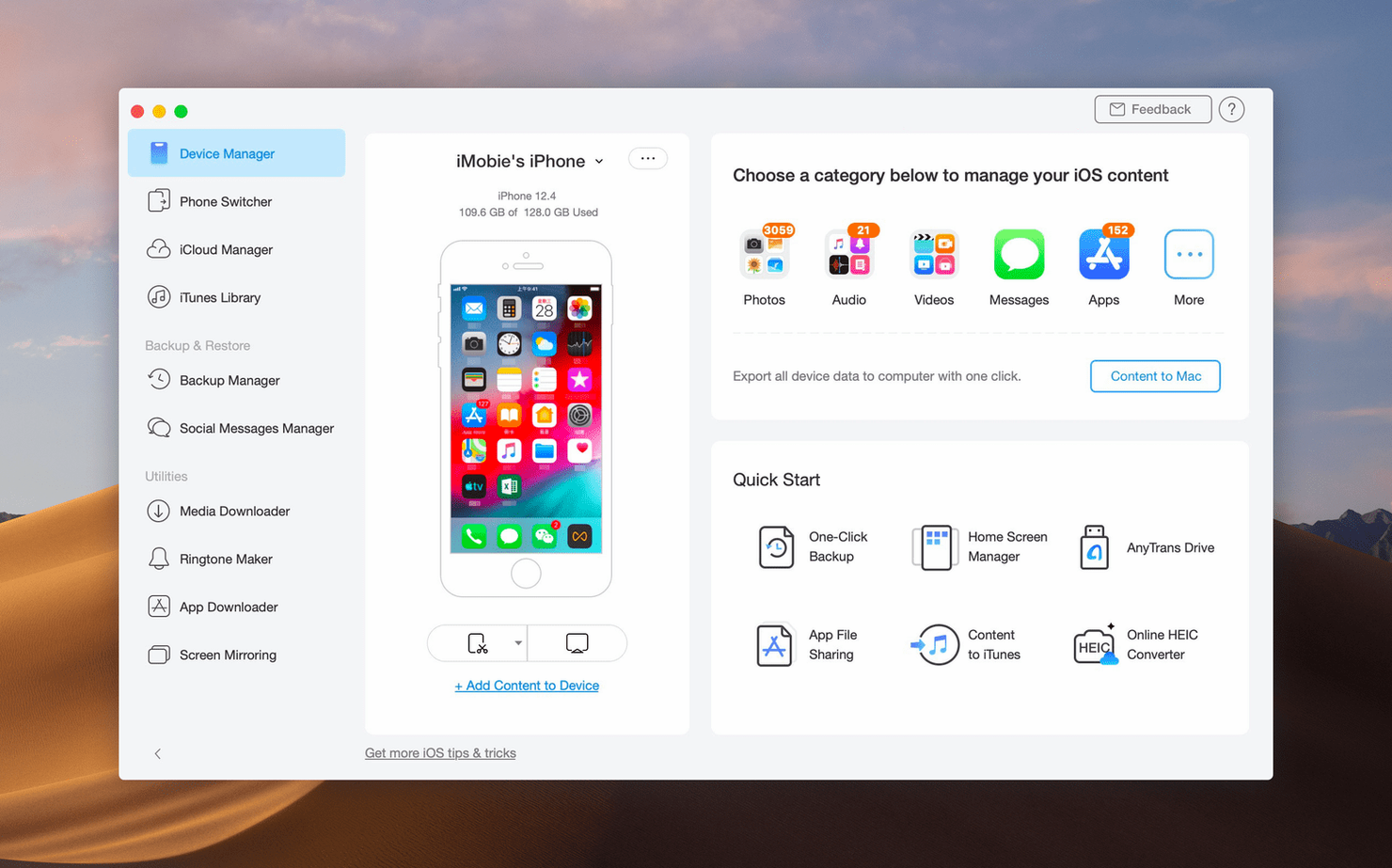
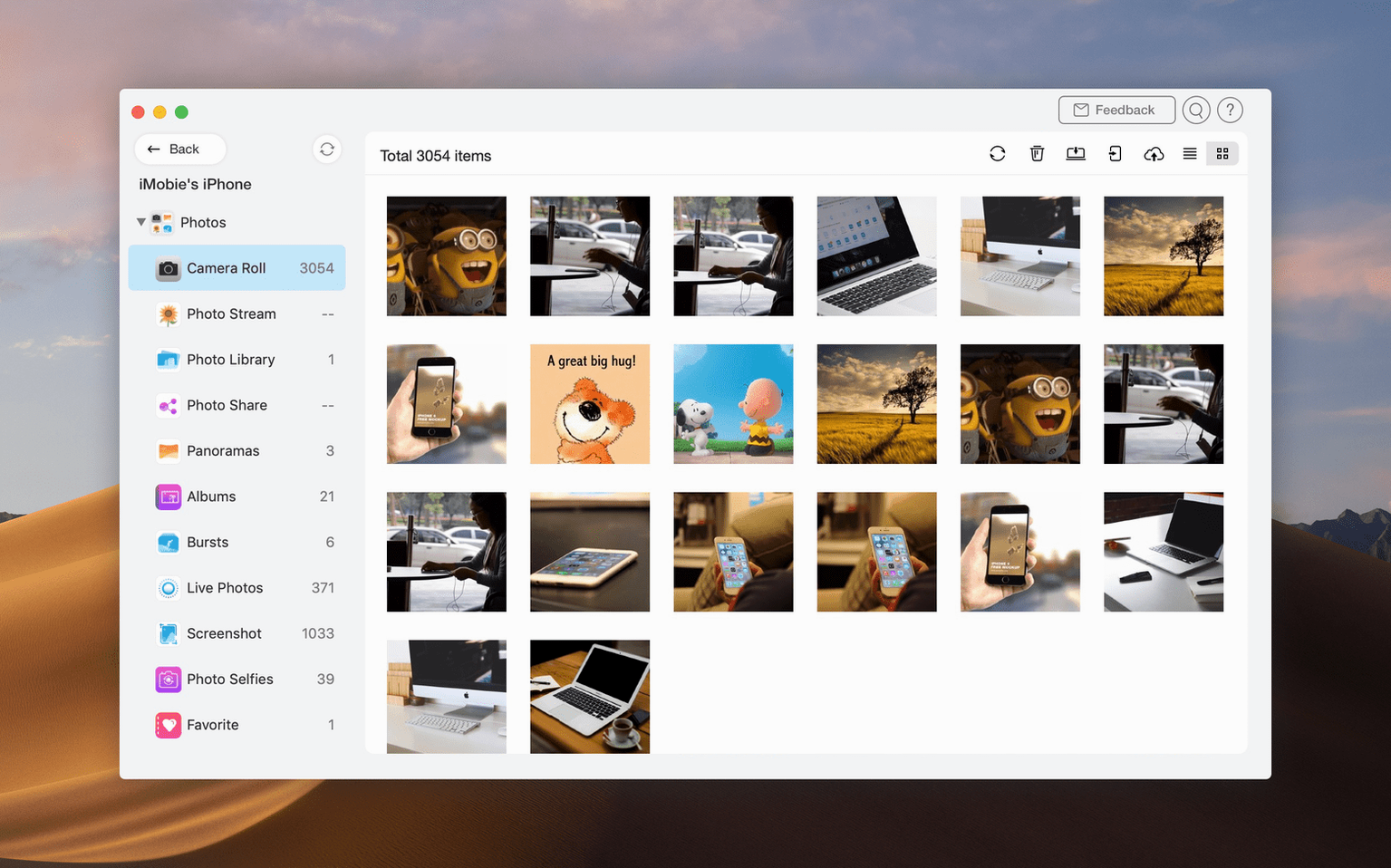
Start with the Quick Transfer tool—a dead-simple way to drag music, photos, and videos straight onto an iPhone over USB. It feels like using a Finder window, not a sync utility.
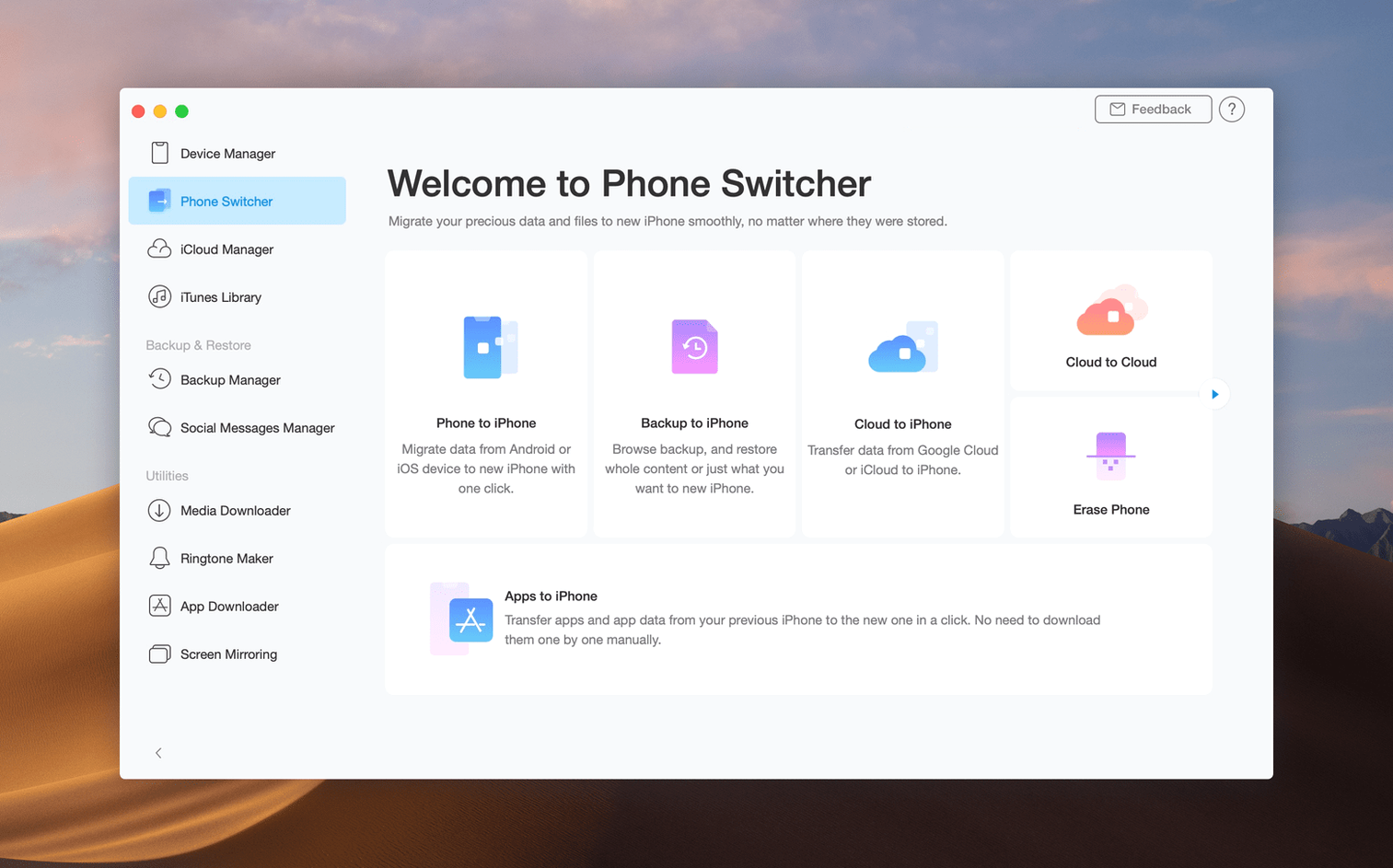
Device-to-Device Cloner — moves everything from an old iPhone to a new one in one go, right on the Mac screen.
iCloud Manager — saves iCloud files to a local folder on your Mac, so you have offline copies without visiting a browser.
iTunes Library Mover — pulls playlists, albums, or your entire library onto a Mac or back to a phone, no full restores needed.
Media Downloader — grabs audio and video from over 900 websites and sends the files straight to an iOS library.
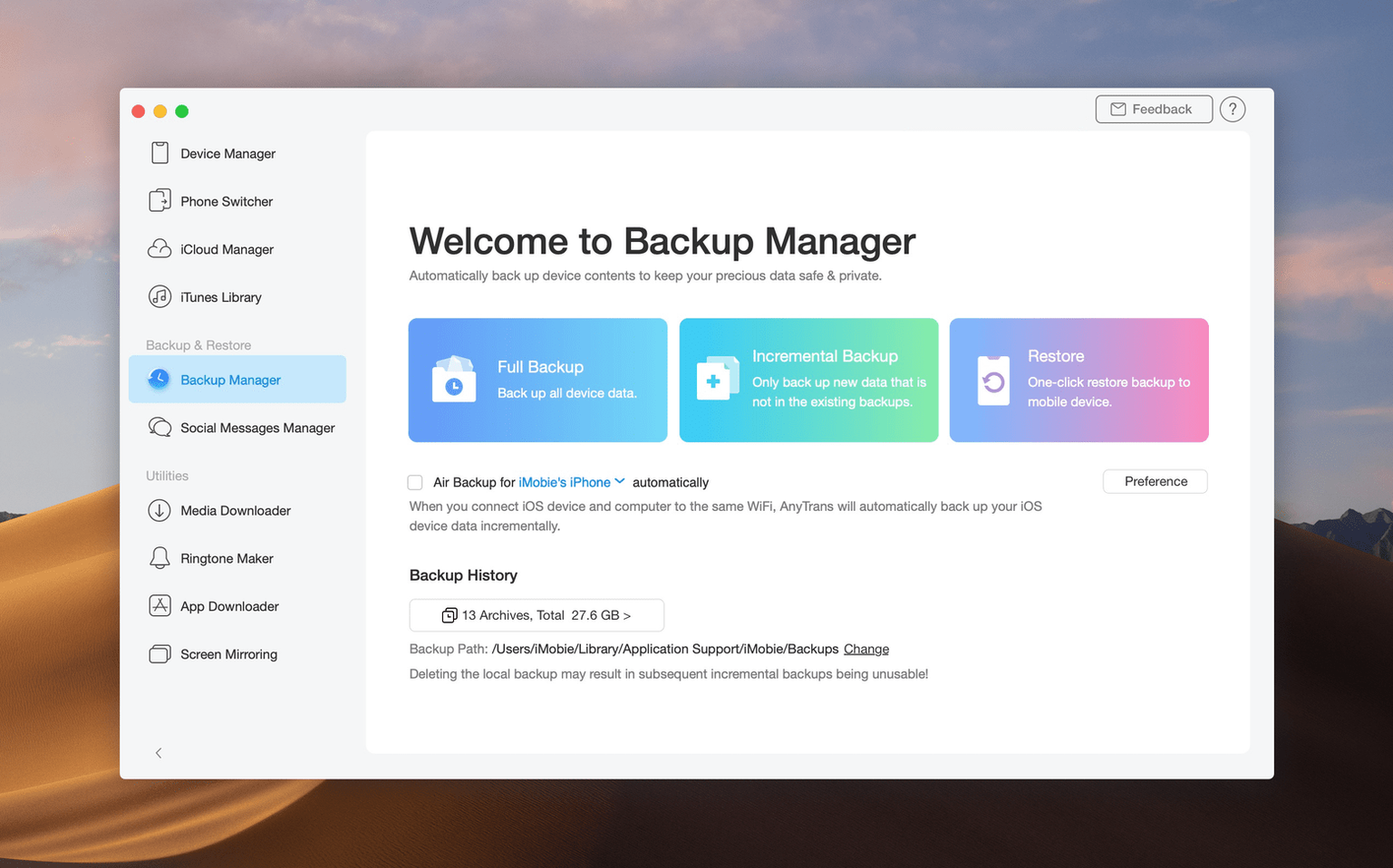
One-Click iPad Backup — copies all iPad data to a Mac with a single press; faster than a full iCloud snapshot when you just need a quick safety net.
Early on, I watched a friend drag a folder of FLACs into AnyTrans and stare at the error. The app doesn’t transcode on the fly—if a file isn’t in a format the iPhone’s Music app understands, it just sits there. Beginners often assume AnyTrans works like a Finder copy and get tripped up by codec mismatches, especially with FLAC, WMA, or older AVI containers. Another classic: connecting the phone while iTunes is open. AnyTrans and iTunes fight over the same USB pipe, and the result is usually a device that doesn’t appear in either window. Quit iTunes first, then launch AnyTrans. Also, people fresh from an anytrans torrent hunt sometimes skip the Gatekeeper step, open the app, and see nothing happen—on Intel Macs running newer macOS builds, you have to mount the disk image, right-click the app, and pick Open the first time, or the system silently blocks it.
First days with AnyTrans — what actually helps
Set aside ten minutes to let AnyTrans finish its initial device scan before you try anything. The first connection builds a local index of your music, photos, and messages; interrupting it with a transfer almost always causes a stalled progress bar. After that, do a small test transfer—maybe five photos to a folder on the desktop—to confirm the USB cable is data-capable, not charge-only. A surprising number of “the app doesn’t see my phone” complaints trace back to a cable that only delivers power.
Next, head into Preferences and uncheck “Automatically check for updates” if you’re using a version you got from an anytrans mac torrent source—auto-updates can break the activation and leave you locked out mid-transfer. While you’re there, set a default export folder that isn’t buried in ~/Documents. I use an “AnyTrans Exports” folder right in my home directory so ringtones, voice memos, and pulled iCloud files never scatter across the drive.
If you plan to move an entire photo library, use the category-based export rather than dragging albums. The category view separates Live Photos into stills and MOV files cleanly, while dragging an album sometimes bundles them into a single HEIC that other apps can’t split apart. And for anyone eyeing the Media Downloader on day one: paste a test URL from YouTube or SoundCloud first to see how the app names files before queueing up fifty videos. The naming pattern is predictable but not always what you’d expect—titles come from the site metadata, not your clipboard text.
Do you still need iTunes after installing
The most common question I hear: “Does this replace iTunes completely?” The honest answer is that AnyTrans handles transfers and backups, but you still need iTunes—or the Music app on newer macOS—for things like restoring firmware or syncing Apple Music subscriptions. AnyTrans sits beside those tools, not on top of them. Another frequent question is whether an AnyTrans Mac crack version will run smoothly on Apple Silicon. The app itself is solid, and cracked builds from curated anytrans pc sources often include the right architecture flags for M1/M2. If you grab it from a catalog, you’re usually good to go; if you’re digging through random AnyTrans torrent links, just check the build notes for macOS compatibility before you mount anything.
People also ask about iCloud two-factor authentication. AnyTrans prompts for the verification code once per session, same as logging into iCloud.com. It doesn’t store your password in plain text—it uses a token-based session—but if you’re uncomfortable entering Apple ID credentials into a third-party app, stick to the USB-only features and skip the iCloud Manager entirely. Finally, “Will this mess up my existing iTunes library?” No, not if you use the iTunes Library Mover to copy rather than move. The default action is a copy, but the wording in the interface can be ambiguous on smaller screens, so double-check the arrow direction before you click.
A 4GB video transfers from iPhone in about 90 seconds
Over USB 3.0, a 4GB video file transfers from an iPhone 14 Pro to my Mac in roughly 90 seconds—comparable to a direct Image Capture pull. Large photo libraries slow things down more from the indexing side than the actual copy; a 10,000-photo library takes about two minutes to appear in the category browser, then copies at wire speed. Wi-Fi transfers are technically supported but I don’t rely on them—the app pushes about 12MB/s over a strong 5GHz network, which is fine for ringtones but painful for video.
Memory use on an Intel Mac sits around 180–220MB during a transfer, spiking to 300MB when the Media Downloader is encoding a long video. That’s light enough to keep it open alongside a browser and a code editor without swapping. I’ve left AnyTrans running for entire workdays and it hasn’t leaked memory or beachballed, though quitting and relaunching once a week clears out cached device indexes that slowly eat disk space in ~/Library/Application Support.
Stability-wise, the 8.9.14 build has been uneventful in a good way. The one crash I can reproduce: switching from the iCloud Manager to the Device Cloner while an iCloud download is in progress. The app doesn’t queue background tasks gracefully across modules, so finish one operation before starting another. Battery impact on the phone is negligible—a twenty-minute transfer session drops the battery about 3%, in line with any sustained USB data connection. For a utility that’s essentially poking at MobileDevice frameworks Apple never intended for third-party use, AnyTrans runs surprisingly clean. It won’t make you forget how fragile the whole iOS-to-Mac bridge can be, but it rarely adds friction of its own.
- macOS 10.13 High Sierra or later
- Intel-based Mac
Questions people ask
Does AnyTrans replace iTunes completely?
It replaces or extends iTunes for transferring and managing iOS content, so you can handle most media and backup tasks without opening iTunes at all.
Also on readers' docks
Sign in or create an account to leave a comment.
No comments yet. Tell me how it got on with your other devices.
More in Mac Apps
See all Updated Antivirus Zap - Virus Scanner
3.22.0 Mac Apps
49 MB
Updated Antivirus Zap - Virus Scanner
3.22.0 Mac Apps
49 MB
 App Cleaner & Uninstaller
10.0 Mac Apps
47 MB
App Cleaner & Uninstaller
10.0 Mac Apps
47 MB
 AppCode
2023.1.5 Mac Apps
1.8 GB
AppCode
2023.1.5 Mac Apps
1.8 GB
 AmpliTube
5.8.2 Mac Apps
3.1 GB
AmpliTube
5.8.2 Mac Apps
3.1 GB
 Apple Keynote
15.3.1 Mac Apps
356 MB
Apple Keynote
15.3.1 Mac Apps
356 MB
 Updated Apple Remote Desktop
3.10 Mac Apps
16 MB
Updated Apple Remote Desktop
3.10 Mac Apps
16 MB
 AppZapper
2.0.3 Mac Apps
4 MB
AppZapper
2.0.3 Mac Apps
4 MB
 Alfred 5 Powerpack
5.8.1 Mac Apps
6 MB
Alfred 5 Powerpack
5.8.1 Mac Apps
6 MB