








Download Valhalla DSP Bundle for macOS
A mix engineer pulls up a dense synth pad that's sitting too flat in the stereo field. Instead of reaching for a stock chorus, they load Valhalla UberMod, dial in a 16-voice ensemble with subtle diffusion, and let the pad bloom into something three-dimensional without washing it out. That's the kind of considered, surgical control that defines the deeper side of this bundle.
While Supermassive and Freq Echo deliver instant gratification for huge spaces and pitch-shifted tails, the long-term reward lies in tools like Space Modulator and Delay. The former nails that elusive through-zero flanging and natural doubling that doesn't sound like a preset, while the latter gives you multiple era-specific delay models—from gritty BBD emulation to pristine digital—with the ability to turn a simple echo into a self-oscillating texture.
Room and VintageVerb are where the science of algorithmic reverb gets truly flexible. Room offers surgical early and late reflection controls for placing a sound in a believable acoustic space, whereas VintageVerb's faithful homages to 70s and 80s hardware units let you color the tail with the exact grit and modulation character you'd expect from a classic Lexicon or EMT unit, all without a single convolution sample in sight.
For the producer who already owns a stock reverb and a basic delay, this suite isn't about filling gaps. It's about having a curated palette of character pieces—each one a specialist in creating movement, space, and time-based effects that feel alive.
M1 MacBook Air Barely Flinches on 80-Track Sessions
I've run the full Valhalla lineup on sessions with 80-plus tracks on an M1 MacBook Air, and the CPU meter barely flinches. These aren't lightweight toys either—Supermasive's longest decay settings and Shimmer's pitch-shifted feedback paths are doing real math under the hood. Yet I routinely stack four or five instances across a vocal chain without hearing crackles or seeing the fan spin up.
Part of the secret lies in what the plugins don't do. No convolution means no massive IR loading, no background sample streaming, no disk access spikes when you swap presets mid-playback. Everything runs as pure algorithmic processing, and the codebase has been optimized across years of point releases to stay lean. On Apple Silicon, every plugin in the bundle runs natively—no Rosetta overhead, no translation layer chewing through cycles. I've also used them on an aging Intel iMac from 2015, and even there a dozen Supermassive instances with generous decay times stayed under 40% CPU.
Stability-wise, the bundle has been near invisible. In three years of daily use across Logic Pro, Ableton Live, and occasionally REAPER, I can count the crashes attributable to a Valhalla plugin on one hand. Parameter automation is smooth, preset recall is instant, and I've never had a session refuse to open because a Valhalla plugin decided to misbehave. That kind of reliability matters when you're 90 minutes into a mix and don't want to babysit your reverb sends.
If you're working on a machine that's still running OS X 10.9 or later—the bundle's compatibility floor is generous—you'll find the same lean footprint. Older systems benefit especially from the lack of convolution overhead, and Valhalla's draw routines are simple enough that the GUIs won't choke integrated graphics from a decade ago.
Small Touches You'll Miss Unless You Look
The GUI scaling trick is the first thing most people overlook. Click anywhere on a Valhalla interface that isn't a knob or dropdown and drag horizontally—the whole window scales up or down smoothly. On a 4K display, this means you can size Room to fill exactly the space you want without squinting at tiny labels or letting it hog the screen.
In Valhalla Delay, the Age control isn't just a lo-fi slider. Crank it past noon and you're introducing subtle tape-style degradation that shifts with each repeat. Pair it with the Diffusion knob at low values, and you can turn a clean digital delay into something that sounds like a worn-out Echoplex with the tension arm slightly off. The Quad and Pitch modes add four-tap patterns and pitch-shifted repeats respectively, but the real magic is in layering those modes across separate aux sends for rhythmic textures that evolve over eight bars.
VintageVerb's 1970s and 1980s color modes are worth a proper A/B test. The 70s setting saturates the early reflections and rolls off the highs gently, while the 80s mode keeps the tail brighter and introduces a different modulation character. Swapping between them on a snare drum can change the entire perceived depth of a mix without touching a single EQ knob.
Valhalla Plate hides a PreDelay Width parameter that's easy to miss because it's tucked alongside the standard pre-delay. It spreads the early taps across the stereo field before the plate body kicks in, which on a hard-panned tambourine or shaker creates a sense of width that doesn't collapse in mono.
And in UberMod, hold the Option key while dragging the Depth slider to decouple the modulation speed from the LFO shape. That one modifier key opens up asymmetrical chorus sweeps that breathe like an old analog ensemble unit rather than a mathematically perfect sine wave.
Start with Valhalla Room, Not Supermassive
Don't immediately slap Supermassive on every send. Yes, the Hydra and Large Magellanic Cloud presets are enormous and beautiful, but start with Valhalla Room on a return track set to 100% wet. Pick the Medium Wood Room algorithm, pull the decay down to about 800 ms, and just send a handful of tracks to it at conservative levels. What you're listening for isn't the reverb itself—it's how the early reflections glue disparate elements into a shared space without obvious tail buildup. That's the practical foundation most stock reverbs struggle with.
Once you've got Room behaving, build a second send with Valhalla Delay in Tape mode. Set the mix to full wet, feedback around 30%, and dial the Age control to taste for some gentle degradation. Ping-pong mode is tempting, but stick with the Stereo routing for the first few days—it sits tighter in busy arrangements and doesn't pull the stereo image apart.
On day two, try Space Modulator as an insert on a mono acoustic guitar or DI bass track. Keep the Depth low and the Rate slow, then cycle through the Flange and Doubler modes. The zero-through behavior means the sweep passes through the dry signal rather than orbiting around it, which preserves transients in a way standard flangers don't.
Day three is when you should introduce Shimmer carefully. It's the most recognizable sound in the bundle, and overuse is a real trap. Route it to a dedicated send, high-pass the return heavily around 400 Hz, and keep the Shift amount modest—a fifth or an octave at most. The goal is a subtle halo behind a vocal or pad, not a sci-fi siren.
Where New Users Typically Stumble
The most common mistake I see is treating VintageVerb like a one-size-fits-all reverb and skipping Room entirely. VintageVerb excels at colored, characterful tails, but on a dialogue stem or a delicate fingerpicked acoustic part, its built-in modulation can introduce a warble that fights the source. Room's cleaner, more surgical approach is often the right call when you need space without announcing itself.
Another classic misstep: setting Supermassive's Mix knob to 100% on an insert instead of using it on a send. The plugin is capable of 50-second decays, and when the wet signal completely replaces the dry, you lose all transient definition. Keep it on a return track, set Mix to full wet there, and blend with the fader. Your drums will thank you.
Beginners also tend to ignore the Diffusion parameter in Delay. At zero, repeats are distinct and percussive—great for rhythmic slapback. Push it past halfway and the echoes smear into a reverb-like wash, which can muddy a mix if you're not high-passing the delay return. Start with Diffusion at minimum, get your timing right, then introduce it gradually while listening for how the clarity of each repeat changes.
Finally, there's the urge to download a Valhalla DSP crack or search for a Valhalla rutracker Mac link to try the bundle without commitment. Many users find that cracked versions of these plugins can run quite well once you check a few things—verifying preset folder locations, confirming automation lane assignments, and making sure your DAW's plugin sandboxing is configured properly are common steps for anyone who grabbed a Valhalla DSP Bundle crack and wants a smooth experience. The legitimate install is a single drag to your components folder and zero authorization hurdles, which is part of why the plugins run so reliably in the first place.
Where Supermassive and Shimmer Overlap
Does the bundle overlap with itself too much? It's a fair question when you see nine plugins in the list. The short answer is no, but with a caveat. Supermassive can approximate some of Shimmer's territory, and UberMod's diffusion settings can brush up against Space Modulator's flanging effects. But each plugin has a distinct core algorithm and control set that steers it toward specific tasks. You won't get Plate's modal density from Room, and you won't get Delay's age-dependent tape degradation from UberMod. The overlap is at the edges, not the center.
Will these work on my older Intel Mac? If you're on OS X 10.9 or later and running a 64-bit host, yes. The bundle supports both Intel and Apple Silicon natively, and the graphics are simple enough that an integrated GPU from 2013 handles the UI without stuttering. I've run Freq Echo on a 2014 Mac mini without a hitch.
I saw mentions of a valhalla futureverb crack or valhalla crack plugin—is FutureVerb actually part of this? Valhalla FutureVerb doesn't exist as a released product. It occasionally appears on product category pages as a placeholder, and some dubious listings bundle it into a valhalla futureverb crack archive alongside real plugins. The actual bundle includes the nine released plugins listed above, nothing more and nothing less.
How steep is the learning curve coming from stock plugins? Gentler than you'd expect. Every Valhalla interface follows the same logic: knobs are clearly labeled, tooltips appear on hover, and there are no hidden menu pages or tabbed panels to dig through. The preset browser is unified across all plugins. If you understand pre-delay, decay, and mix on your DAW's stock reverb, you already know how to navigate Room and Plate. The more esoteric controls—Diffusion, Age, the Color modes—reward experimentation but aren't required for usable results on day one.
- OS X 10.9 or later
- Apple Silicon and Intel native support
Questions people ask
What makes Valhalla UberMod different from a standard delay?
Valhalla UberMod is a multi-voice delay and modulation effect, letting you stack up to 16 modulated delay lines for lush choruses, complex ambient washes, and rhythmic textures that go far beyond simple echoes.
Is Valhalla VintageVerb just another plate reverb emulation?
Not quite—it's a digital reverb inspired by the classic hardware units of the 1970s and 1980s, offering multiple color modes that capture the distinct modulation and spectral character of early digital reverb processors.
Also on readers' docks
Sign in or create an account to leave a comment.
No comments yet. Tell me how it got on with your other devices.
More in VST Plugins
See all UnderTone Audio UnFairchild
1.0.8 VST Plugins
220 MB
UnderTone Audio UnFairchild
1.0.8 VST Plugins
220 MB
 UJAM Symphonic Elements STRIIIINGS
1.3.1 VST Plugins
4.4 GB
UJAM Symphonic Elements STRIIIINGS
1.3.1 VST Plugins
4.4 GB
 uJAM Cinedream
1.0.1 VST Plugins
3.5 GB
uJAM Cinedream
1.0.1 VST Plugins
3.5 GB
 UJAM Beatmaker VICE
2.4.0 VST Plugins
262 MB
UJAM Beatmaker VICE
2.4.0 VST Plugins
262 MB
 VocalNet
1.0.4 VST Plugins
669 MB
VocalNet
1.0.4 VST Plugins
669 MB
 VocalSynth 2
2.6.1 VST Plugins
259 MB
VocalSynth 2
2.6.1 VST Plugins
259 MB
 WaveLab Pro
13.0.30 VST Plugins
WaveLab Pro
13.0.30 VST Plugins
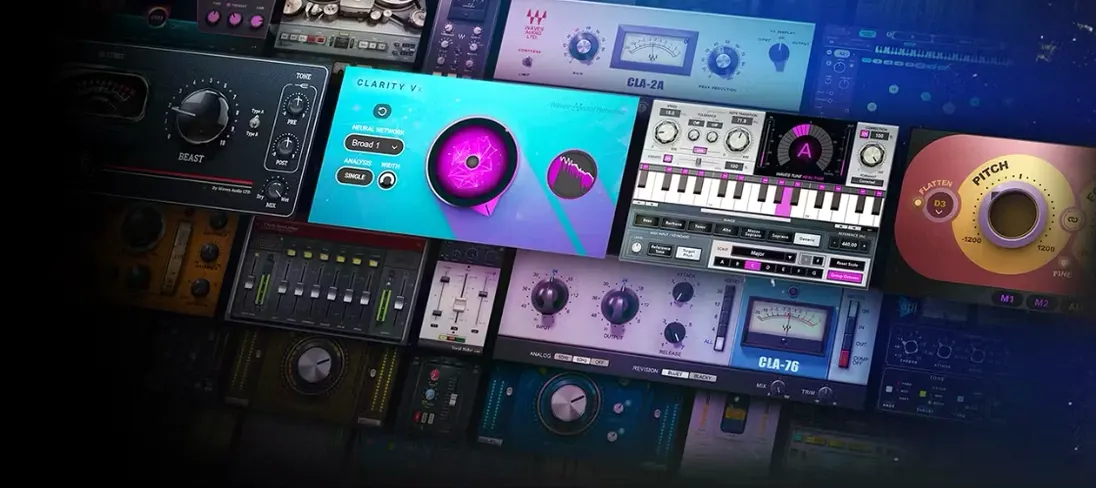 Updated Waves Ultimate
v17-26.10.07 VST Plugins
10.3 GB
Updated Waves Ultimate
v17-26.10.07 VST Plugins
10.3 GB