









Download Neural DSP Archetype Rabea X for macOS
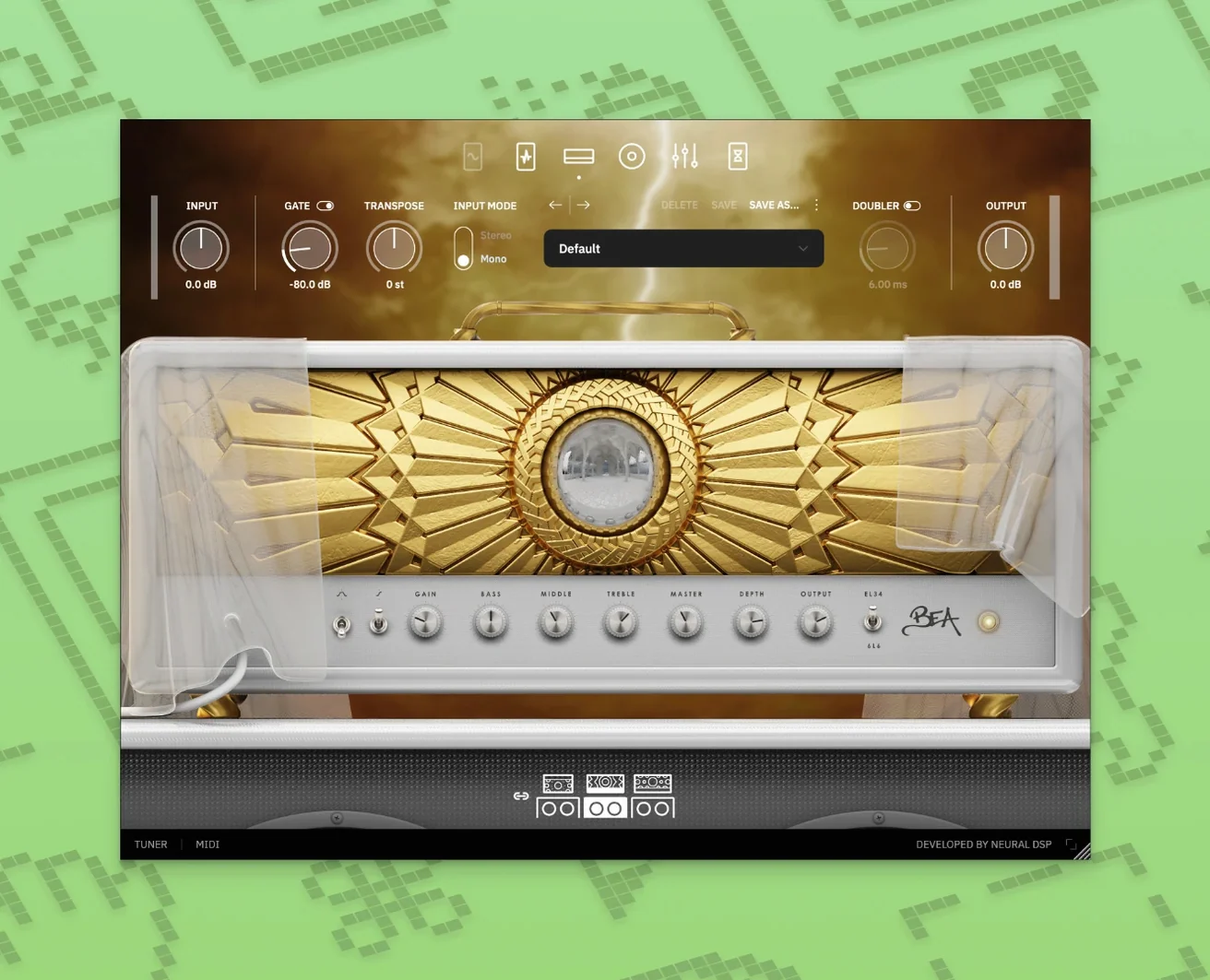
Most amp sims lock you into a single lane—great for chugs, useless for cleans, or vice versa. Archetype Rabea X solves that by packing three distinct amp voices alongside a full monosynth, so one plugin can cover rhythm tracking, lead lines, and synth pads without swapping tools mid-session.
Layering Synth and Guitar on One Track
- Layering guitar and synth textures on a single track
- Dialing in everything from glassy cleans to saturated high-gain leads
- Quad Cortex users who want a matching desktop sound
Monosynth as Creative Layer, Not Poly Replacement
- The Overlord monosynth is a creative tool, not a full polysynth replacement
- Part of a series, so the workflow will feel familiar to Archetype users
Silicon-Native Stability Under Heavy Sessions
I've thrown some genuinely unreasonable projects at this plugin—dense sessions with forty-plus tracks, two or three instances of Archetype Rabea X open at once, other amp sims running alongside it—and it hasn't flinched. The native Apple Silicon support is the quiet hero here. On an M1 machine the CPU hit sits low enough that I stopped checking the meter after the first few days.
Loading times are snappy. Switching presets happens without the half-second audio dropout that some older amp sims still suffer from, and I haven't run into a single crash during automation-heavy mixing. The standalone app is equally stable; I've left it open on my desktop for entire afternoons, picking up the guitar between tasks, and it never drifted out of sync or introduced latency creep.
If you're coming from another Archetype plugin, the resource footprint will feel familiar—maybe a touch leaner. On Intel machines, expect a slightly hungrier draw, but nothing that would embarrass a Mac from the last five years. I keep the buffer at 128 samples for tracking and 512 for mixing, and neither setting gives the plugin trouble.
Build Sounds Slowly, Synth Alongside Amp
Resist the urge to immediately twist every knob. Archetype Rabea X rewards a slower approach, especially because the Overlord synth sits right next to the amp controls and it's tempting to layer everything at once. Here's what I'd suggest for the first few sessions:
- Start with just the amp section. Pick one of the three voices, turn off the synth block, and build three or four core tones you genuinely like. The amps are original designs, so your usual knob positions from other sims won't translate one-to-one. Spend fifteen minutes learning where each amp's sweet spots live before adding effects.
- Calibrate your input level early. The plugin responds differently to hot pickups versus lower-output single coils. Neural DSP's input gain staging matters more here than in some of their earlier releases, especially if you plan to use the Overlord synth, which tracks pitch based on a clean, consistent signal.
- Save a blank template. Once you have a dry amp tone you trust across all three voices, save it as a preset with the synth and time-based effects bypassed. You'll reach for this starting point constantly.
- Run the standalone app for practice. Before wiring it into a DAW project, open the standalone version and play for an evening. It gives you a better feel for how the gates and compressors react to your dynamics without the distraction of arrangement decisions.
A Working Guitarist's Evening
Picture a session guitarist who gets a late-night request: a producer needs a dark, atmospheric lead for a bridge section, plus a textured pad underneath it, and the stems are due by morning. They open a project with a dry DI track already recorded. First instance of Archetype Rabea X goes on the lead—amp voice two, gain at about two o'clock, a touch of plate reverb from the built-in effects. The part gets tracked in one take because the response under the fingers feels immediate, not spongy.
Second instance opens on a duplicate of the same DI. This time the Overlord monosynth takes center stage. They dial in a single sawtooth oscillator, blend it about forty percent under the dry amp signal, add a slow phaser from the effects section, and suddenly the bridge has a hovering texture that sounds like it required a separate synth plugin. It didn't. The producer gets both stems before midnight, and the session file stays tidy—two instances of one plugin instead of a patchwork of amp sim and external synth chain.
That's the real promise here. Not that it replaces every tool, but that it collapses a multi-plugin workflow into something you can hold in your head at once.
Double-Click to Instantly Reset Any Knob
- Double-click to reset. Every knob returns to its default value with a double-click. It's a tiny thing, but when you're deep in a mix and a parameter has wandered off, the speed of resetting it without hunting for a zero point matters.
- The gate has a hidden personality. It's not just a noise gate. At faster release settings, it shapes the transient of palm-muted notes in a way that tightens rhythm parts without needing an extra compressor. Try setting it slightly slower than you think you need and listen to how the attack changes.
- Overlord tracks best on the neck pickup. The manual mentions clean signal matters, but it's worth stressing: the synth's pitch detection is happiest with the guitar's tone knob rolled back and the neck pickup selected. Even mild fret noise on a bridge humbucker can confuse the tracking on fast passages.
- Standalone mode remembers your interface. If you switch between a desktop interface and a portable one, the standalone app holds its routing. Set it once per device and it sticks.
- Preset browsing is arrow-key friendly. You can step through presets with the up and down arrows after clicking into the preset list. It sounds minor, but with hands full of guitar, it beats reaching for the mouse every time.
Version 1.0.1 rolls in quality-of-life tweaks and a handful of bug fixes that keep the plugin running smoothly on both Intel and Apple Silicon Macs.
- macOS 10.15 or later
- Apple Silicon or Intel processor
- 64-bit plugin host
Questions people ask
Does the Overlord monosynth need a guitar input?
No, Overlord can trigger up to two oscillators simultaneously and works independently of the guitar signal, letting you blend synth tones with your dry or processed amp sound.
Also on readers' docks
Sign in or create an account to leave a comment.
No comments yet. Tell me how it got on with your other devices.
More in VST Plugins
See all Neural DSP Archetype Petrucci
1.0.0 VST Plugins
745 MB
Neural DSP Archetype Petrucci
1.0.0 VST Plugins
745 MB
 Neural DSP Mantra
1.0.1 VST Plugins
153 MB
Neural DSP Mantra
1.0.1 VST Plugins
153 MB
 Neural DSP Parallax X
1.0.0 VST Plugins
179 MB
Neural DSP Parallax X
1.0.0 VST Plugins
179 MB
 Neural DSP Soldano SLO-100 X
1.0.0 VST Plugins
340 MB
Neural DSP Soldano SLO-100 X
1.0.0 VST Plugins
340 MB
 Native Instruments Noire KONTAKT
1.2.1 VST Plugins
14.7 GB
Native Instruments Noire KONTAKT
1.2.1 VST Plugins
14.7 GB
 Native Instruments Massive X
1.7.1 VST Plugins
1.6 GB
Native Instruments Massive X
1.7.1 VST Plugins
1.6 GB
 noteGRABBER
2.0.0 VST Plugins
35 MB
noteGRABBER
2.0.0 VST Plugins
35 MB
 Nudist Audio Nudistort
1.2.5 VST Plugins
45 MB
Nudist Audio Nudistort
1.2.5 VST Plugins
45 MB