








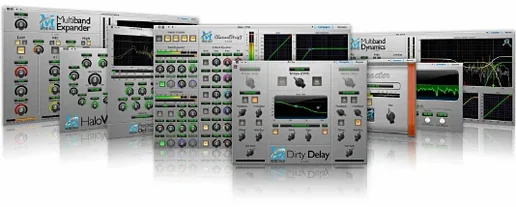
Download Metric Halo Production Bundle for macOS
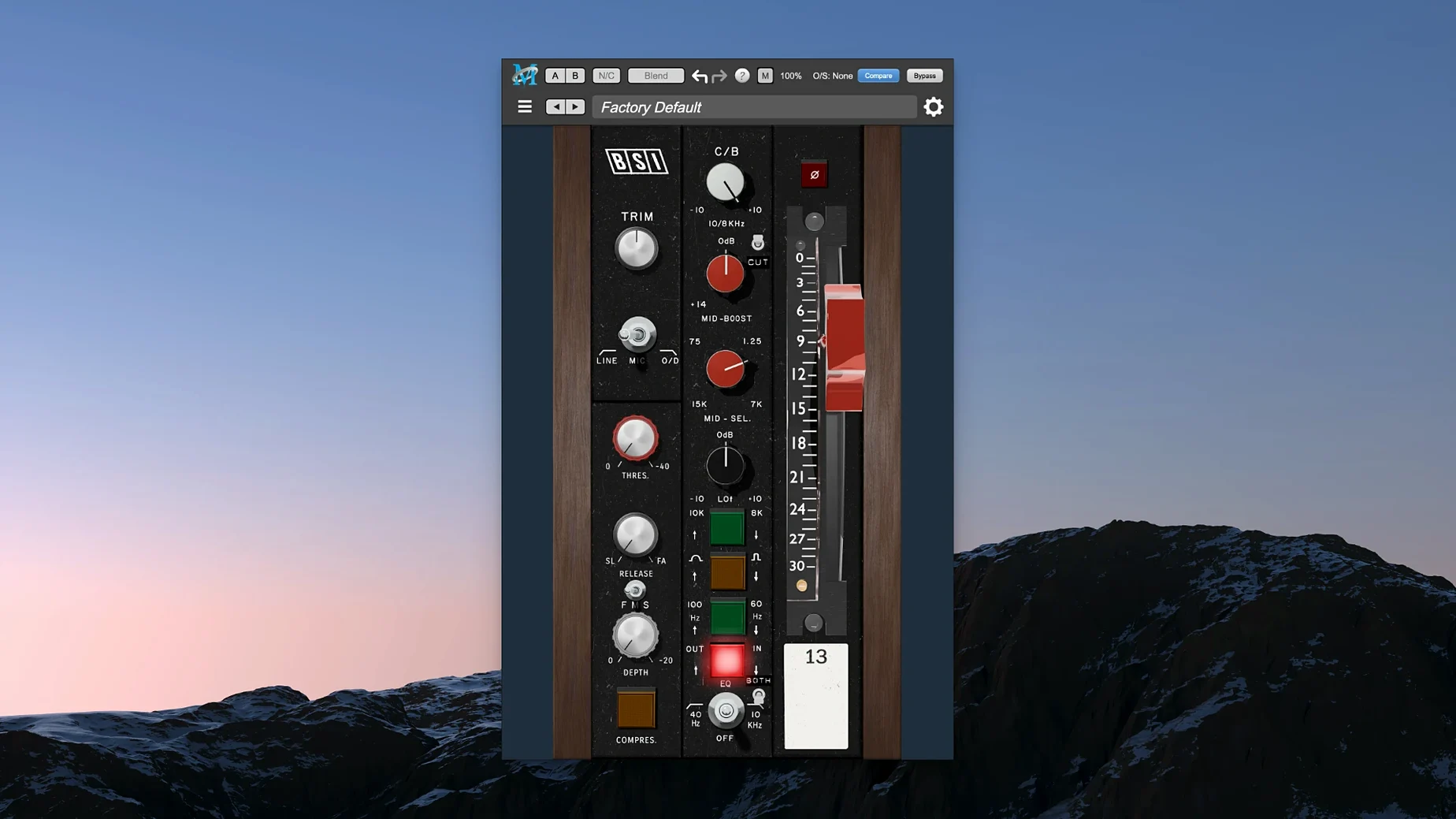
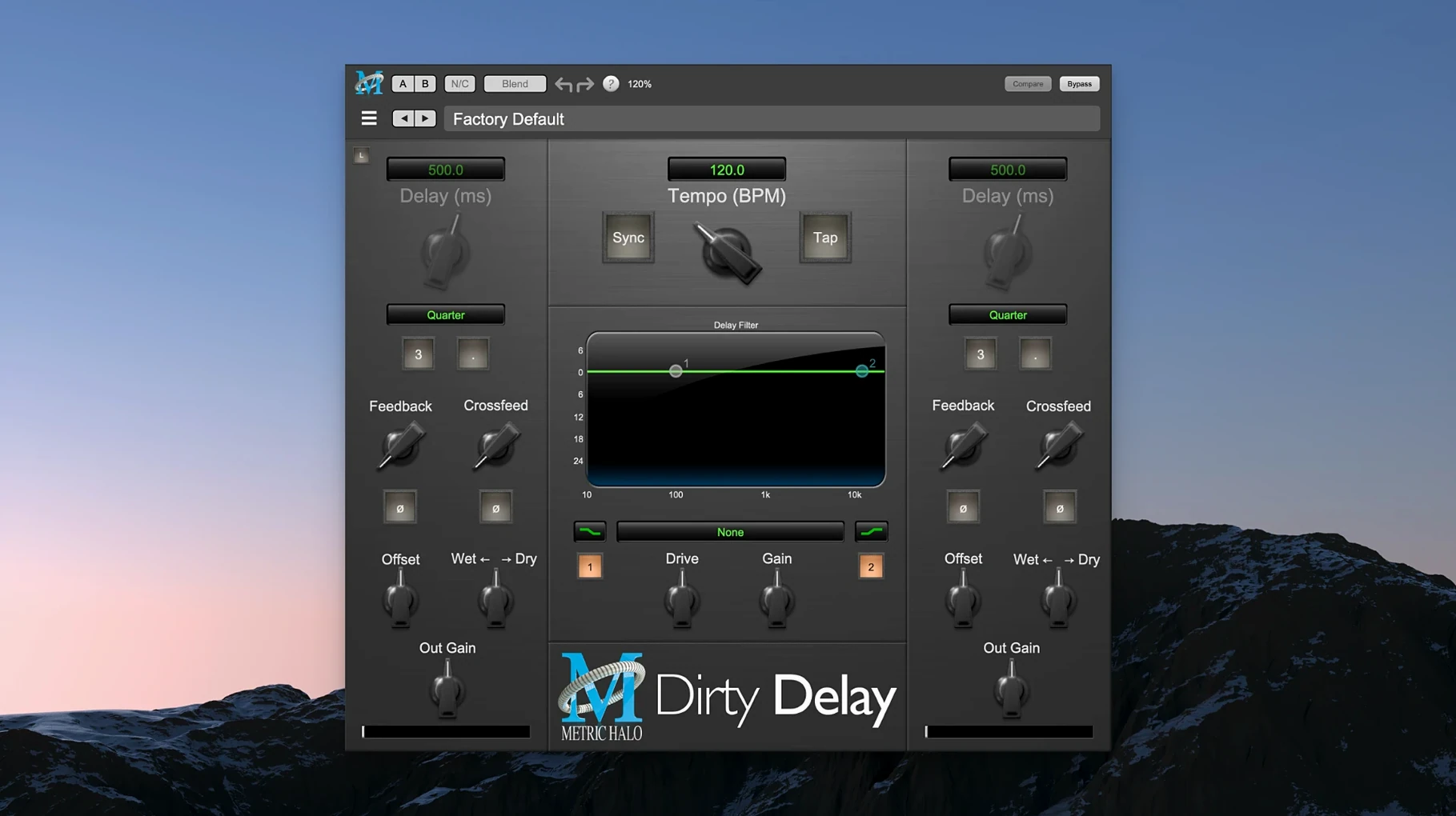
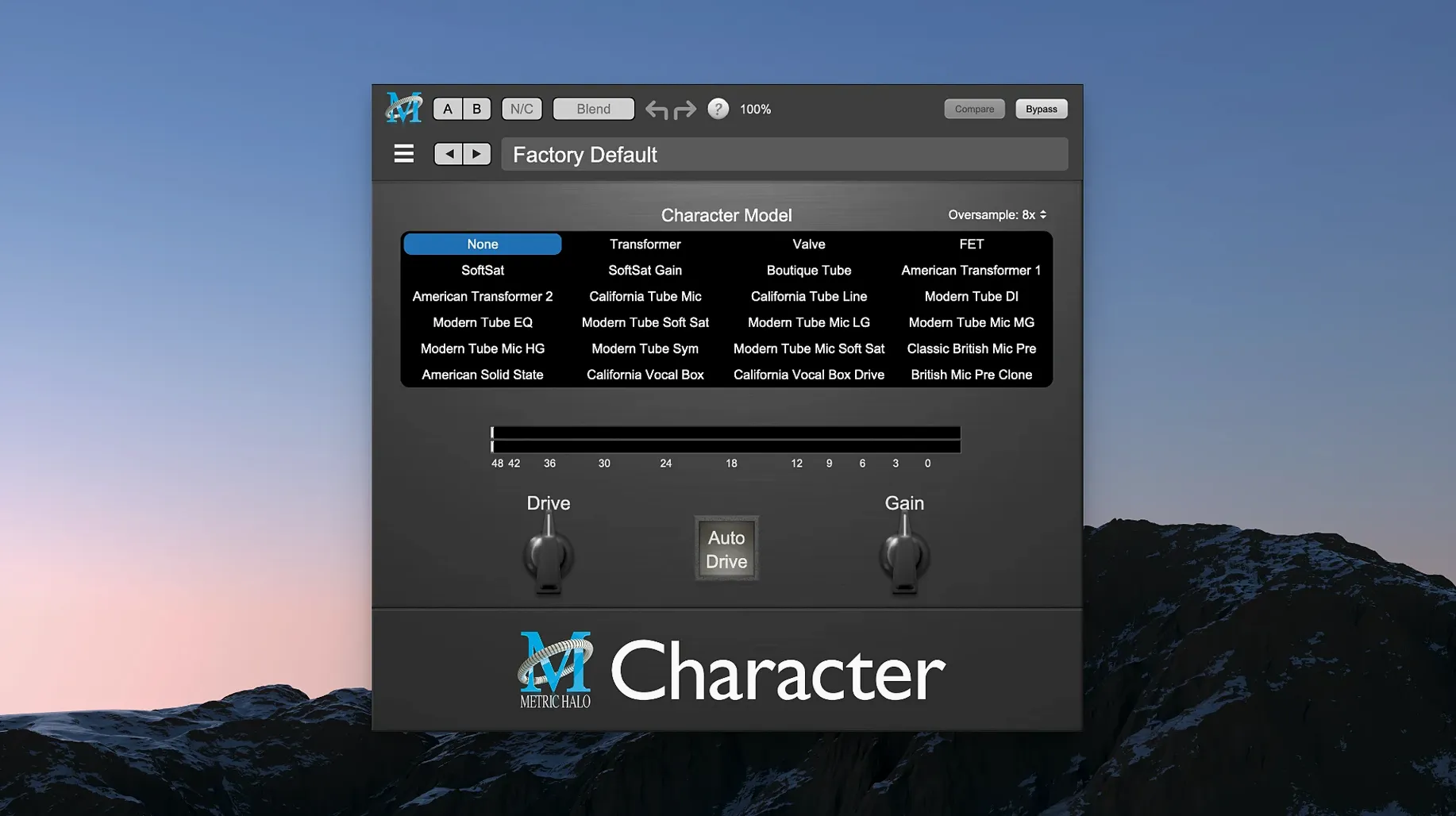
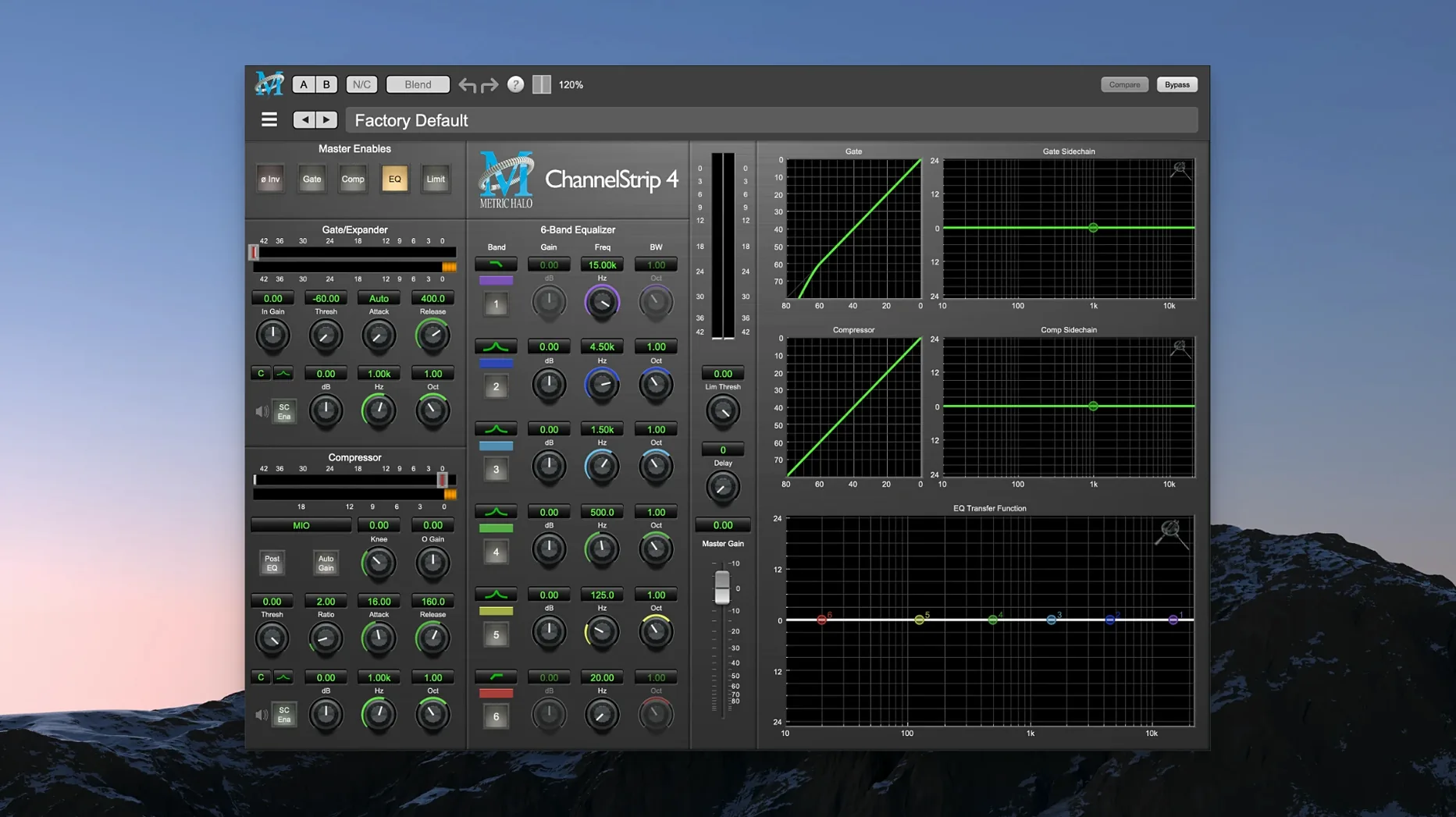
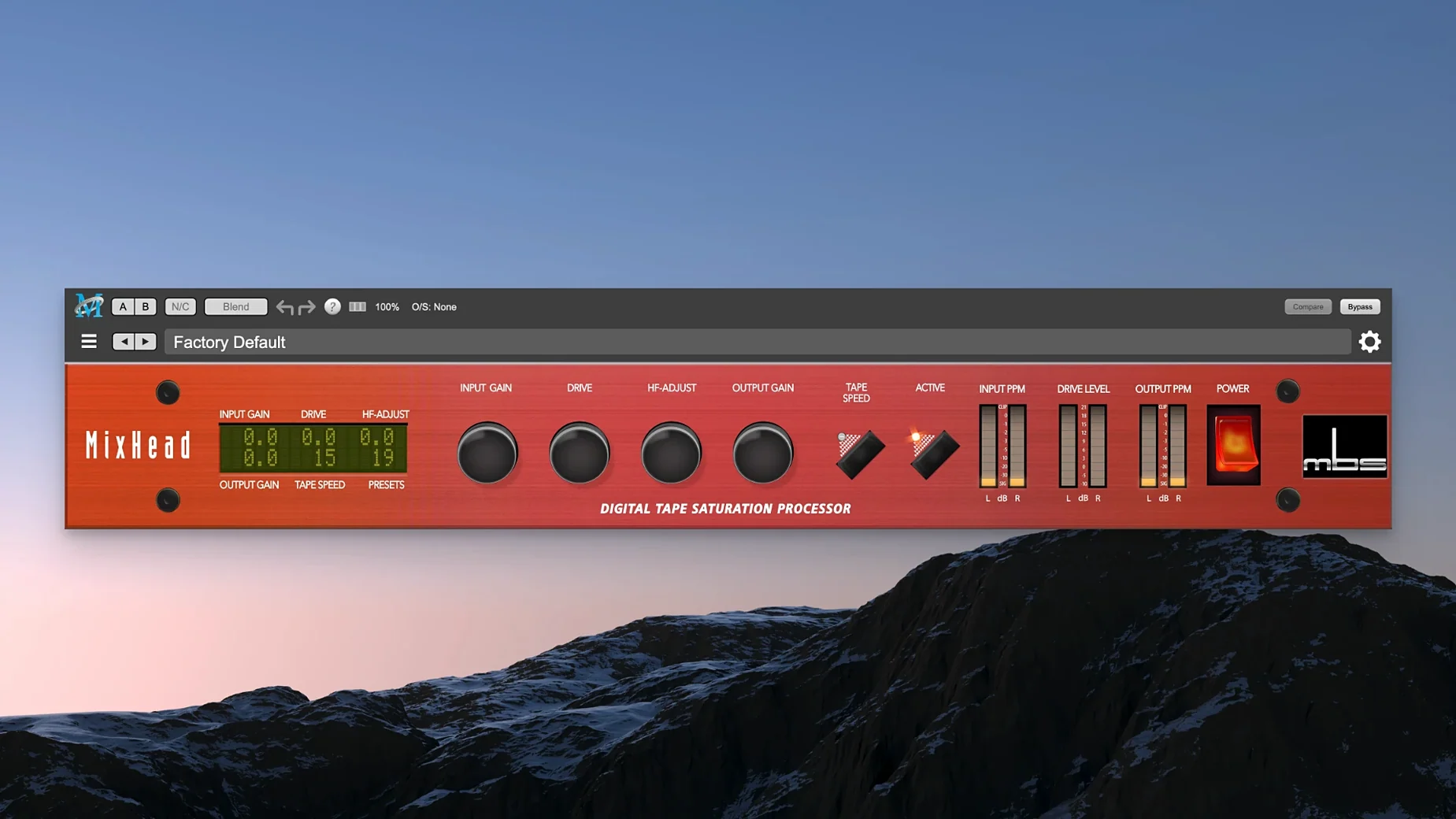
Precision De-Esser is where I usually start, especially after a long vocal tracking session when the top end feels a little too pokey. But that single tool is just one piece of a much larger picture. The Metric Halo Production Bundle pulls together a focused collection of the developer's in-house signal processing, built from the ground up for ARM architecture and ready for modern macOS workflows.
- ChannelStrip — the classic gate, expander, compressor and EQ channel in one slot, modelled on Metric Halo's hardware console heritage.
- HaloVerb — a lush, tail-heavy algorithmic reverb that goes from tight ambiences to vast, modulated spaces without choking the CPU.
- MIOStrip — an updated take on the channel strip concept with extra headroom and a cleaner spectral display for surgical work.
- Metric Halo Thump — a subharmonic synth and punch enhancer that beefs up kicks, bass lines and low-end in post.
- Precision De-Esser — narrow-band sibilance control that catches harsh esses without dulling the air above them.
- Runs natively on Apple Silicon Macs from macOS 11 onward, in AAX, VST3 and AU hosts.
The whole bundle feels cohesive in a mix session — the gain staging between plug-in instances is predictable, and the interfaces share a clean, no-nonsense layout that puts the controls you need right on the surface. Whether you're shaping a dialogue stem with the De-Esser or adding weight to a sampled kick with Thump, the sound leans musical rather than clinical.
Resist ChannelStrip on Day One — Try MIOStrip Instead
After dropping the plug-ins into your components folder and firing up a DAW, resist the urge to slap ChannelStrip on every track. Spend a session just with MIOStrip instead. Its lighter CPU draw and cleaner metering make it a gentler teacher, and you'll pick up Metric Halo's gain structure faster when you're not also wrestling with the gate's hysteresis knob.
A handful of habits that pay off early:
- Audition the De-Esser's sidechain. Hold Option while dragging the frequency band and you'll hear exactly what the plug-in is about to shave off. It's the fastest way to dial in sibilance without guesswork.
- Thump before compression, not after. Feeding a subharmonic synth into a compressor gives you a more glued low end than the reverse chain, especially on bass guitar DI tracks that need body before dynamics control.
- Save a flat HaloVerb preset on day one. Kill the modulation and set a medium hall with the tail ducked to taste. That neutral starting point beats the factory presets when you're in a hurry and just need a believable space fast.
- Match the ChannelStrip compressor's RMS mode to the source. Snappy for drums, slow RMS for vocals — the knee shapes change noticeably and it's easy to miss in the heat of a rough mix.
If you're coming from a hybrid setup, the metric ab torrent scene often circulates older Intel-only builds that don't reflect how snappy the ARM-native version feels. The 2025.05 release runs with noticeably lower latency on Apple Silicon hosts, so lean on the current build from the start.
Built for Recorded Sources and Surgical Mix Workflows
This isn't a bundle for producers who live inside a single soft synth and call it a day. It rewards people who record real sources and need surgical control without stacking six plug-ins from six different developers.
Post-production editors benefit the most from the Precision De-Esser and ChannelStrip combo. Dialogue chains that previously needed a dedicated de-esser, a surgical EQ and a transparent compressor collapse into two slots, and the gate on ChannelStrip handles noise floor cleanup without chattering on breaths.
Mixing engineers who print stems through outboard will find Thump indispensable for kick and sub reinforcement. It doesn't just generate subharmonics — it lets you shape the transient attack separately from the synthesized low end, which means you can add weight without smearing the initial hit.
Sound designers working with field recordings gravitate toward HaloVerb's longer tail algorithms. The diffusion network holds together even at absurd decay times, and the ER/tail balance control makes it easy to place a distant rumble behind a close-miked texture without muddying the foreground.
Taming Harsh Overheads and a Full Stem Session at 10 a.m.
Let's say it's 10 a.m. and I've just imported stems from a tracking session — drums, bass DI, two guitar mics, a scratch vocal and a stereo room pair. The overheads are a little harsh around 4 kHz and the kick has no weight below 60 Hz.
I instantiate MIOStrip on the drum bus first. The spectral analyzer confirms what my ears suspected: a narrow bump at 4.2 kHz from the overhead mics. I notch it out with a medium Q, then engage the soft-knee compressor at 2:1 just to catch the snare peaks. The gate stays off — no need on a bus.
Over to the kick track. Metric Halo Thump loads with the factory "Reinforce Kick" preset, but I roll the subharmonic frequency down to 48 Hz to match the song's root note and tighten the transient attack by about 15%. The kick now hits in the chest without dominating the low end, and the bass guitar still has room to breathe.
On the bass DI, a second instance of Thump with the blend set to 40% wet adds just enough harmonic saturation to make the part audible on small speakers, without turning it into a synth bass. With metric ab mac torrent builds floating around, some users have asked whether the ARM version handles the aliasing differently — in practice, the current release keeps artifacts well below the noise floor at 48 kHz and up.
Vocals get ChannelStrip with the expander engaged to pull down headphone bleed between phrases, a gentle 3 dB boost at 2.5 kHz for presence, and the RMS compressor doing 3–4 dB of reduction. The Precision De-Esser sits after the strip, catching sibilance around 7.2 kHz with a narrow bandwidth so the air above 10 kHz stays untouched.
Finally, HaloVerb on an aux send. I start from that flat preset I saved on day one, push the pre-delay to 28 ms, and dial the tail length to 2.4 seconds with a slight high-frequency roll-off. The room mics feed it at about 18% send level, just enough to glue the close mics into a single acoustic picture without sounding like a wet reverb throw.
By 10:45 the rough balance is up, the low end translates, and nothing pokes out. The bundle didn't fight me once — and that's the whole point of using a matched set of processors from a single developer.
- macOS 11 or later
- Apple Silicon Mac
- AAX, VST3 or Audio Unit host
Questions people ask
Which plug-in formats does the bundle support?
It installs AAX, VST3 and Audio Unit versions for broad DAW compatibility on macOS.
Does the Production Bundle run natively on Apple Silicon?
Yes, all plug-ins in the bundle are compiled as ARM-native applications for M-series Macs.
Can I use HaloVerb and Thump in the same project?
Absolutely. Every plug-in in the bundle can coexist in a single session, and they share a consistent gain structure across instances.
Also on readers' docks
Sign in or create an account to leave a comment.
No comments yet. Tell me how it got on with your other devices.
More in VST Plugins
See all Melodyne
5.4.2.006 VST Plugins
97 MB
Melodyne
5.4.2.006 VST Plugins
97 MB
 MiniMeters
1.0.30.358 VST Plugins
103 MB
MiniMeters
1.0.30.358 VST Plugins
103 MB
 Minuit Solstice
1.2.0 VST Plugins
117 MB
Minuit Solstice
1.2.0 VST Plugins
117 MB
 Native Instruments Massive X
1.7.1 VST Plugins
1.6 GB
Native Instruments Massive X
1.7.1 VST Plugins
1.6 GB
 Native Instruments Noire KONTAKT
1.2.1 VST Plugins
14.7 GB
Native Instruments Noire KONTAKT
1.2.1 VST Plugins
14.7 GB
 LFOTool
1.768 VST Plugins
7 MB
LFOTool
1.768 VST Plugins
7 MB
 Neural DSP Archetype Petrucci
1.0.0 VST Plugins
745 MB
Neural DSP Archetype Petrucci
1.0.0 VST Plugins
745 MB
 LANDR Vocal Bundle
2025.12 VST Plugins
447 MB
LANDR Vocal Bundle
2025.12 VST Plugins
447 MB