








Download Arturia Analog Lab V for macOS
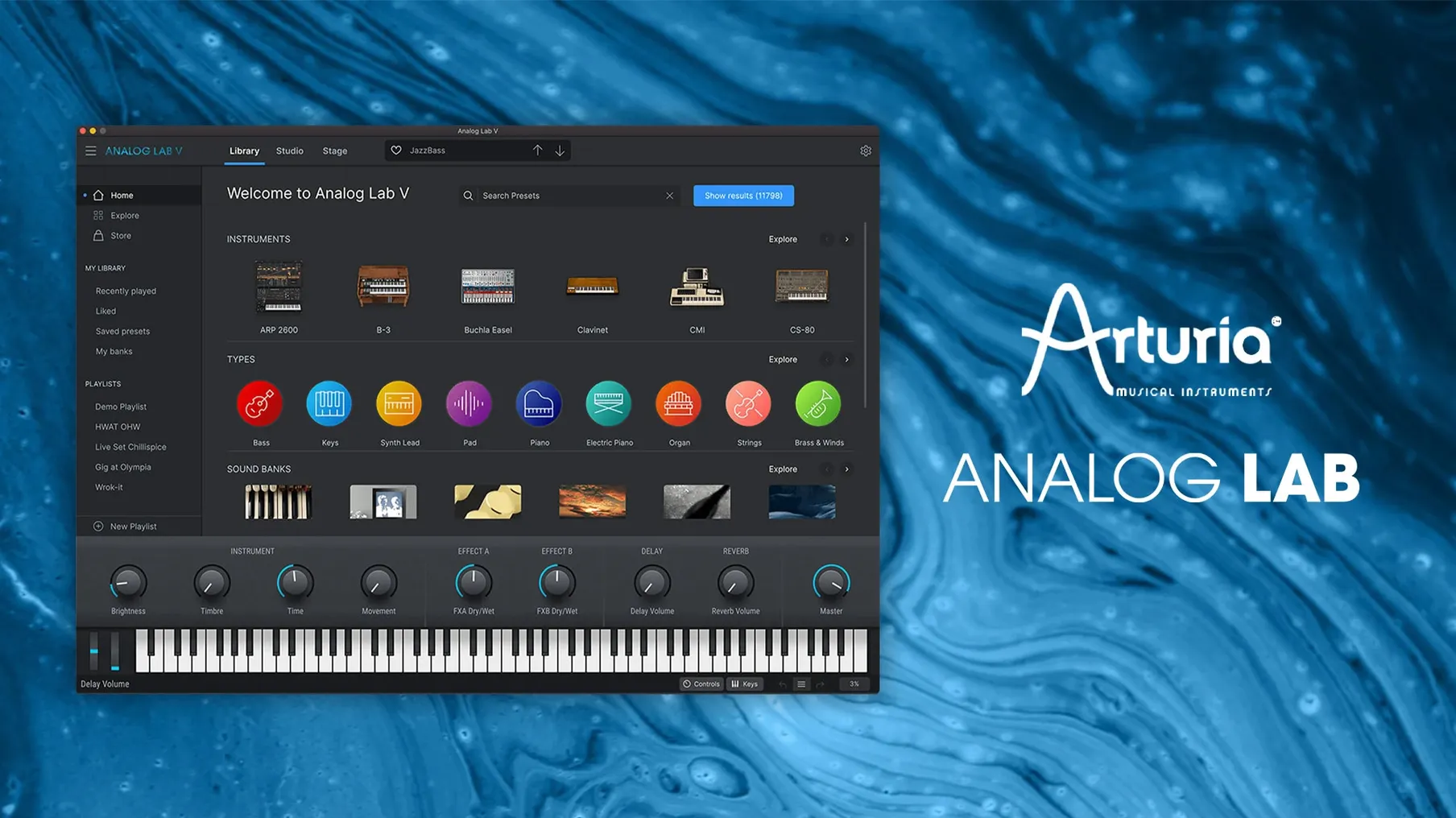
Digging through folders of patches kills the moment. You want a sound, not a file hunt. That’s where Analog Lab V comes in — it’s the player that gives you a curated key to Arturia’s whole kingdom of modeled synths and keyboards, all from a single window. No patch cables, no deep menu diving, just thousands of world-class presets sorted and ready to tweak.
The plugin works as AU, VST3, and AAX inside any DAW that hosts them, and it runs natively on both Apple Silicon and Intel Macs. If you’ve been eyeing an arturia v collection mac torrent, this is the companion that lets you browse and play sounds from that massive bundle with instant-access macro controls — filter, envelope, effects — mapped right to the surface.
Under the hood, the sound engine draws from dozens of legendary instruments, from warm analog pads to biting digital leads. The integrated browser learns what you like, so finding a thick Moog-style bass or a shimmering Juno chord stack takes seconds, not minutes. It fits a life where you hop between Logic on a MacBook and Ableton on a desktop without losing your go-to palette.
A producer's Sunday morning, one window deep
Imagine a beatmaker who spent Saturday chopping drum breaks and now has a half-finished track that needs a bassline with some growl and a pad that breathes. Sunday morning, coffee in hand, the DAW opens and Analog Lab V loads inside Logic. They click the Style filter, pick "Bass," then nudge the Character slider toward "Aggressive." Three clicks later, a Model D patch growls through the monitors. They add a second instance for pads, filter by "Analog" and "Warm," and land on a CS-80-inspired wash within thirty seconds. The song gets its spine before the coffee gets cold. That speed — jumping from a Minimoog to a Mellotron without ever touching a different plugin window — is what keeps the session moving when inspiration is fragile.
Mistakes beginners make with it
New users often treat Analog Lab V like a preset jukebox and never touch the macro controls. That’s like owning a synth with four performance wheels and only using one. The eight assignable knobs and faders sitting across the top aren’t decorative — they control filter cutoff, resonance, envelope decay, effects mix, and other parameters the sound designers picked as most expressive for each patch. Grab them early.
Another common stumble is ignoring the browser’s learning muscle. People type keywords manually every time instead of favoriting patches as they go. The heart icon exists for a reason: tap it on a dozen bass sounds you love during your first week, and by week two the browser surfaces similar tones before you ask. Beginners also overlook the "Playlists" feature for live sets — you can batch up to 128 sounds into a single list and step through them with a MIDI controller, which turns Analog Lab V into a stage-ready instrument instead of a studio plugin you keep clicking around inside.
Finally, don’t run it in standalone mode for a week and assume that’s the whole experience. The AU and VST3 versions inside a DAW let you automate every macro knob, layer instances, and save channel strip presets that recall your exact tweaks. Standalone mode is for noodling; the real integration unlocks when it sits in a session.
How it stacks up against similar instruments
Arturia Pigments comes from the same developer but plays a different role entirely. Pigments is a deep synthesis engine — wavetable, virtual analog, granular, additive — where you build sounds from oscillators up. Analog Lab V has almost no sound design depth; it’s the curated front-end to already-designed presets from the V Collection. Think of Pigments as the workshop and Analog Lab V as the showroom. If you want to sculpt a pad from scratch, Pigments is the tool. If you want the best Juno pad Arturia’s engineers ever made and you want it now, Analog Lab V gets the call.
Native Instruments Komplete Kontrol shares the same browser-first philosophy but pulls from NI’s ecosystem — Massive, FM8, Kontakt libraries — rather than Arturia’s modeled vintage synths. Komplete Kontrol leans heavily on NKS hardware integration with Light Guide keyboards. Analog Lab V integrates tightly with Arturia’s own KeyLab controllers but works universally with any MIDI gear. The sound character differs, too: NI’s palette tends toward modern and cinematic, while Arturia’s catalog skews warm, vintage, and classic-keyboard-focused. Someone chasing a 1970s Wurlitzer or a Mellotron choir instinctively gravitates here.
u-he Diva is a single-synth plugin that models analog circuits with obsessive detail. It sounds glorious, but it’s one instrument with a few hundred presets out of the box. Analog Lab V spans dozens of instrument models and thousands of presets. Diva wins on raw analog modeling depth for its specific architecture; Analog Lab V wins on breadth and instant-access variety. Many producers own both and reach for Diva when they want to tweak oscillator drift, then flip to Analog Lab V when the deadline is close and they need ten different keyboard flavors in an afternoon.
Practical tips for the first days after installing
- Favorite fifty presets on day one. Open every category — bass, keys, pads, leads, arps — and heart the ones that make you stop scrolling. This seeds the browser’s recommendation engine and builds your personal shortlist. You’ll thank yourself on day four when a client session demands fast decisions.
- Map the macro knobs to your controller immediately. Even a basic rotary encoder mapped to Filter Cutoff makes every preset feel like a living instrument. Arturia’s MIDI Learn is right-click simple: assign, twist the physical knob, save it as a template.
- Test the "Similar" button. When a patch is close but not quite right — maybe the bass is too clean — hit the Similar button near the preset name. Analog Lab V scans its library and returns siblings with related timbre, which often solves the "almost there" problem faster than tweaking.
- Set up a performance playlist before you need it. Live players should spend an hour dragging presets into a playlist, ordering them by setlist, and assigning a footswitch to advance. Rehearsing with the playlist reveals which sounds need macro adjustments under stage volume — catch that before soundcheck, not during.
- Check the audio buffer when running standalone. First-launch crackles usually mean the buffer is too low for the onboard sound chip. Bump it to 256 or 512 samples in the Audio Settings panel; the latency hit is negligible for preset browsing and the glitches vanish.
Questions people usually ask before installing
Does it work without owning the V Collection?
Yes, and this is the most misunderstood part of the product. Analog Lab V is a fully functional instrument with over 2,000 presets on its own, covering basses, pads, leads, keys, strings, brass, and percussion drawn from across Arturia’s modeled catalog. You can play, tweak, and record every one of them without a V Collection license. What changes when you add a V Collection license is the ability to open the full instrument view — clicking the "Open" button on a Mini V4 patch launches the full Mini V4 interface for deep editing. Without the license, you stay in the macro-focused Analog Lab window, which is already plenty for most production tasks. If you’re hunting an arturia v collection torrent or an arturia v collection crack mac, know that Analog Lab V is the gateway that makes those full instruments browsable and playable in one place.
Will it slow down my older Mac?
Not in a way that should scare you off. The plugin runs on any Mac that meets the macOS 11 cutoff, and Arturia’s modeling engine is efficient enough that an Intel MacBook Pro from 2015 handles a dozen instances without choking — especially if you keep the sample rate at 44.1 or 48 kHz. Apple Silicon Macs barely notice it’s there. The biggest CPU spikes come from heavy reverb and delay effects on certain presets; dial back the built-in effects mix with a macro knob and the load drops significantly.
Can I use my own samples in it?
No. Analog Lab V is a preset player for Arturia’s modeled instruments, not a sampler or a synth engine you load your own waveforms into. It plays what Arturia built. If you need sample import, that’s Pigments territory or a dedicated sampler. But the presets cover so much ground that most users find the built-in palette replaces a handful of other plugins rather than leaving them wanting.
Does it come with the classic vocoder or organ sounds?
It does. The vocoder presets draw from Arturia’s Vocoder V model, and the organ patches pull from the B-3 V modeling. You get rotating-speaker grit, drawbar-style tones, and robotic voice textures all from the same browser — no separate downloads or expansions needed. The Stage-73 and Wurlitzer V electric piano models are in there too, so the keyboard category alone justifies the download for keyboard players tired of lifeless sampled pianos. Anyone who’s grabbed an arturia torrent mac for the synths often sticks around for the keys.
- macOS 11 or later
- Apple Silicon or Intel processor
- AU, VST3, or AAX host
Also on readers' docks
Sign in or create an account to leave a comment.
No comments yet. Tell me how it got on with your other devices.
More in VST Plugins
See all Arturia Augmented STRINGS
2.0.0 VST Plugins
4.9 GB
Arturia Augmented STRINGS
2.0.0 VST Plugins
4.9 GB
 Arturia Augmented Voices
2.0.2 VST Plugins
4.8 GB
Arturia Augmented Voices
2.0.2 VST Plugins
4.8 GB
 Arturia DX7 V
11.13.4 VST Plugins
475 MB
Arturia DX7 V
11.13.4 VST Plugins
475 MB
 Arturia Efx AMBIENT
1.0.0 VST Plugins
285 MB
Arturia Efx AMBIENT
1.0.0 VST Plugins
285 MB
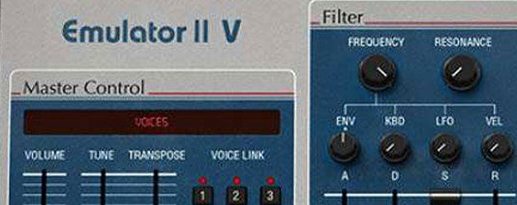 Arturia Emulator II V
1.6.2 VST Plugins
700 MB
Arturia Emulator II V
1.6.2 VST Plugins
700 MB
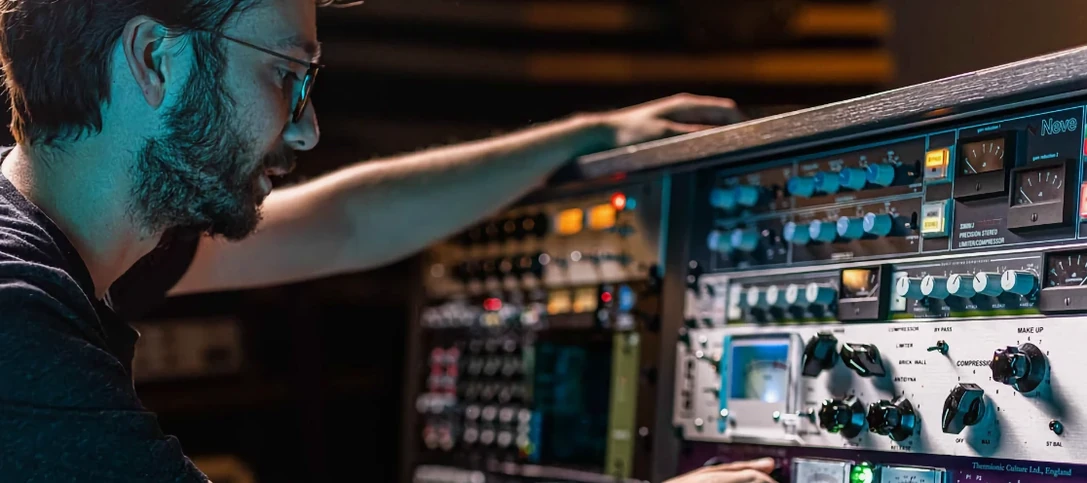 Arturia FX Collection
2026.02 VST Plugins
16.1 GB
Arturia FX Collection
2026.02 VST Plugins
16.1 GB
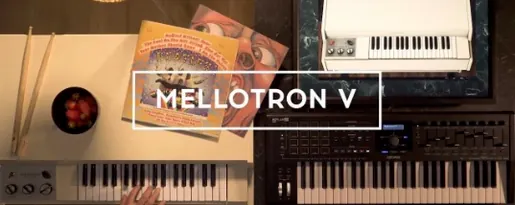 Arturia Mellotron V
1.9.3 VST Plugins
2.1 GB
Arturia Mellotron V
1.9.3 VST Plugins
2.1 GB
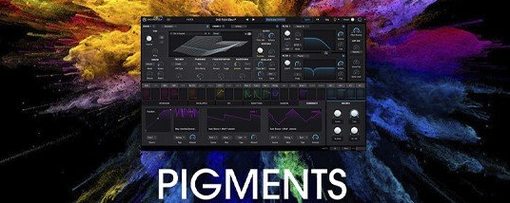 Arturia Pigments
7.0.1-6772 VST Plugins
1.8 GB
Arturia Pigments
7.0.1-6772 VST Plugins
1.8 GB