








Download Addictive Keys for macOS
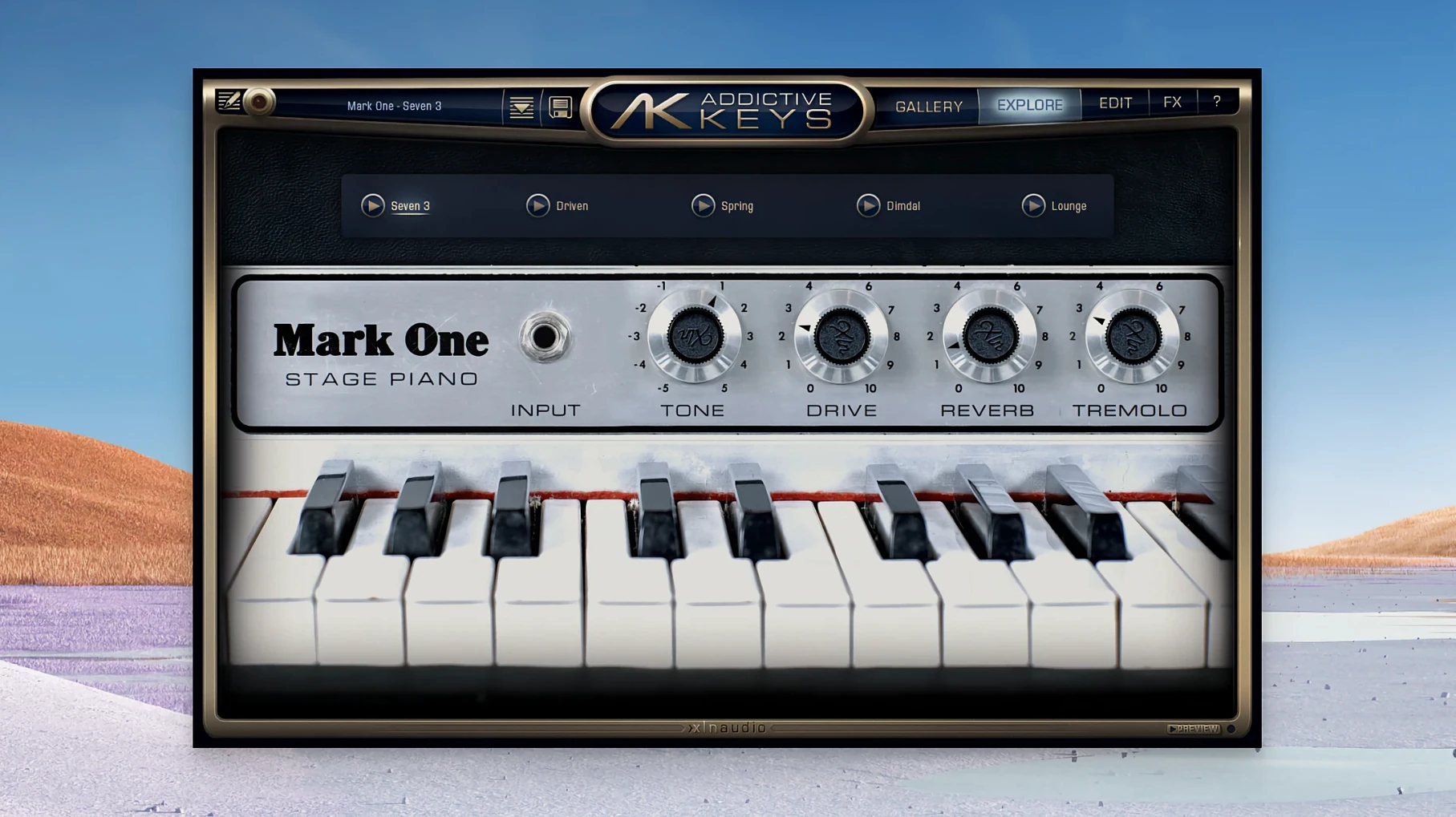
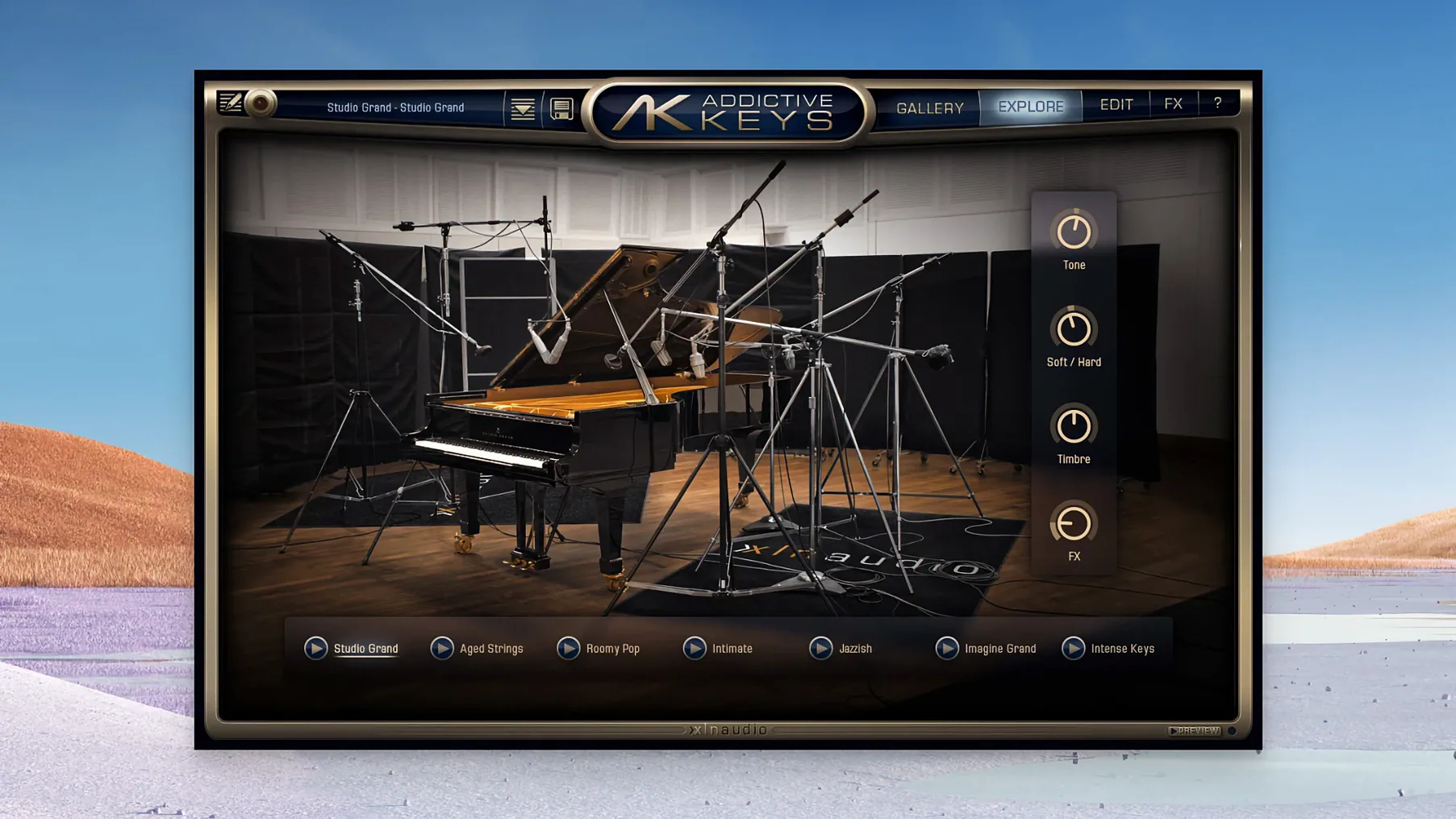
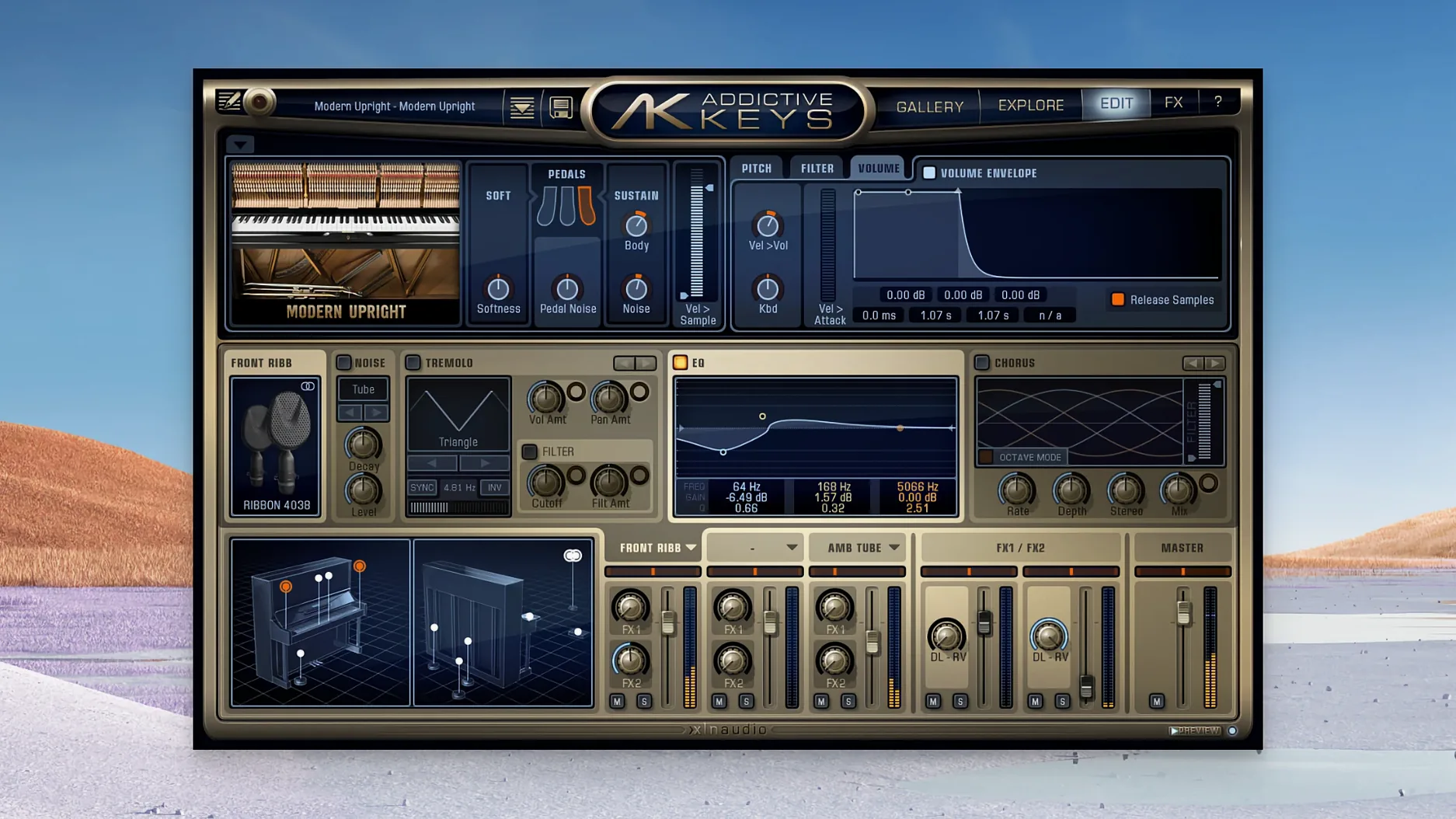
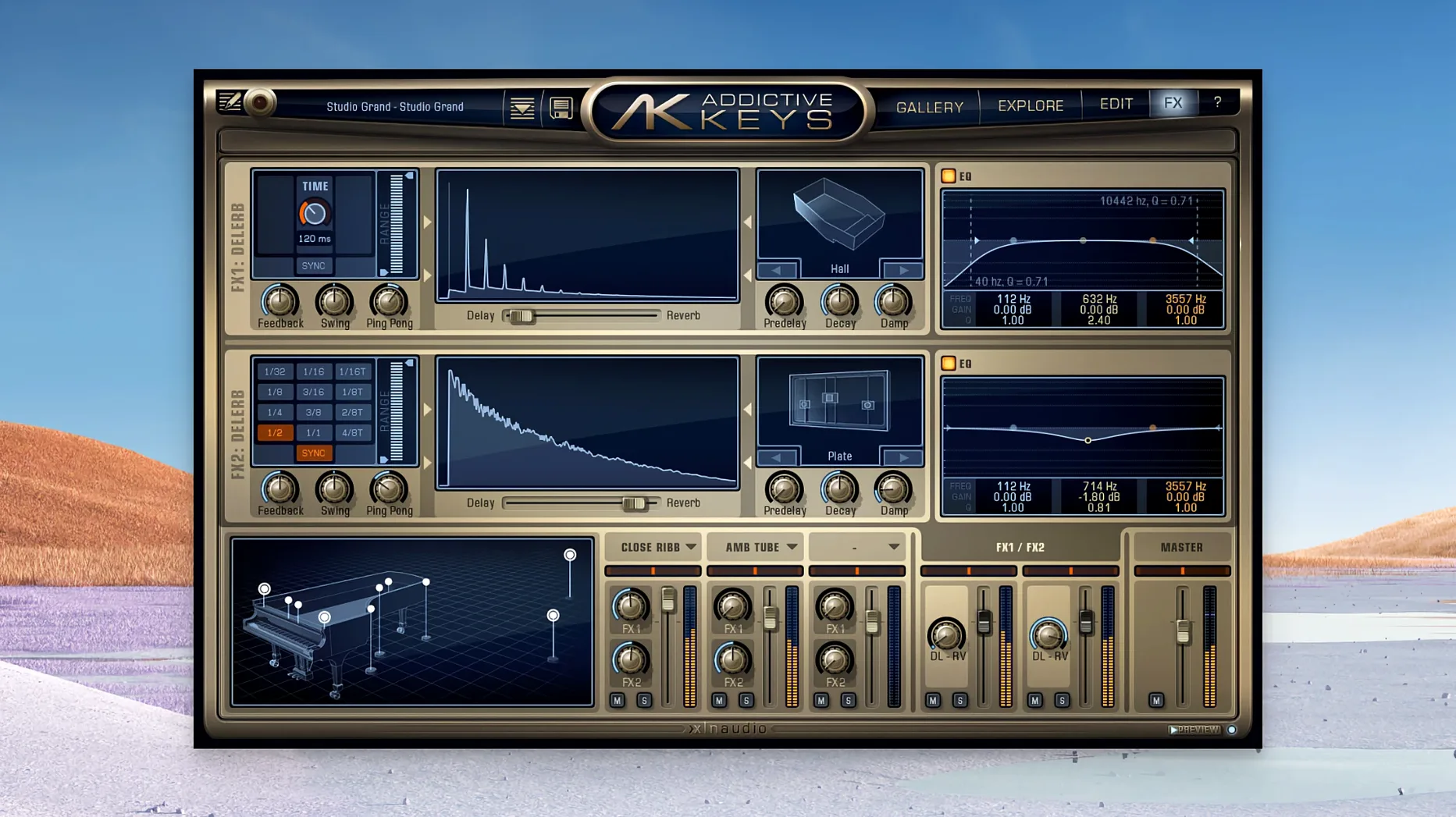
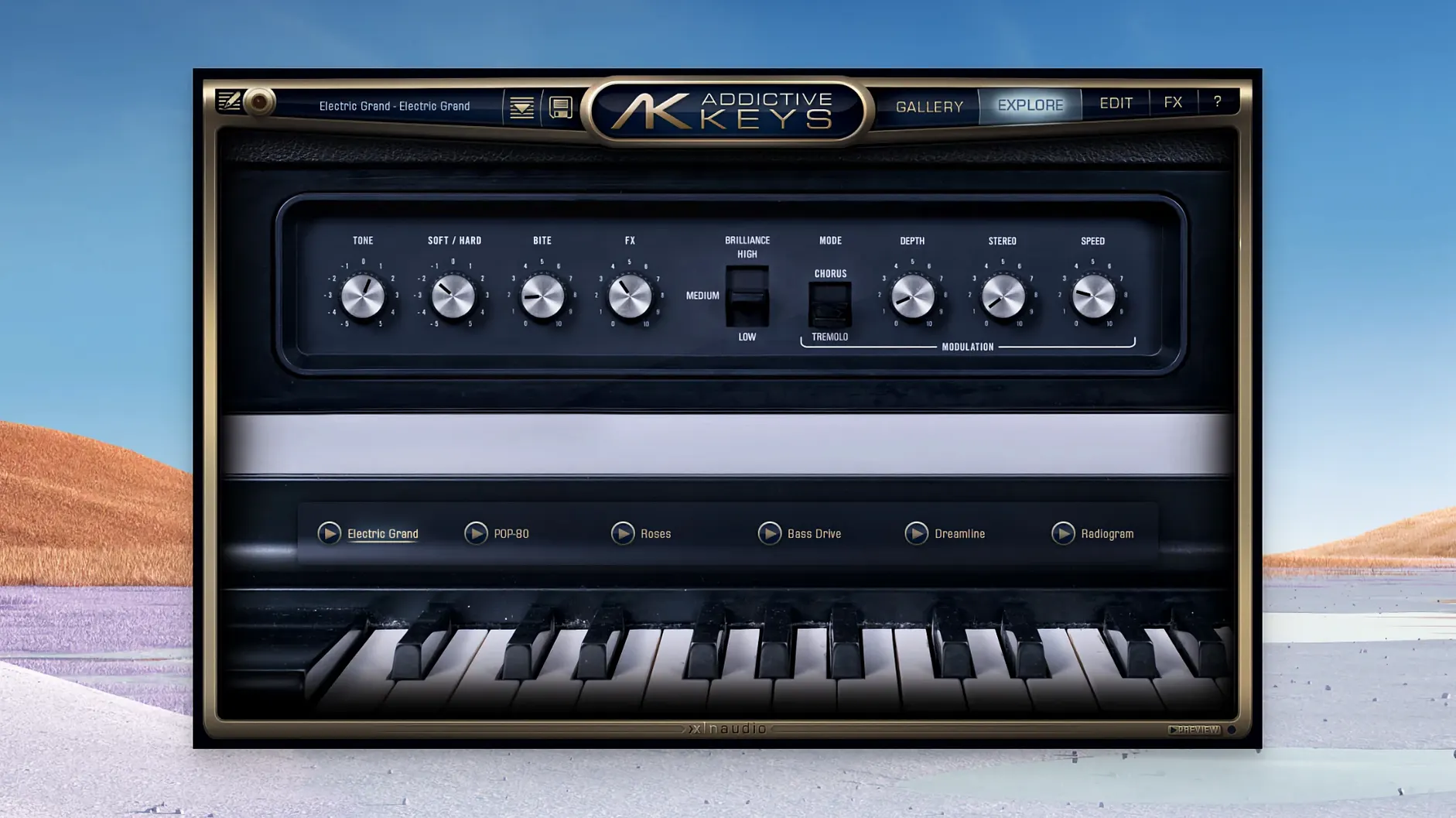
Session players and producers who keep a MIDI controller on the desk tend to reach for Addictive Keys 1.7.3 when they need character, not just a generic piano sound. The Complete Collection bundles Studio Grand, Modern Upright, Mark One, and Electric Grand — two acoustics and two electrics recorded through a mix of modern and vintage outboard gear that gives each instrument a distinct footprint.
- Mic perspective first. Before touching EQ, I pick my blend of close, room, and ambient microphones. Moving a fader here changes the physicality of the sound more than any reverb plug-in can.
- Shape the tone in the engine. The timbre, compression, and tone controls are modeled per piano. On the Mark One — a Rhodes Mk. 1 stage piano — I'll often push the bell-like attack and back off the sustain for a barky, percussive thing that sits in a busy mix.
- Work the pedal and velocity map. The key response curves let me match the plug-in to a weighted hammer-action board or a synth-action controller, so the dynamic layers open up exactly where my fingers expect them.
- Load it anywhere. It runs as a VST, AU, or AAX plug-in in any major DAW, or in standalone form for quick practice sessions.
What keeps Addictive Keys in rotation isn't the preset list — it's how quickly you can pull a raw DI-like signal or a fully produced tone out of the same instrument. It rewards players who tweak, not just browse.
A Warehouse of Rare Keyboards Versus a Personal Sonic Stamp
Addictive Keys 1.7.3 sits in a crowded corner of the plug-in world, so comparisons are inevitable. Keyscape by Spectrasonics brings a warehouse of rare keyboards to the table — over 500 sounds — and the detail is almost absurd. But its footprint is enormous, and it demands a fast SSD. Addictive Keys feels lighter on its feet. The four pianos in the Complete Collection load faster and lean harder into character rather than sheer volume of choice.
Pianoteq uses physical modeling instead of samples, so you get a tiny install and endless tweakability, but the tone can feel synthetic to players who grew up on recorded pianos. Addictive Keys sticks to multi-sampled instruments, and the difference shows in the sustain and room bloom of the Studio Grand. UVI Key Suite splits the difference with a broad palette of keyboards, but its acoustic pianos don't have the same front-to-back soundstage that the mic-blending engine in Addictive Keys delivers. If you want a deep, focused set of pianos that respond to shaping rather than a thousand presets, the Complete Collection holds its own.
Intimate Indie Ballad on a Yamaha U3
Picture a late-night writing session. The track is a half-finished indie ballad, and the chorus needs something intimate but not precious. I load the Modern Upright — based on a Yamaha U3 — into Logic as an AU instrument. The default preset is fine, but the close mics feel too clean for this song. I pull the room fader up about forty percent and dip the ambient mic back to twenty, so the felt hammers have breath around them without turning distant.
Next I open the engine panel and roll the tone knob slightly left, pulling out some of the upper-mid clang that uprights can push into a dense vocal mix. Compression stays gentle — just enough to glue the dynamic layers. The velocity curve gets a nudge toward the softer end because I'm playing a semi-weighted controller tonight, and I want the quiet notes to trigger the lower sample layers without having to tiptoe. Within two minutes the piano sits behind the vocal like it was tracked in the same room, not dropped in from a plug-in.
Flatten the Velocity Curve for Synth-Action Keys
- Velocity curve. The default curve assumes a weighted controller. On a synth-action keyboard or older MIDI board, flattening it slightly prevents the top dynamic layers from jumping out unpredictably. This one adjustment does more for realism than any other.
- Mic mix presets. Save your own. The factory mixes are starting points, but a blend that works for a sparse ballad will wash out in a full arrangement. I keep three go-to mic scenes per piano and switch between them before reaching for EQ.
- Pedal noise and key release samples. These are on by default and add realism, but in a busy pop or electronic mix they can muddy the transients. Dial them back from the engine page — the sound tightens up immediately without losing the instrument's personality.
- macOS 10.13 or later
- Apple Silicon and Intel native
Questions people ask
Which pianos are included in Addictive Keys Complete Collection?
The Complete Collection bundles all four instruments: Studio Grand, Modern Upright, Mark One, and Electric Grand.
Can I use Addictive Keys without a DAW?
Yes, the manual notes the software is also available in standalone form, so you can open it directly for practice or live playing.
What is the Mark One instrument modeled after?
The Mark One is based on a Rhodes Mk. 1 stage piano, with controls for tine attack, sustain, and stereo vibrato.
Also on readers' docks
Sign in or create an account to leave a comment.
No comments yet. Tell me how it got on with your other devices.
More in VST Plugins
See all Addictive Drums 2
2.9.1 VST Plugins
14.5 GB
Addictive Drums 2
2.9.1 VST Plugins
14.5 GB
 Ample Guitar M
4.1.0 VST Plugins
5.2 GB
Ample Guitar M
4.1.0 VST Plugins
5.2 GB
 Ample Sound Ample Guitar LP III
4.0.1 VST Plugins
9.2 GB
Ample Sound Ample Guitar LP III
4.0.1 VST Plugins
9.2 GB
 Arturia Analog Lab V
5.12.0 VST Plugins
4.4 GB
Arturia Analog Lab V
5.12.0 VST Plugins
4.4 GB
 Arturia Augmented STRINGS
2.0.0 VST Plugins
4.9 GB
Arturia Augmented STRINGS
2.0.0 VST Plugins
4.9 GB
 Arturia Augmented Voices
2.0.2 VST Plugins
4.8 GB
Arturia Augmented Voices
2.0.2 VST Plugins
4.8 GB
 Arturia DX7 V
11.13.4 VST Plugins
475 MB
Arturia DX7 V
11.13.4 VST Plugins
475 MB
 Arturia Efx AMBIENT
1.0.0 VST Plugins
285 MB
Arturia Efx AMBIENT
1.0.0 VST Plugins
285 MB