








Download Affinity Designer for macOS
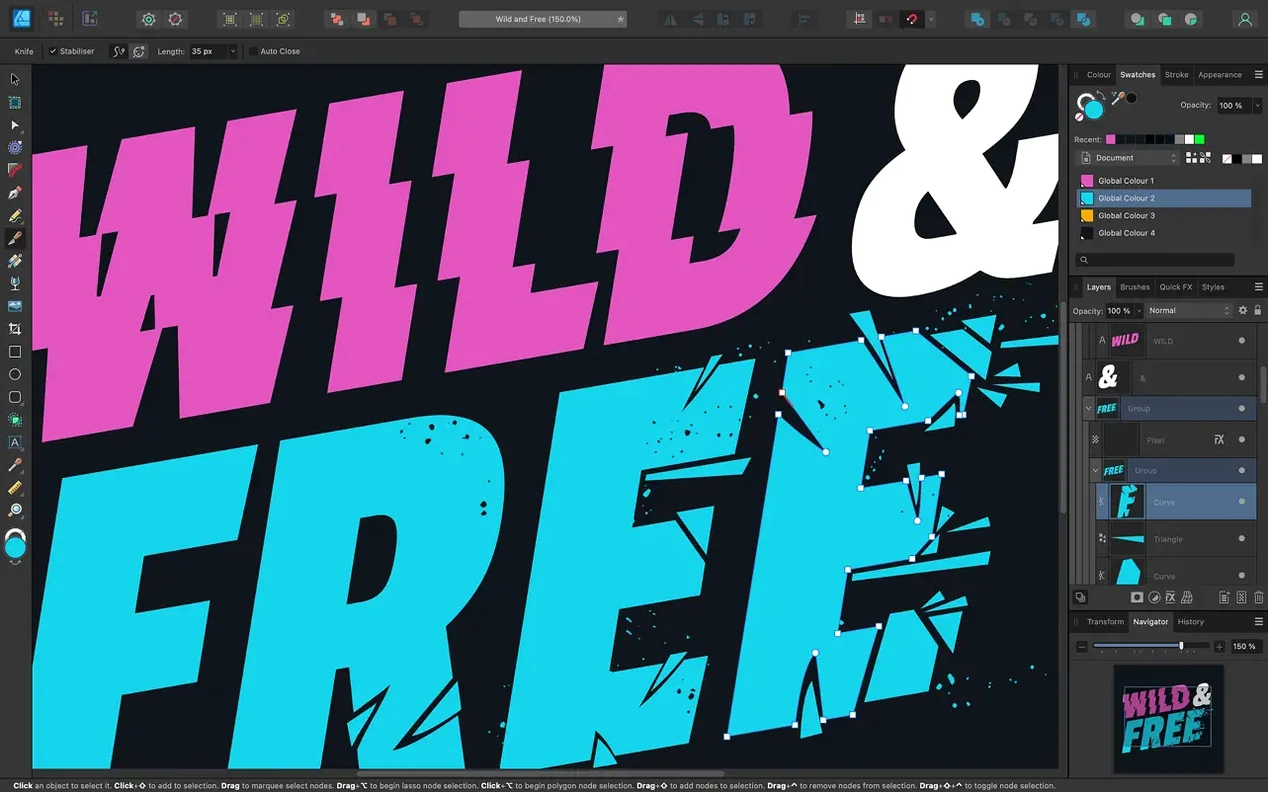
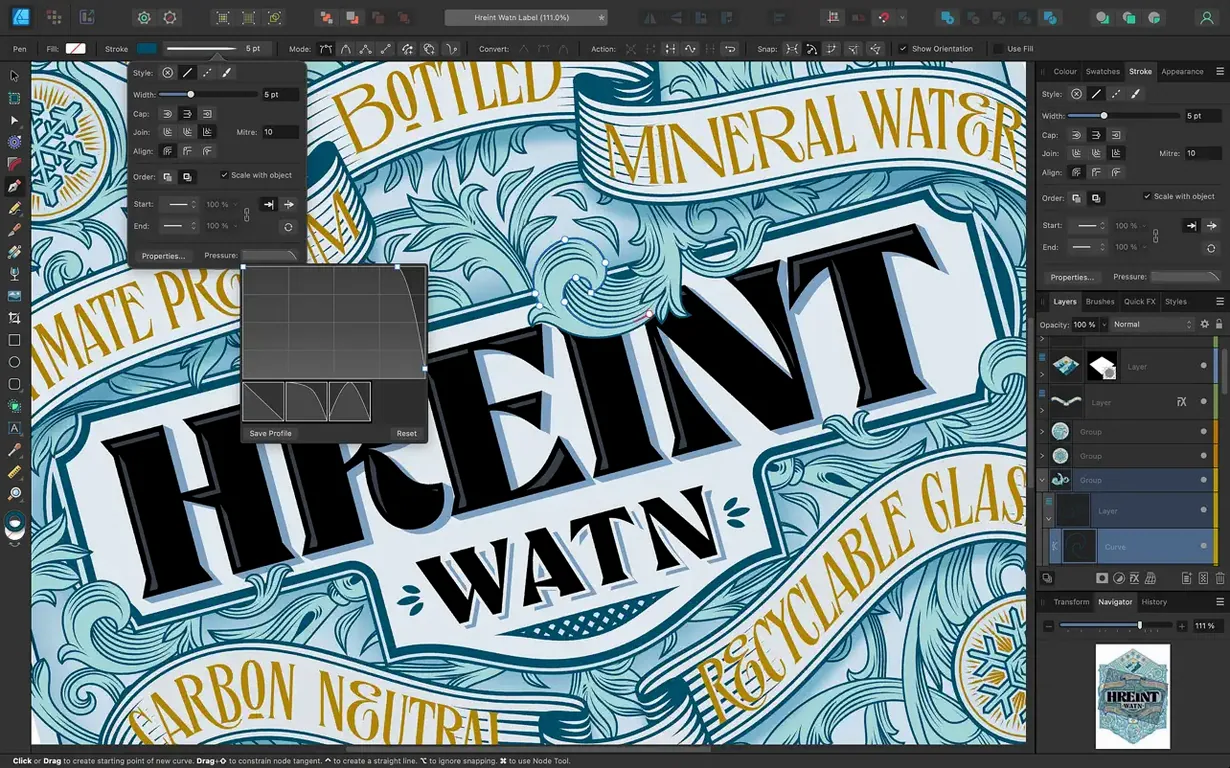
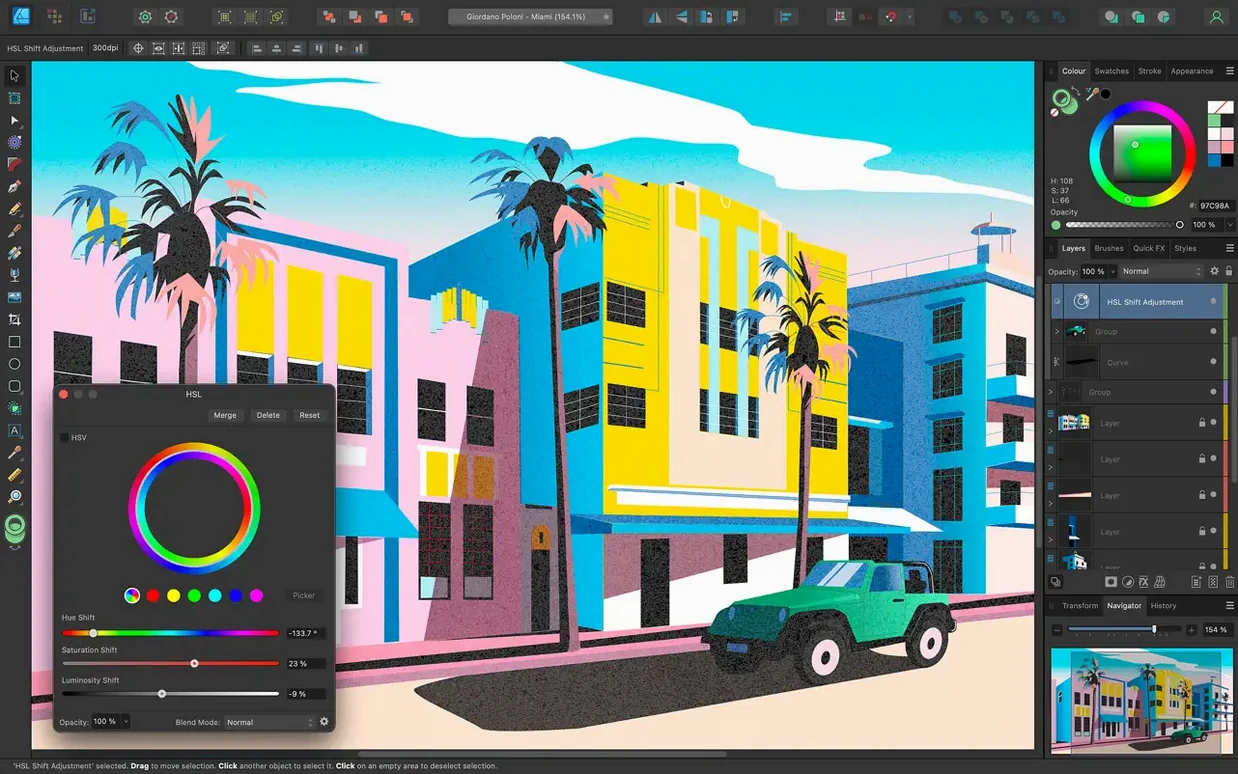
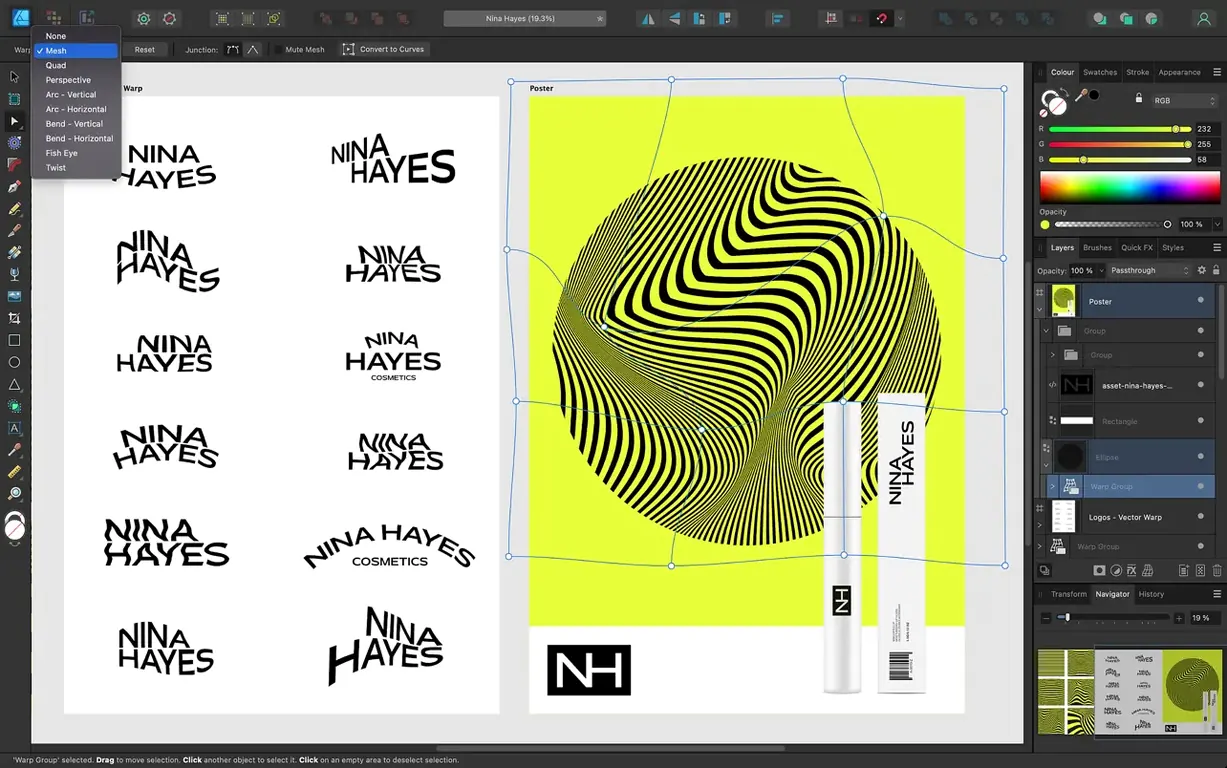
Affinity Designer supports unlimited artboards, which is a welcome departure from apps that make you count them. You can lay out an entire brand refresh or a multi-screen app flow on one vast canvas without the software ever telling you you've hit a ceiling. It handles CMYK, LAB, RGB, and grayscale color models with full ICC profile support, so the jump from screen to print doesn't feel like a gamble.
The Pen, Node, and shape tools are standard fare for vector work, but the brush and pencil stabilization is what makes freehand curves actually usable with a mouse or trackpad. On a Mac, it hooks into Metal, OpenGL, Grand Central Dispatch, and Core Graphics, plus it still nods to the Touch Bar and Force Touch trackpad if you're hanging onto older hardware.
People often search for an affinity designer mac crack or a torrent thinking they'll kick the tires first, and the real install is just as easy. You mount the disk image, run a quick Terminal command to skip the Gatekeeper dance, drag the app into Applications, and you're in. That straightforward setup matters when you just want to see if the tool clicks.
Version 2.6.5 is a stability release, but the 2.6 cycle brought the real goods: a toggle for marquee select intersection via Command, Stroke Width Tool profiling with a reset option, and refined Pencil tool behavior. If you regularly switch between precise node edits and looser sketching, those tweaks trim a lot of frustration.
Sketch, Illustrator, Inkscape: Where Affinity Lands After Hour One
If you've been hunting an affinity designer torrent or a cracked copy, chances are you've also sized up Sketch, Illustrator, and maybe Inkscape. Each has its own flavor, and the differences become obvious once you're past the first hour of clicking around.
Adobe Illustrator is the old guard. It does everything, and its integration with After Effects and InDesign can be a genuine advantage if you're deep in that ecosystem. The downside is weight — Illustrator feels like it was built for a workstation circa 2006 and then had features bolted on ever since. Affinity Designer stays lean. Pan and zoom at 60 fps isn't a bullet point you notice in a screenshot, but after a day of wireframing, the responsiveness just melts into the background. Illustrator still chugs on complex artboards unless you have a fairly recent Mac.
Sketch went all-in on UI design and never really looked back. Its component libraries and prototyping links are slick, but it's a one-trick pony next to Designer's dual raster-and-vector workspace. If your day involves logo work in the morning and texture painting in the afternoon, Sketch asks you to buy a second app. Affinity doesn't. It also handles print-ready CMYK without plugins, which Sketch has sidestepped entirely.
Inkscape is the free option people often pit against an affinity designer mac crack when they're testing the waters. It's capable and open-source, but the macOS build has always felt like a Linux app wearing a trenchcoat. Menus lag, the interface ignores native conventions, and working with PSD or AI files is a coin toss. Designer opens those formats directly and preserves layers and effects well enough that you won't dread client handoffs.
Coffee Brand from Brief to Style Guide in Affinity
Imagine a freelance identity designer who's just landed a small coffee roaster as a client. The brief calls for a logomark, a wordmark variant, packaging for three bean varieties, and a single-page style guide the client can hand to a web developer later.
She starts with six artboards in a single document — rough pencil sketches on the first two, vector explorations on the next three, and a color-study board where she drags swatches between CMYK and Pantone-referenced palettes. The Pencil tool's new stabilization means a few loose strokes with a trackpad turn into usable letterform ideas without switching to an iPad. She drops a high-res photo of burlap onto a raster layer, masks out the logo area, and toggles back to vector mode to refine the type lockup. No export, no round-tripping.
When the client emails an old EPS of a tagline from a previous designer, she drags it onto an artboard and finds the text still editable — not outlines, not a flattened mess. She sets the final wordmark on a curved path above the logomark, tweaks OpenType ligatures for the ampersand, and sends a single PDF with all six artboards for review. The whole file stays under 40 megabytes. That's the kind of workflow where Affinity Designer's breadth quietly pays the rent.
When Selections Jump Before You Click: The Marquee Fix
New users tripped up by an affinity designer mac torrent sometimes hit the same few walls. The fixes are straightforward once you know them.
Selection feels unpredictable. By default, the Move Tool selects objects the moment the marquee brushes them. If you'd rather it selected only objects fully inside the rectangle, hold the Command key while dragging. That toggle was refined in the 2.6 release, so muscle memory from older versions might need a refresh.
Stroke widths jump when you resize objects. The Stroke panel has a "Scale with object" checkbox that's easy to overlook. If your lines go fat or skinny after a transform, check that box — or uncheck it — depending on what you intended. The Stroke Width Tool's new profiling also means you can fix inconsistent tapering without rebuilding the curve.
Imported PSDs look wrong. Affinity Designer reads PSDs, but adjustment layers and smart objects don't always translate cleanly. If a client file arrives looking flat, open it in Affinity Photo first (the suite companion), tweak the layer stack there, then bring it into Designer via the "Edit in Designer" command. The two apps share a file format, so this is painless.
Performance dips on huge canvases. Even with Metal acceleration, a dozen artboards full of high-resolution raster brushes can get sluggish. Switch the document view mode to "Pixel" only while working on raster details, then flip back to "Vector" for layout. It avoids the engine trying to render both pipelines simultaneously.
What the 2.6 Era Changed in Everyday Use
Version 2.6.5 is a quiet maintenance release, but the 2.6 cycle itself reshaped a few daily habits. The Pencil tool improvements aren't flashy — they're about fewer accidental sharp nodes and smoother curve previews while you draw. If you sketch letterforms or icons by hand, you'll notice the line trusts your intent more and second-guesses your wobbles less.
The Stroke Width Tool gained a Reset Profile command. Anyone who's mangled a variable-width stroke and had to manually drag every point back to uniform will appreciate a one-click escape hatch. Paired with better profiling handles, it's now feasible to use the tool on production work instead of just experiments.
The marquee intersection toggle via Command is the kind of change you don't seek out but start relying on within a week. It turns what used to be a trip to the preferences dialog into an on-the-fly modifier key, which matters when you're selecting complex overlapping shapes and need both behaviors in the same session.
Bug-fix releases like 2.6.5 don't make headlines, but they're the reason the app stays viable for people who might otherwise go looking for an affinity designer 2 torrent to test a cracked version. A stable build means fewer crashes during exports, fewer artifacts with Metal rendering on Apple Silicon, and a tool that simply gets out of the way. That's the whole bargain.
Version 2.6.5 focuses on bug fixes and stability. The earlier 2.6 release added a Command or Ctrl key toggle for marquee select intersection behaviour, improvements to the Stroke Width Tool including a Reset Profile option, and refinements to the Pencil tool for smoother drawing.
- macOS 10.15 Catalina or later
- Intel or Apple Silicon Mac
Questions people ask
Which macOS versions does Affinity Designer support?
It runs on macOS 10.15 Catalina and later, with native support for both Intel and Apple Silicon Macs.
Does Affinity Designer handle print-ready color workflows?
Yes, it works in CMYK, LAB, RGB, and grayscale and supports ICC color management profiles for accurate proofing.
What OpenType features are available?
The app supports standard OpenType text features, giving you control over ligatures, stylistic alternates, and number spacing directly in your designs.
Also on readers' docks
Sign in or create an account to leave a comment.
No comments yet. Tell me how it got on with your other devices.
More in Mac Apps
See all Adobe XD
59.0.12 Mac Apps
2.6 GB
Adobe XD
59.0.12 Mac Apps
2.6 GB
 Affinity Photo
2.6.5 Mac Apps
789 MB
Affinity Photo
2.6.5 Mac Apps
789 MB
 Affinity Publisher
2.6.5 Mac Apps
783 MB
Affinity Publisher
2.6.5 Mac Apps
783 MB
 Updated AI Transcription
2.16 Mac Apps
5.1 GB
Updated AI Transcription
2.16 Mac Apps
5.1 GB
 Adobe Premiere Rush
1.5.62 Mac Apps
1.6 GB
Adobe Premiere Rush
1.5.62 Mac Apps
1.6 GB
 Aiarty Image Enhancer
3.14 Mac Apps
129 MB
Aiarty Image Enhancer
3.14 Mac Apps
129 MB
 Updated Adobe Premiere Pro
26.5.2 Mac Apps
4.1 GB
Updated Adobe Premiere Pro
26.5.2 Mac Apps
4.1 GB
 Updated Adobe Photoshop
27.11 Mac Apps
3.5 GB
Updated Adobe Photoshop
27.11 Mac Apps
3.5 GB