








Download Synapse Audio The Legend HZ v2.0.2.R1 for macOS
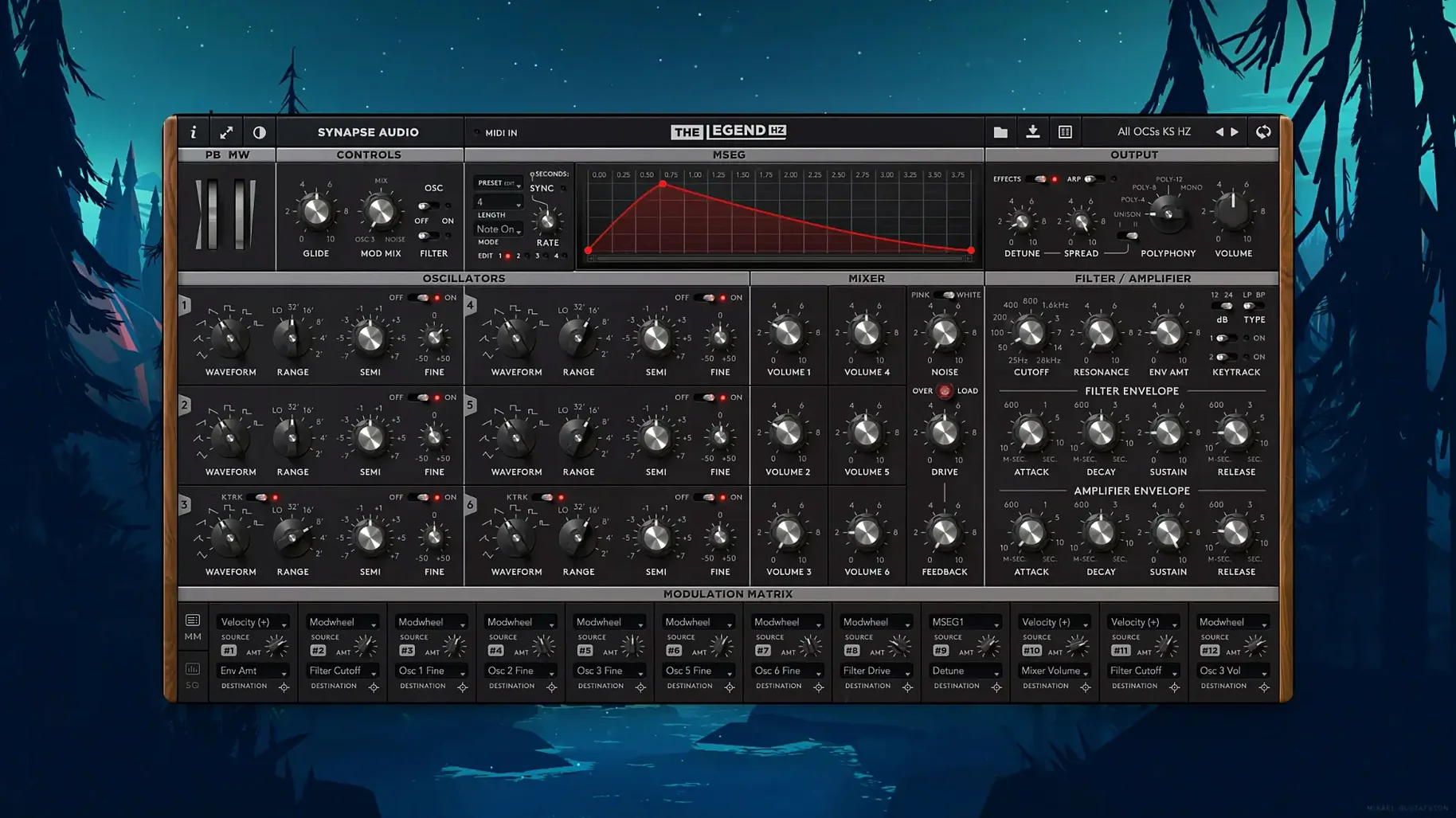
Engaging the new paragraphic EQ on the back panel changes how quickly you can fix a muddy pad.
Patch recall across generations — loading a favorite soundbank from the original The Legend is straightforward; the HZ reads them natively, so your custom library moves forward with you.
Unison mode on a bass bus — stacking the six VA oscillators here gives you that wide, slightly detuned weight that sits under a kick without eating the low-end headroom.
The 400 hz frequency band — pulling this down by a couple of dB on a synth stem clears the cardboardy buildup that clashes with guitars and vocals, leaving the fundamental warmth intact.
Arpeggiator as a writing tool — running a simple chord through the sequencer on an insert track spits out ideas faster than playing them in; useful when a verse feels static.
MPE on a lead track — sliding between notes with a compatible controller turns a plain sawtooth patch into something vocal, perfect for a bridge melody that needs to breathe.
Paragraphic EQ removes a plugin from your chain
The updates in 2.1 aren't splashy, but they quietly reshape how you reach for the plugin during a session. The paragraphic EQ on the back panel is the kind of addition that saves you a separate EQ insert — you can notch out a ringing frequency or shelf-boost the air on a pad without leaving the synth window. That's a genuine speed gain when you're auditioning patches and a patch is almost right but has a boxy low-mid hump.
Compressor saturation landed in the same update, and it's the sleeper feature. Pushing the compressor a little harder introduces a soft clip that behaves more like analog gain-staging than a transparent dynamics processor. On a pluck sound, it rounds off transients without dulling the attack — the kind of subtle glue that used to require routing to a separate bus.
MTS-ESP microtuning support opened the door for film composers working outside Western 12-tone scales. Loading a Bohlen-Pierce tuning table into The Legend HZ and pairing it with the 914 Fixed Filter Bank's resonant peaks produces textures that feel custom-built for tension underscoring, no sample library required.
The extra 50 presets from Kevin Schroeder lean cinematic — lots of evolving pads and dark, modulated bass patches that sit well under dialogue. They're not filler; a few of the "MW" (mod wheel) tagged patches transform so dramatically when pushed that they double as two sounds in one slot.
In Practice: A Sound Designer's Afternoon
Imagine a sound designer tasked with creating a signature alarm sound for a sci-fi game — something that starts as a low pulse and climbs into a shrieking overtone. They open The Legend HZ on an empty instrument track, initialize a patch, and stack three of the six oscillators at octave intervals. The 914 Fixed Filter Bank gets dialed to emphasize the 1.6 kHz and 4 kHz bands, creating a hollow, resonant cavity that already sounds mechanical.
Then they assign the mod wheel to slowly sweep the filter bank's mix and route the arpeggiator to cycle through a minor-second tritone pattern at 16th notes. Unison mode fattens the sound without making it phasey — the voice spread sits wide enough for stereo interest but narrow enough to survive a club PA. When the compressor saturation is driven harder on the back panel, the alarm gains a distorted edge that implies urgency without clipping the output. The whole design takes twenty minutes and stays entirely inside one plugin window, which matters when the project delivery deadline is the same afternoon.
Factory presets voiced for Zimmer-style hybrid scoring
Film composers working with Hans Zimmer-style hybrid scores benefit immediately — the factory presets are voiced for that world, and the Fixed Filter Bank mimics the hardware units that defined scores like Dune and Inception. Dropping The Legend HZ into a template alongside orchestral libraries creates a modern tension layer without third-party processing chains.
Keyboard players using MPE controllers find the per-note expression unusually responsive for a subtractive synth. Because the oscillators and filters respond to polyphonic aftertouch and slide data, a ROLI Seaboard or LinnStrument turns a simple triangle wave patch into a performance instrument that bends and swells naturally, no automation lanes required.
Producers maintaining backward-compatible session archives have a practical reason to prefer it. Projects that contain instances of the original The Legend open with The Legend loaded; The Legend HZ sits alongside it as a separate plugin. That means you can replace older parts gradually, swapping in the HZ only where you need the extra oscillators or the filter bank, without breaking older mixes.
Unison overload turns lush chords into noise
Overloading unison on polyphonic patches. Six oscillators times twelve voices of polyphony times full unison — that's a CPU spike waiting to happen, and it often turns a lush chord into undefined noise. Start with two or three voices of unison and only increase spread when the part plays solo.
Ignoring the Fixed Filter Bank's gain staging. Crank multiple bands and the output level climbs fast, sometimes into the compressor saturation before users realize why the patch suddenly sounds "fuzzy." Back off the input trim to the filter section before boosting bands, or use the new paragraphic EQ after the filter to compensate.
Assuming every preset needs the 400 hz frequency range cut. While pulling that band down clears room in a busy mix, many of Kevin Schroeder's presets are already sculpted for that zone. Cutting further can thin out the body of a pad that was designed to fill the center of a sparse cue. Listen first, then reach for the EQ.
Treating the arpeggiator as an afterthought. Beginners often hit the arp button and let it run a stock up-down pattern without touching the note order or gate length. The sequencer section goes deeper — tweaking step velocity and rests turns a static chord loop into a melodic hook that feels deliberate, not robotic.
Version 2.1 brings some welcome additions to the back panel and beyond:
- A paragraphic equalizer sits on the back panel, giving you precise tone sculpting.
- Compressor saturation adds a new flavor of analog-style grit.
- MTS-ESP microtuning support opens up alternate scales.
- 50 new factory presets by Kevin Schroeder join the library.
- macOS 10.14 or newer
- Apple Silicon and Intel Macs supported
- VST, AAX, and Audio Unit formats
Questions people ask
Can I open my old The Legend patches in The Legend HZ?
Yes, patches and soundbanks created for the original The Legend load directly into The Legend HZ without conversion.
Also on readers' docks
Sign in or create an account to leave a comment.
No comments yet. Tell me how it got on with your other devices.
More in VST Plugins
See all T-RackS
6.3.2 VST Plugins
2.3 GB
T-RackS
6.3.2 VST Plugins
2.3 GB
 Supertone Air
1.0.1 VST Plugins
408 MB
Supertone Air
1.0.1 VST Plugins
408 MB
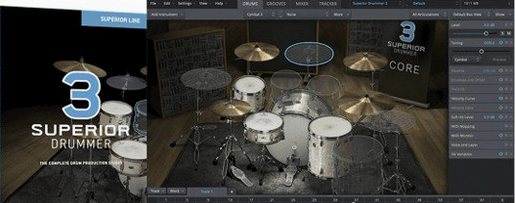 Superior Drummer
3.4.4 VST Plugins
625 MB
Superior Drummer
3.4.4 VST Plugins
625 MB
 Steinberg SpectraLayers Pro
13.0.20-All-in-One VST Plugins
3.9 GB
Steinberg SpectraLayers Pro
13.0.20-All-in-One VST Plugins
3.9 GB
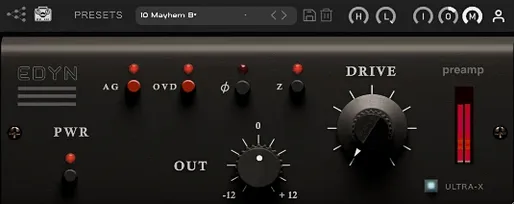 Tone Empire EDYN
1.0.2 VST Plugins
198 MB
Tone Empire EDYN
1.0.2 VST Plugins
198 MB
 Toontrack EZkeys
2.1.5 VST Plugins
707 MB
Toontrack EZkeys
2.1.5 VST Plugins
707 MB
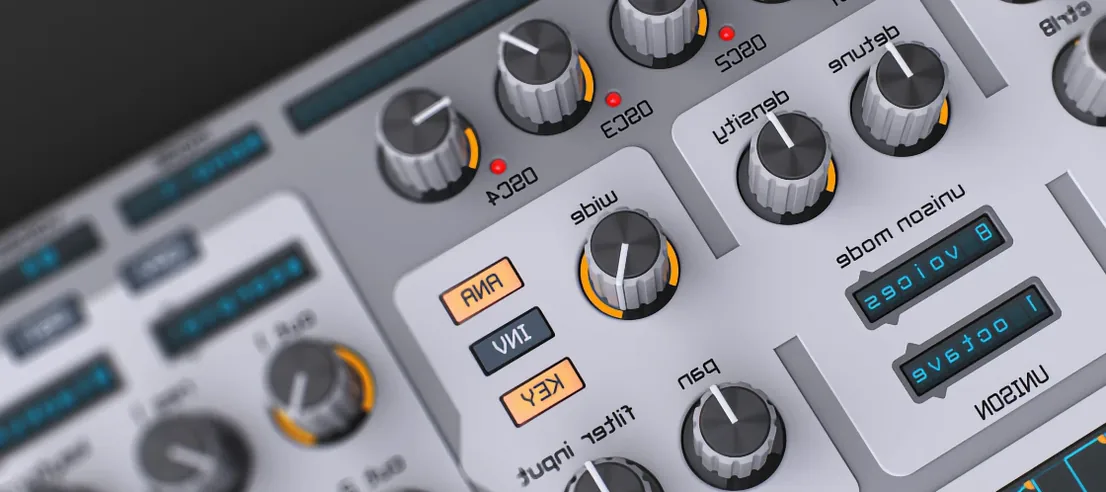 Spire
1.5.19 VST Plugins
158 MB
Spire
1.5.19 VST Plugins
158 MB
 Toontrack EZmix Bundle
3.2.2 VST Plugins
977 MB
Toontrack EZmix Bundle
3.2.2 VST Plugins
977 MB