









Download Cableguys Snapback for macOS
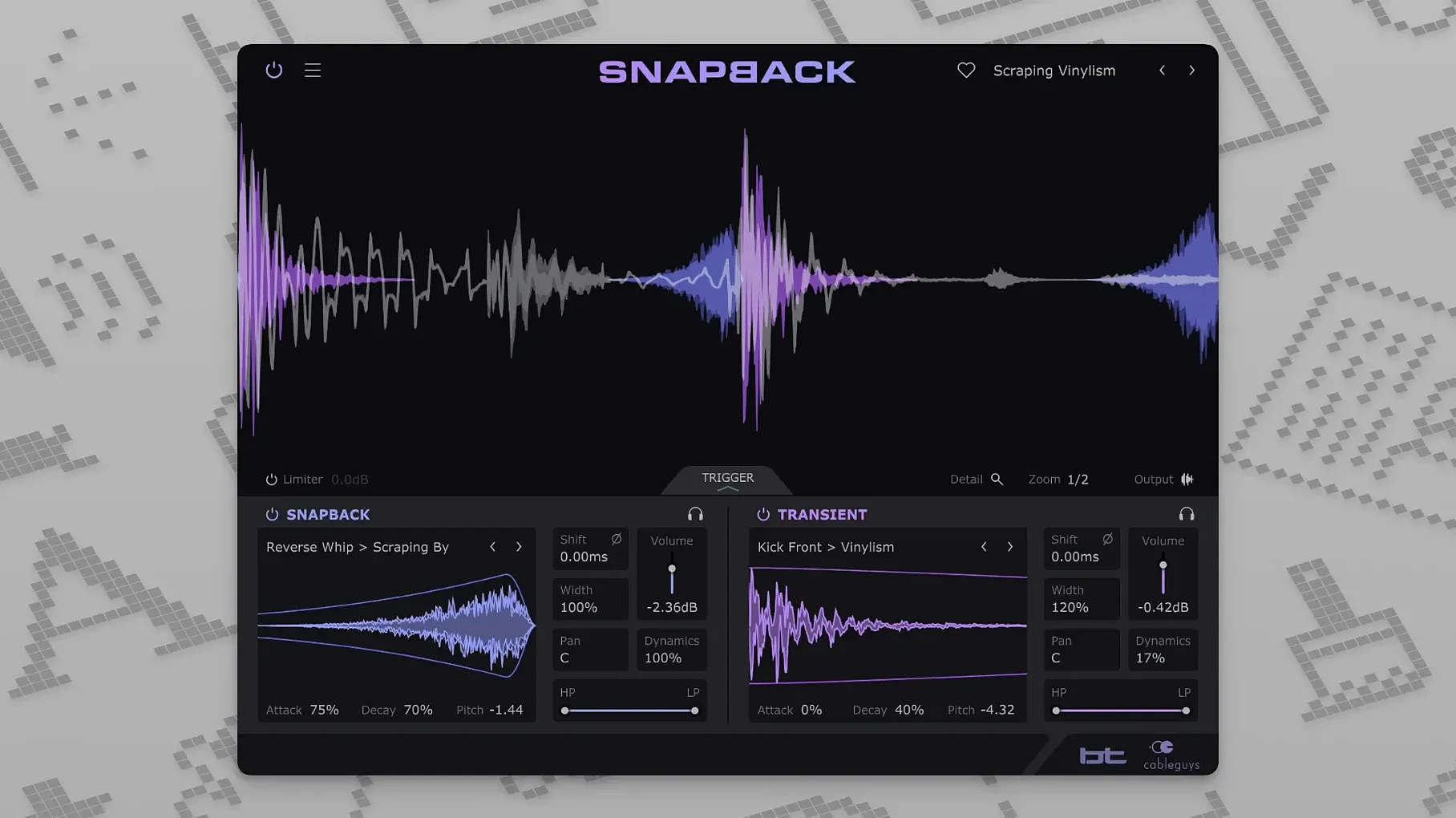
It runs on any Intel or Apple Silicon Mac back to macOS 10.13, covering VST 2, VST 3, AU, and AAX hosts — so pretty much every DAW you’re likely to fire up.
Detection engine — reads your incoming drum track and locks new samples to each hit the moment it hears a transient. No manual slicing.
Sample browser — over 200 built-in sounds plus your own imports. Drag a kick, snare, or clap onto a track and Snapback places it.
Pitch control — quick tuning so a glued-on hi-hat doesn’t fight the original’s frequency range.
Phase adjustment — flips polarity when a layered sample cancels the body of the acoustic hit beneath it.
Waveform visualizer — shows both the source and the layered hit so you can see alignment, not just trust your ears.
BT helped shape the plugin, and that shows in how it handles transients. The Reverse button added in version 1.1 lets you flip samples instantly — useful for risers and electronic breakdowns.
In daily use across a mix of Intel and Apple Silicon Macs, Snapback runs lean. RAM usage rarely climbs above a couple hundred megabytes even with a dozen instances scattered across a project — each one just parks itself on a track, listens for transients, and stays out of the way. CPU load is similarly polite. The detection engine doesn't scan endlessly; it sleeps until playback starts, then wakes up and does its job with barely a blip on the meter. I've thrown it onto busy Logic sessions with 40+ tracks and three other Cableguys plugins running, and it hasn't nudged the fan on an M1 Air.
Stability holds up. Version 1.1 hasn't thrown any surprise crashes in AU or VST 3 hosts — Logic and Bitwig have both been solid through hours of layering kicks and reprogramming snare attacks. The waveform visualizer stays responsive, redrawing quickly when you drag a sample in or tweak the pitch knob. One thing I appreciate: undo history in the DAW works exactly as expected. Snapback doesn't hijack keyboard shortcuts or make a mess of the host's undo chain, which isn't always a given with real-time detection plugins.
Search phrases like snapback vst torrent and cableguys snapback torrent pop up because people want to test the detection accuracy before committing — fair enough, since transient alignment is something you feel more than you describe. A quick way to gauge it: feed the plugin a sloppy live breakbeat and layer a tight 808 kick underneath. If Snapback's visualizer shows the sample landing exactly on the transient and you hear zero flam, the engine's doing its job. The phase flip switch is your friend here — toggle it once to confirm the low end isn't hollowing out.
Fixing missed ghost notes with input trim
First snag: detection misses softer ghost notes. If a snare track has quiet grace notes or brush hits, Snapback sometimes ignores them. The fix is usually a little gain staging — bump the input trim in your DAW before the plugin slot, or use a clip-gain region edit just for the quiet sections. The detection threshold is internal and not user-adjustable, so feeding it a hotter signal is the quickest workaround.
Second: sample import confusion. Dragging a WAV from Finder onto the waveform display works perfectly, but dragging from some third-party sample managers can give you a silent drop zone. A few people searching for snapback vst rutracker or cableguys snapback crack have mentioned this in forums. The reliable method is loading user samples through the built-in browser — hit the folder icon, navigate to your library, and Snapback remembers the path between sessions.
Third: AAX users on older Pro Tools versions occasionally see the plugin fail to scan on startup. Clearing the Pro Tools plugin cache and re-scanning from the preferences pane sorts it out. If you're on a newer Pro Tools build, this hasn't been an issue in testing.
Fourth: phase cancellation that the polarity flip alone can't fix. Sometimes a layered kick sample arrives a few samples late even when detection is spot-on. Use the envelope controls — shave the attack down to zero and nudge the sample start point manually while watching the waveform visualizer. It's tedious the first time, but once you save that tweak as a user preset, the problem doesn't come back.
Live pad tracking latency
Does it work with live drum input or only recorded clips? It works with both. Arm the track, hit your pad, and Snapback layers the sample in real time. Latency stays low enough for tracking — especially if your buffer is at 128 samples or below. The detection feels instantaneous in practice.
Can I use it on anything other than drums? The transient detection targets percussive spikes, so plucked strings, muted guitar chugs, and even percussive synth stabs all trigger it. Layering a noise click onto a soft synth attack gives you a hybrid texture that cuts through a dense mix. It's not designed for sustained notes with slow attacks, though — you'll get unpredictable triggering on pads or legato strings.
What DAWs are confirmed compatible? Ableton Live, Logic Pro, Pro Tools, Cubase, Bitwig Studio, FL Studio, and REAPER all host it without issues on version 1.1. If you're running something less common that supports VST 2 or AU, it's worth a try — the plugin doesn't rely on DAW-specific features.
Does the reverse feature eat CPU? Not noticeably. Reversing a sample is a simple buffer read operation; the plugin just plays the waveform backward. You can toggle it on and off mid-playback without glitches or CPU spikes. Searches like snapback torrent often come with questions about the reverse quality — it's clean, and it handles long samples without truncation.
Version 1.1 brings a couple of practical additions:
- A Reverse button for flipping loaded samples on the fly.
- Expanded MIDI port support, jumping from 16 to 256 addressable ports.
- macOS 10.13 or later
- Intel or Apple Silicon processor
- VST 2, VST 3, AU, or AAX host DAW
Questions people ask
Can I use my own drum samples with Snapback?
Yes, you can import your own samples alongside the more than 200 included ones.
Does Snapback work with Apple Silicon Macs?
It does. The official requirements list both Intel and Apple Silicon processors.
What DAWs can host Snapback?
It supports VST 2, VST 3, AU, and AAX hosts on macOS 10.13 or later.
Also on readers' docks
Sign in or create an account to leave a comment.
No comments yet. Tell me how it got on with your other devices.
More in VST Plugins
See all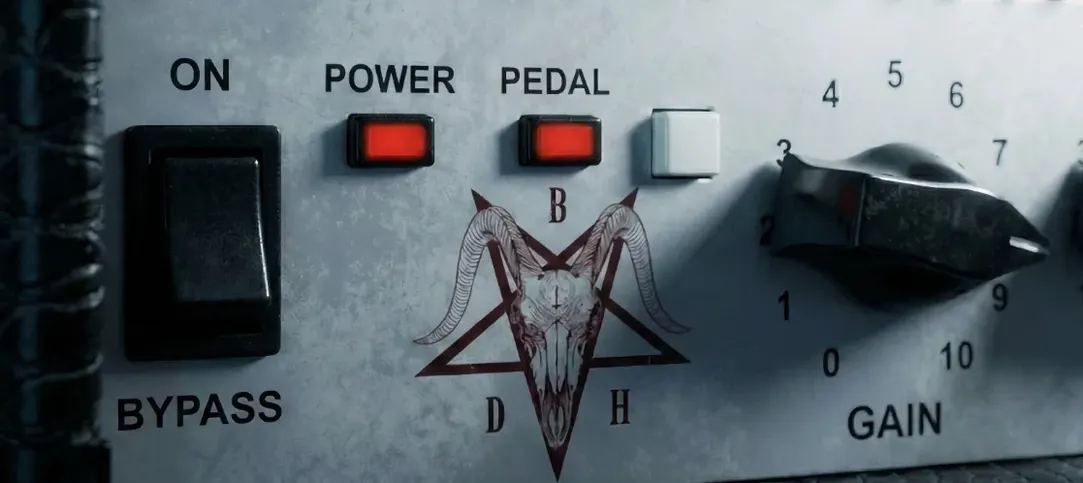 Bogren Digital Ampknob BDH 66o6 Plus
1.2.118 VST Plugins
253 MB
Bogren Digital Ampknob BDH 66o6 Plus
1.2.118 VST Plugins
253 MB
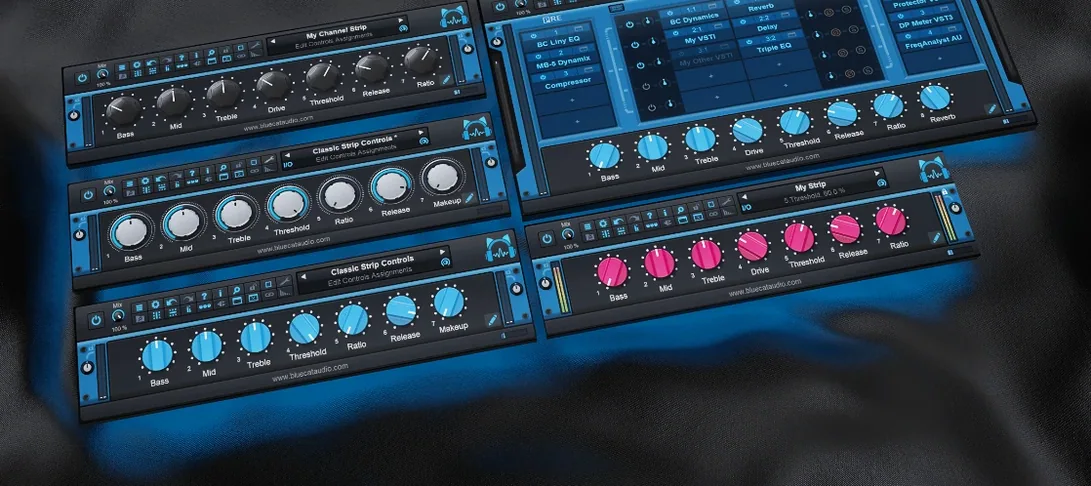 Blue Cat Audio Blue Cats PatchWork
2.7.5 VST Plugins
587 MB
Blue Cat Audio Blue Cats PatchWork
2.7.5 VST Plugins
587 MB
 Arturia Rev LX-24
1.2.1-6567 VST Plugins
403 MB
Arturia Rev LX-24
1.2.1-6567 VST Plugins
403 MB
 Arturia Pigments
7.0.1-6772 VST Plugins
1.8 GB
Arturia Pigments
7.0.1-6772 VST Plugins
1.8 GB
 Arturia Mellotron V
1.9.3 VST Plugins
2.1 GB
Arturia Mellotron V
1.9.3 VST Plugins
2.1 GB
 Arturia FX Collection
2026.02 VST Plugins
16.1 GB
Arturia FX Collection
2026.02 VST Plugins
16.1 GB
 Arturia Emulator II V
1.6.2 VST Plugins
700 MB
Arturia Emulator II V
1.6.2 VST Plugins
700 MB
 Arturia Efx AMBIENT
1.0.0 VST Plugins
285 MB
Arturia Efx AMBIENT
1.0.0 VST Plugins
285 MB