Download Airfoil for macOS
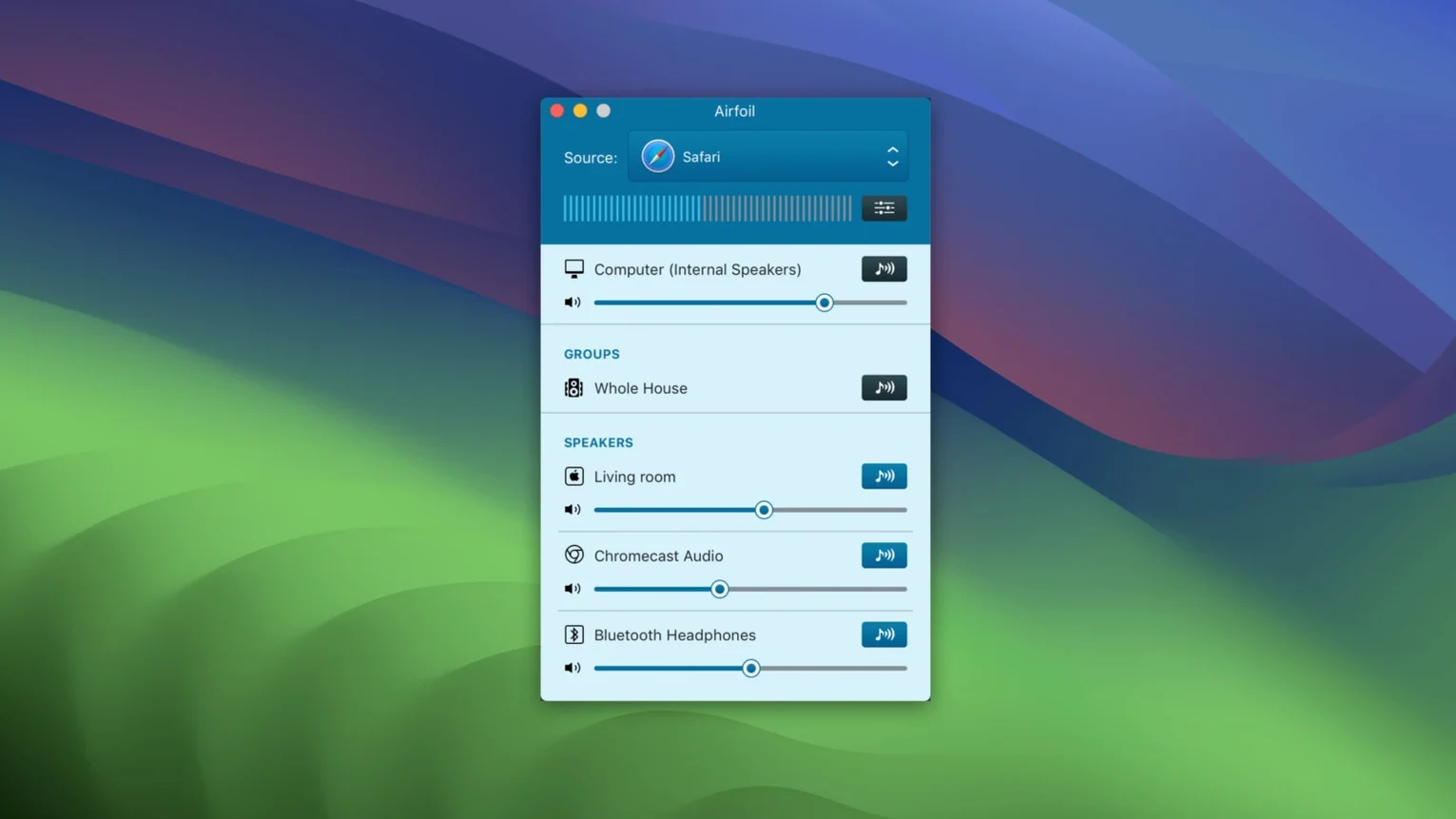
Airfoil 5.13 arrived late September 2026 with one fix longtime fans had been waiting for: streaming to Apple TV and HomePod is back. That restoration sits on top of everything that already made the app a staple for routing sound around a home.
Pick where the music goes
Choose any AirPlay, Bluetooth, or Chromecast speaker — or several at once — and the audio follows, encoded in Apple Lossless so nothing gets squashed along the way.
Tweak the sound on the fly
The built-in equalizer gives you quick tone shaping before the signal ever leaves your Mac, no matter which speakers are listening.
Set it and forget it
Memory barely twitches, even with Firefox and Spotify
After a week of daily use — sending podcasts to the living room HomePod while pulling audio from Firefox, Spotify, and sometimes both — the app felt light and unobtrusive. My MacBook Air's memory pressure barely twitched, and CPU hovered around 2–3% during a single-device stream, climbing to maybe 8% when I pushed four different speakers at once. That's Apple Lossless encoding at work: quality without punishment.
No dropouts appeared on AirPlay 2 speakers, and latency stayed tight enough that YouTube dialogue matched the person's lips on screen. If you stumble across an Airfoil cracked build floating around, it often ships with older audio capture kexts that trip over macOS 15's tightened security model — this 5.13 release runs cleanly on the current system plumbing, and you feel it in the uptime.
First days with Airfoil
The initial setup takes three minutes, but a little extra attention early on makes the weeks that follow frictionless. Here's what I do after dragging the app into Applications:
- Name your sources clearly. By default, Airfoil lists apps by their process names, and "com.spotify.music" tells you nothing. Right-click any source and pick a friendly label.
- Test the sync with video first. Open a YouTube clip, send it to a Bluetooth speaker and your Mac's built-in speakers, then listen for echo. If they drift, the equalizer's pre-delay slider can nudge the Mac output a few milliseconds to line them up — trial and error, but worth it once.
- Star your go-to speakers. Drag your most-used devices to the top of the list and tap the star icon. They'll stay pinned above the fold even when a neighbor's Apple TV shows up in range.
- Check the volume ceiling. Airfoil respects per-device volume, but it also has a global output slider that I accidentally left at 50% on day one and spent ten minutes troubleshooting "quiet" HomePods. Set it to 100% and manage loudness downstream.
Three switches that change behavior across restarts
Open Preferences and hit these three switches — they change how the app behaves across restarts and system updates:
Silence monitor
Turn it off unless you genuinely need it. When enabled, Airfoil mutes any stream that drops below a threshold for a few seconds, which sounds clever until a quiet podcast intro triggers silence detection and you miss the first sentence. Found under the Streaming tab, the toggle rarely earns its keep.
Launch behavior
The "Start transmitting to" dropdown at the top of the Transmitting pane is the closest thing Airfoil has to a morning routine. Point it at a specific speaker — kitchen, bathroom, wherever you start the day — and audio is already playing when you unlock your Mac. Combine it with the "Automatically launch at login" checkbox one row above.
Audio capture source
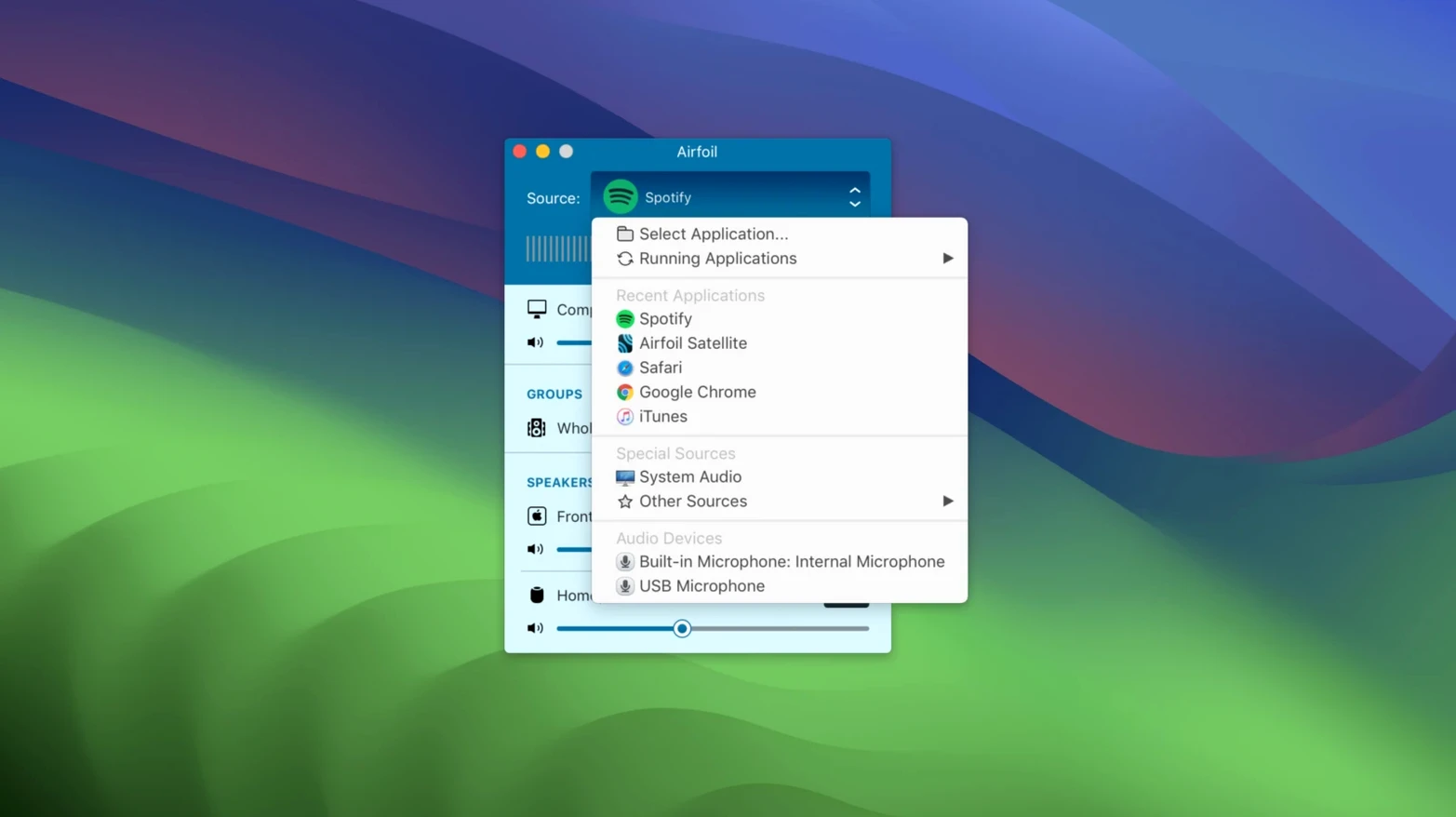
Under Source, Airfoil defaults to capturing from the last-used application, but switching to "System Audio" makes the app behave like a universal audio pipe. Everything the Mac plays gets routed. I keep it on per-app capture during work hours (so Slack pings stay local) and flip to system-wide in the evening when music and movies take over. An airfoil for mac setup that arms system capture from day one saves you from wondering why a random browser tab never showed up in the source list.
Tell Airfoil to automatically start sending to your kitchen speaker the moment the app opens and you walk into a room that's already playing.
Airfoil 5.13 restores audio streaming to Apple TV and HomePod devices.
- macOS 14.4 or later
- 64-bit Intel or Apple Silicon Mac
Questions people ask
Can Airfoil send audio to more than one device at the same time?
Yes, you can stream to several AirPlay, Bluetooth, or Chromecast devices simultaneously, all kept in sync.
What does the Airfoil Satellite app do?
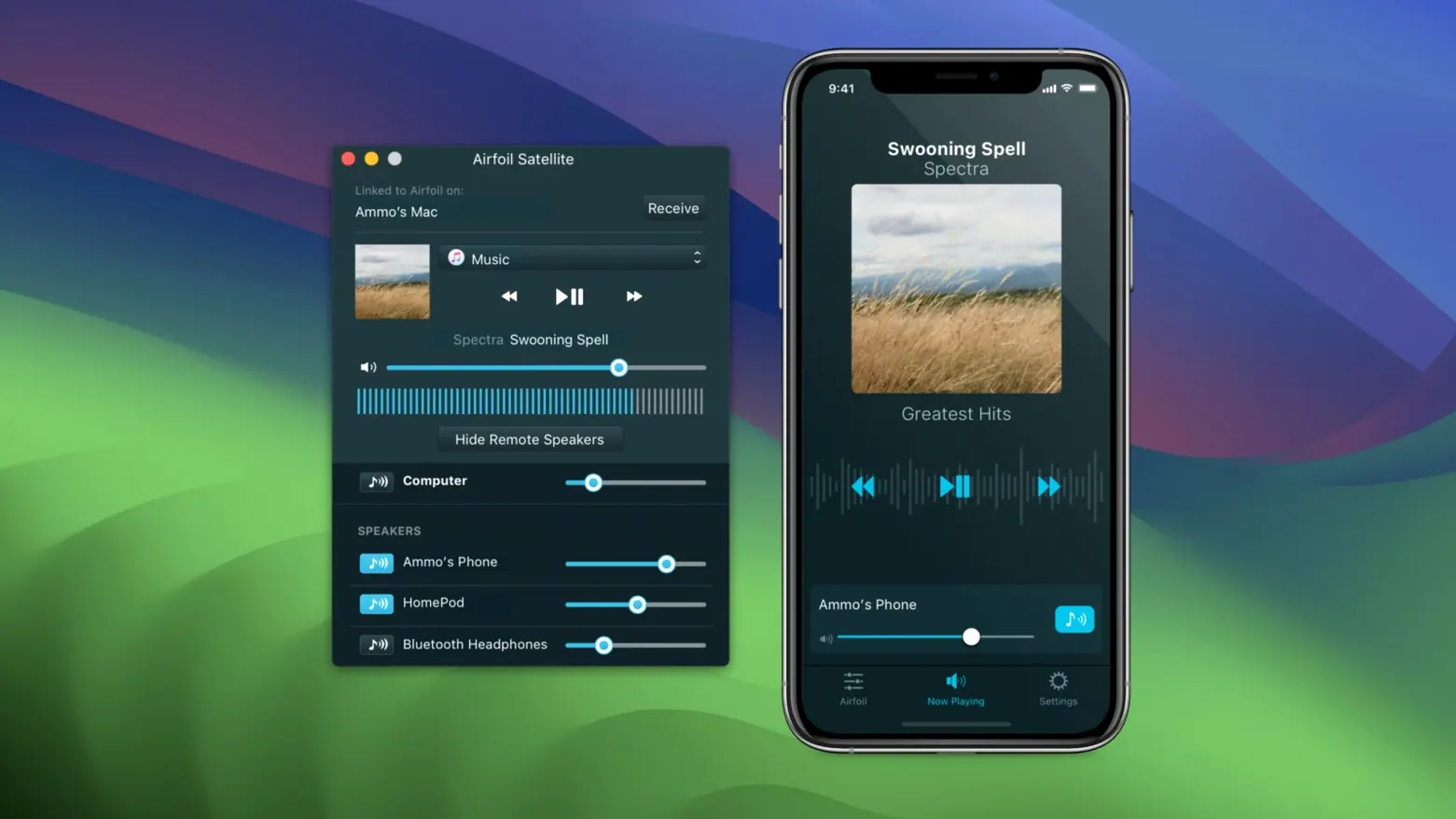
Airfoil Satellite lets other Macs, iPhones, and iPads act as receivers for Airfoil's stream or as remote controls for the main Mac.
Does Airfoil 5.13 support Apple TV and HomePod?
Absolutely — version 5.13 specifically restored streaming to Apple TV and HomePod devices after a gap.
Also on readers' docks
Sign in or create an account to leave a comment.
No comments yet. Tell me how it got on with your other devices.