Download Absynth for macOS
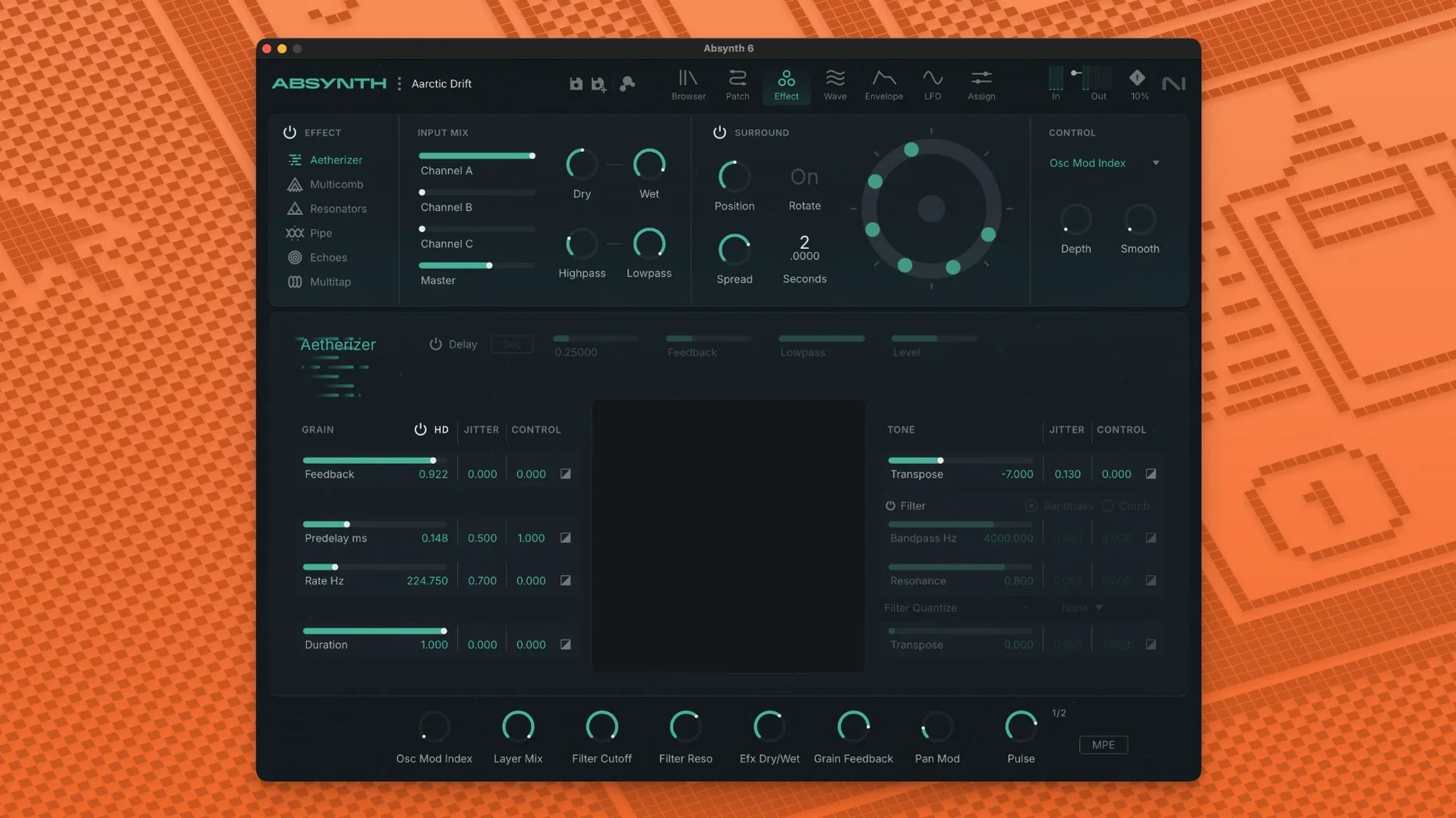
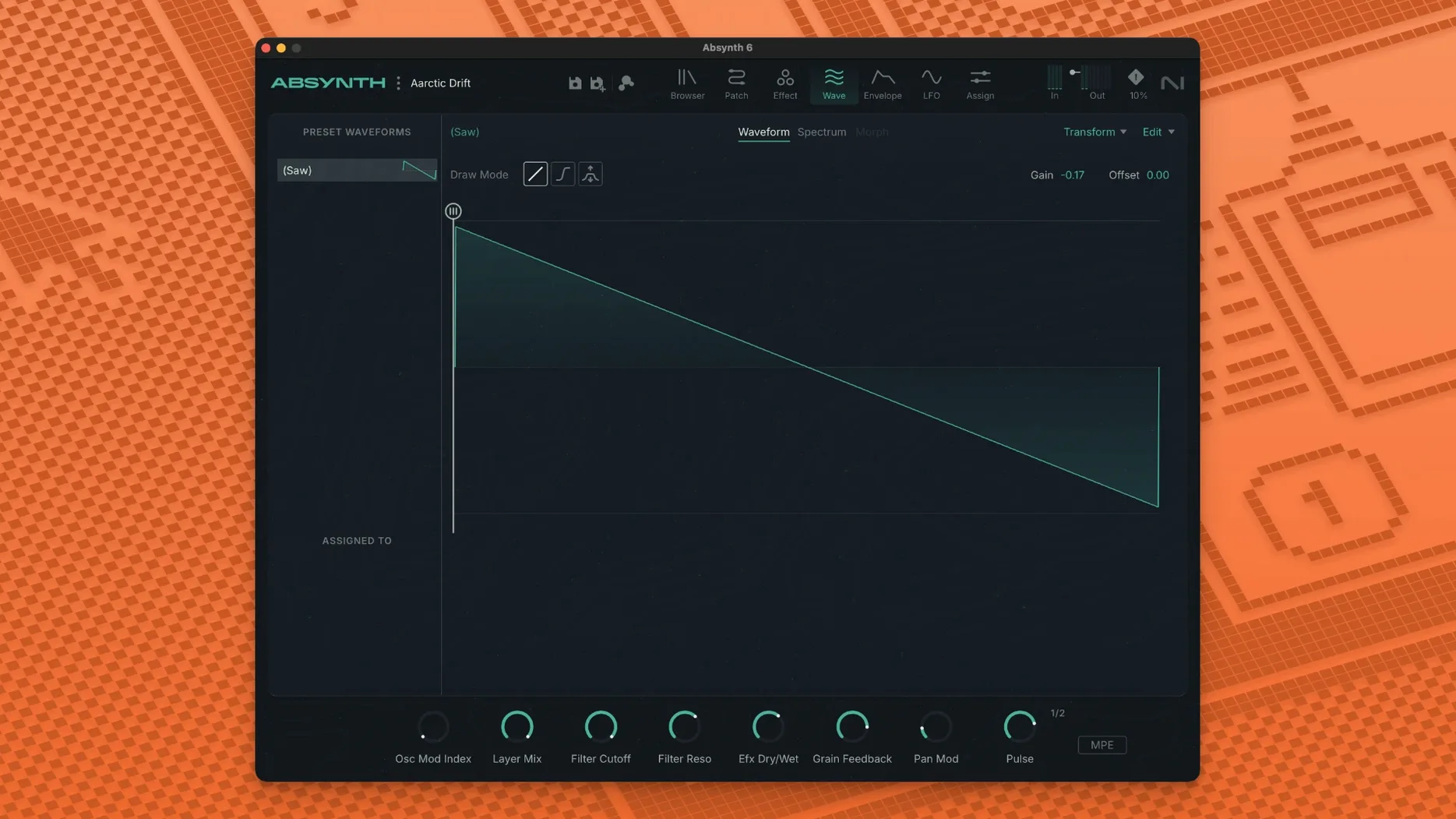
Absynth packs four synthesis engines into one semi-modular instrument—subtractive, FM, wavetable, and granular—and it can drive up to eight-channel surround mixes, including 5.1 and Octaphonic.
How do I build a pad from scratch?
Start by blending two oscillators with the Sound Mutator. Route a slow wavetable sweep through a dual filter, then drag characteristics from a granular cloud sample to give the tail some grit and movement.
What makes the modulation feel alive?
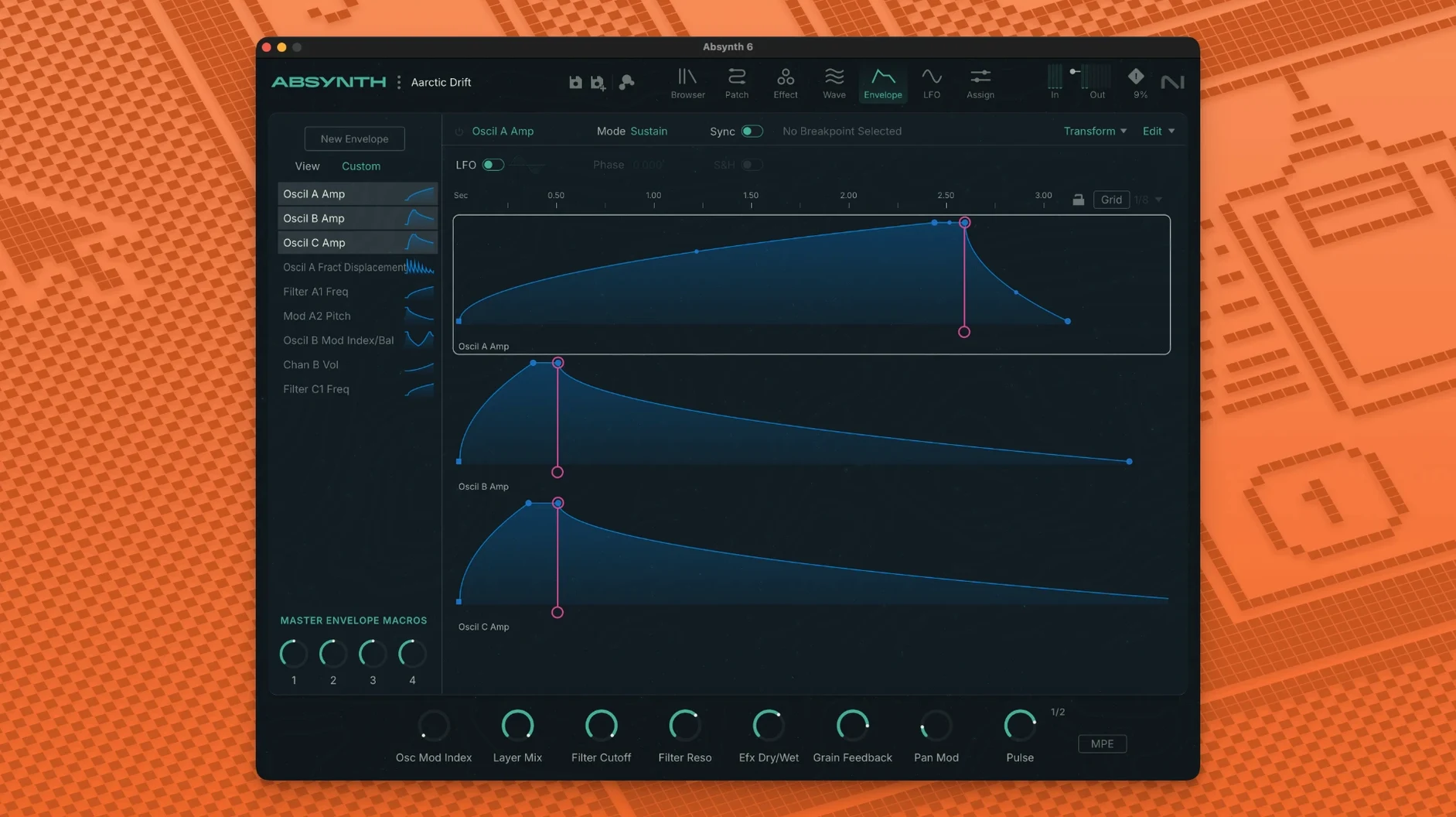
The envelope system lets you draw breakpoint curves that go far beyond ADSR. Combine those with polyphonic aftertouch and full MPE support, and every finger on the keyboard can push a different parameter independently.
Does it handle modern surround projects?
Yes—the current version adds native support for Quadraphonic, 5.1, and Octaphonic formats. Assign different oscillator outputs to specific channels and pan modulations around the room without leaving the plug-in.
250 Presets Built for Cinematic Mutation
They're a fast starting point for cinematic textures and evolving atmospheres. Load one, then swap a filter type or reroute an LFO through the Sound Mutator to make it your own in under a minute.
Absynth vs. the rest of the hybrid synth field
When people ask me what else sits in the same lane as Absynth, I usually point to three—each interesting, none quite the same beast.
Serum is the wavetable champion around here. Its visual feedback when you drag warp modes across a waveform is immediate and satisfying, and the modulation system feels like drag-and-drop candy. But Serum stays stereo. Absynth pulls ahead the moment you need a drone that circles a 5.1 room or a granular texture that drifts between rear channels. Serum is faster for snappy basses and modern pop leads; Absynth's strength is in sounds that feel like they're decaying somewhere physical, somewhere dark.
Falcon from UVI is the semi-modular powerhouse that probably comes closest in breadth. It covers sampling, wavetables, FM, and physical modeling with a scriptable engine underneath. The difference is philosophy: Falcon gives you a workshop with every tool mounted on the pegboard. Absynth feels more like an instrument that encourages happy accidents—the Sound Mutator and Aetherizer aren't modules you'd build yourself in Falcon, they're strange rooms you walk into and tweak until something breathes.
Phase Plant from Kilohearts is the modular upstart. You snap generators and modulators into a grid and the routing shows itself as you go. It's cleaner, more surgical. Absynth's architecture has a murkier charm. I reach for Phase Plant when I know exactly the signal flow I want; I reach for Absynth when I want the synth to suggest a direction I wouldn't have sketched on paper.
Pre-Install Checks for a Smooth Setup
Does it still hold up in current sessions?
People downloading an absynth 6 torrent often wonder if they're grabbing something that feels like a relic. The architecture might be familiar, but the surround and MPE additions keep it sitting comfortably in modern templates. It loads as a 64-bit AU, VST3, or AAX inside Logic, Live, or Pro Tools on Apple Silicon Macs without a wrapper, and the CPU hit is reasonable on an M1 or better for all but the densest granular patches.
What about the preset browser—usable or dated?
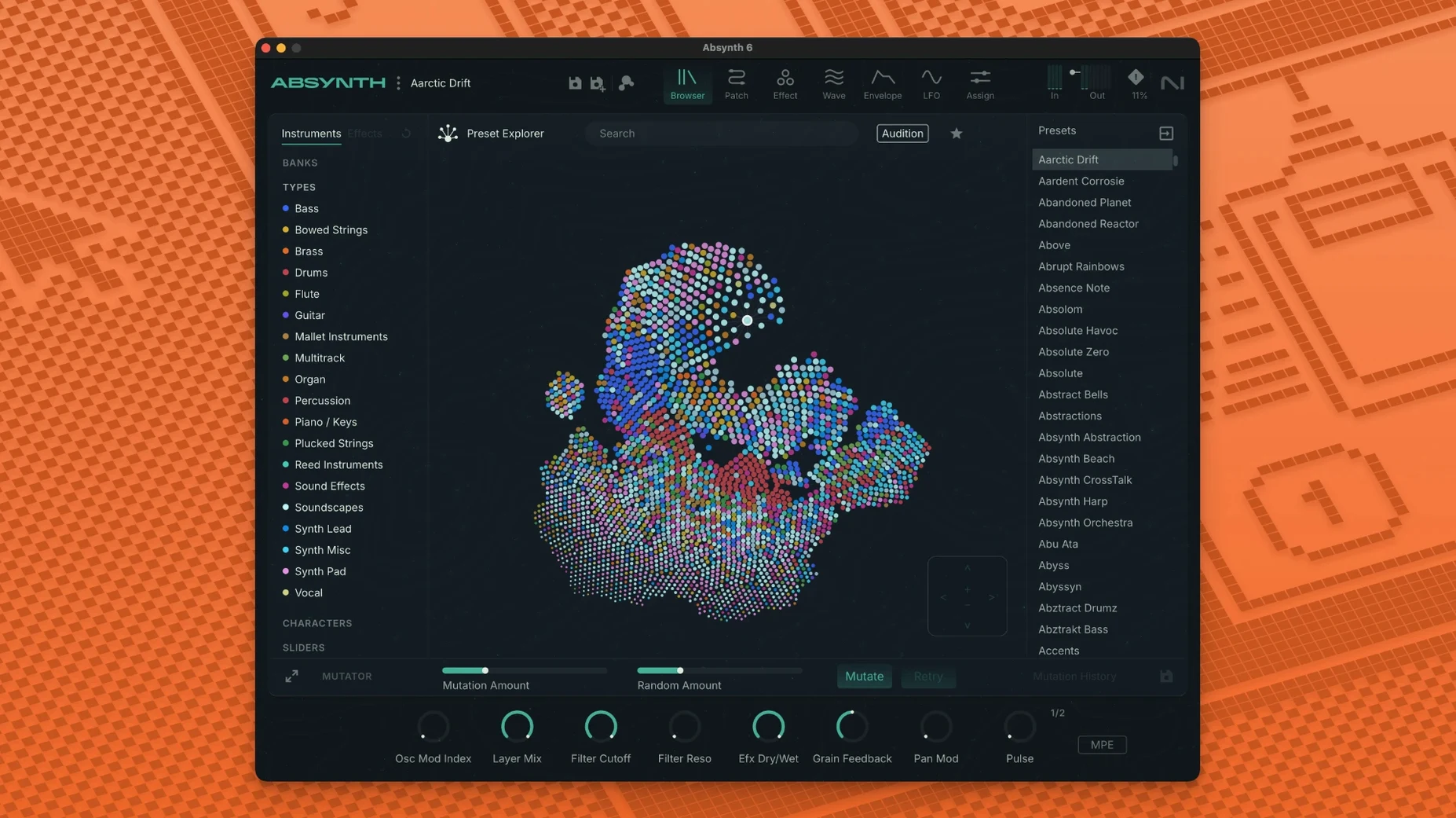
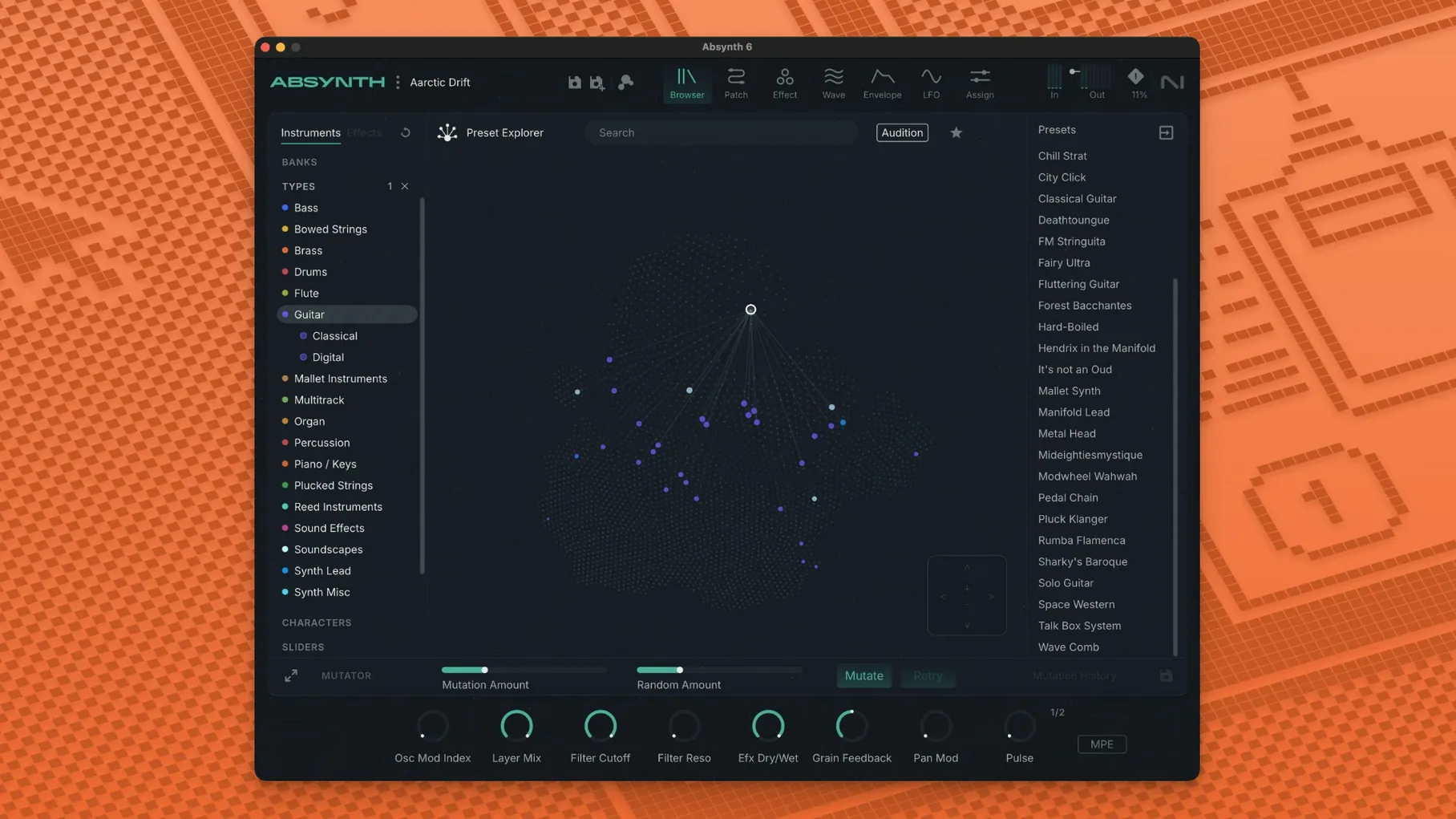
The browser tags by timbre, articulation, and source type, and you can filter fast. It's not a cloud-connected tag cloud like some newer instruments, but it's snappy and local. If you're pulling an absynth 6 mac torrent for the first time, the 250 fresh presets are already tagged and searchable the moment you open the interface.
Does it work well with MPE controllers?
Full MPE support means a ROLI Seaboard or a LinnStrument pushes independent pitch, timbre, and pressure per voice. It's not tacked-on—assign MPE dimensions to filter cutoff, wavetable position, or Aetherizer feedback, and slide between notes with real polyphonic tension.
Is activation a headache?
Some absynth 6 crack setups benefit from making sure macOS permissions are granted before you launch your host. The current disk image runs a standard procedure—open it, run the installer, and the plug-in appears in your host. No extra authorization hoops.
Where Absynth fits in the Mac ecosystem
Absynth plays well with the Mac's built-in audio routing once you understand a few details. The AU version loads inside Logic Pro and the surround channels map to Logic's surround panner without extra configuration—assign an oscillator to the rear-left channel in Absynth and it arrives there in the mixer. In Ableton Live, the VST3 version sees the external audio routing when you set up multi-channel tracks, which means you can feed a return from Absynth into a separate chain of effects on another track. I often run the Cloud Filter output into Valhalla Supermassive on a parallel bus, creating a wash that Absynth's internal effects alone wouldn't deliver.
For sound designers who use a sampler alongside, dragging audio from Absynth into something like Logic's Quick Sampler works in real time—record a four-bar drone with the Aetherizer spinning, drop it into a sampler track, and suddenly your evolving texture becomes a playable instrument with key tracking. The Sound Mutator also pairs strangely well with macOS's Accessibility zoom: zoom in on the Mutator's blend graph while dragging a source sound across, and you can make micro-adjustments that feel like sculpting clay under a magnifier.
With MPE controllers connected through macOS's MIDI studio setup, Absynth recognizes the device immediately. No driver dance. The polyphonic aftertouch data routes alongside standard MIDI, so you can layer an MPE performance from Absynth with a non-MPE bass from another plug-in on the same keyboard split.
A late-night session with Absynth
Last Tuesday I opened a blank Logic project around eleven with no plan beyond "make something that feels like rain on a metal roof." Here's how it went.
Step 1: I loaded Absynth on a software instrument track and picked an init patch. The first oscillator went to granular mode, and I dragged a short field recording of actual rain—three seconds of my back porch during a storm—onto the waveform display. Grain density up, position modulated by a slow random LFO.
Step 2: The second oscillator started as a basic FM carrier with a ratio of 3:1, but I routed it through the Sound Mutator and blended in characteristics from a glassy wavetable preset. The Mutator's analysis took about four seconds. What came out was a metallic shimmer that moved independently of the rain grains beneath.
Step 3: I turned on the Aetherizer and set it to a diffuse cloud with feedback around 40%. The grains started smearing into each other, and the FM shimmer acquired a strange Doppler-like pitch wobble that I hadn't programmed—the Aetherizer's internal modulation interacting with the grain density from step one.
Step 4: For the low end, I enabled a third oscillator as a simple subtractive sine, tuned an octave down, and sent it to a separate output. In Logic, that output fed a channel with a bass amp sim and a little distortion. The sine alone was boring; through the amp it became a subterranean rumble that anchored the chaos above.
Step 5: I assigned polyphonic aftertouch to the FM oscillator's modulation index and the Aetherizer's wet/dry. Playing soft chords kept things gentle; pressing harder pushed the metallic overtones forward and opened the effect wider. Within ten minutes I had a three-note progression that sounded like a storm system breathing.
That's the rhythm of working with Absynth—you set up a few sound sources, connect them through the Mutator or effects, and then the instrument starts suggesting things you didn't plan. The patch never made it into a finished track, but I saved it as a preset and I'll stumble across it again next month when I search the browser for "rain" or "metal" or "late night ideas that got away."
Absynth 6 marks the synth's return with a few key additions:
- Support for up to eight-channel surround formats, including Quadraphonic, 5.1, and Octaphonic.
- Full MPE and polyphonic aftertouch across the entire engine.
- macOS 14 or later
- Apple Silicon or Intel Mac (64-bit)
- 4 GB RAM (6 GB recommended)
- VST3, AU, or AAX host
Also on readers' docks
Sign in or create an account to leave a comment.
No comments yet. Tell me how it got on with your other devices.