








Download Cuphead for macOS
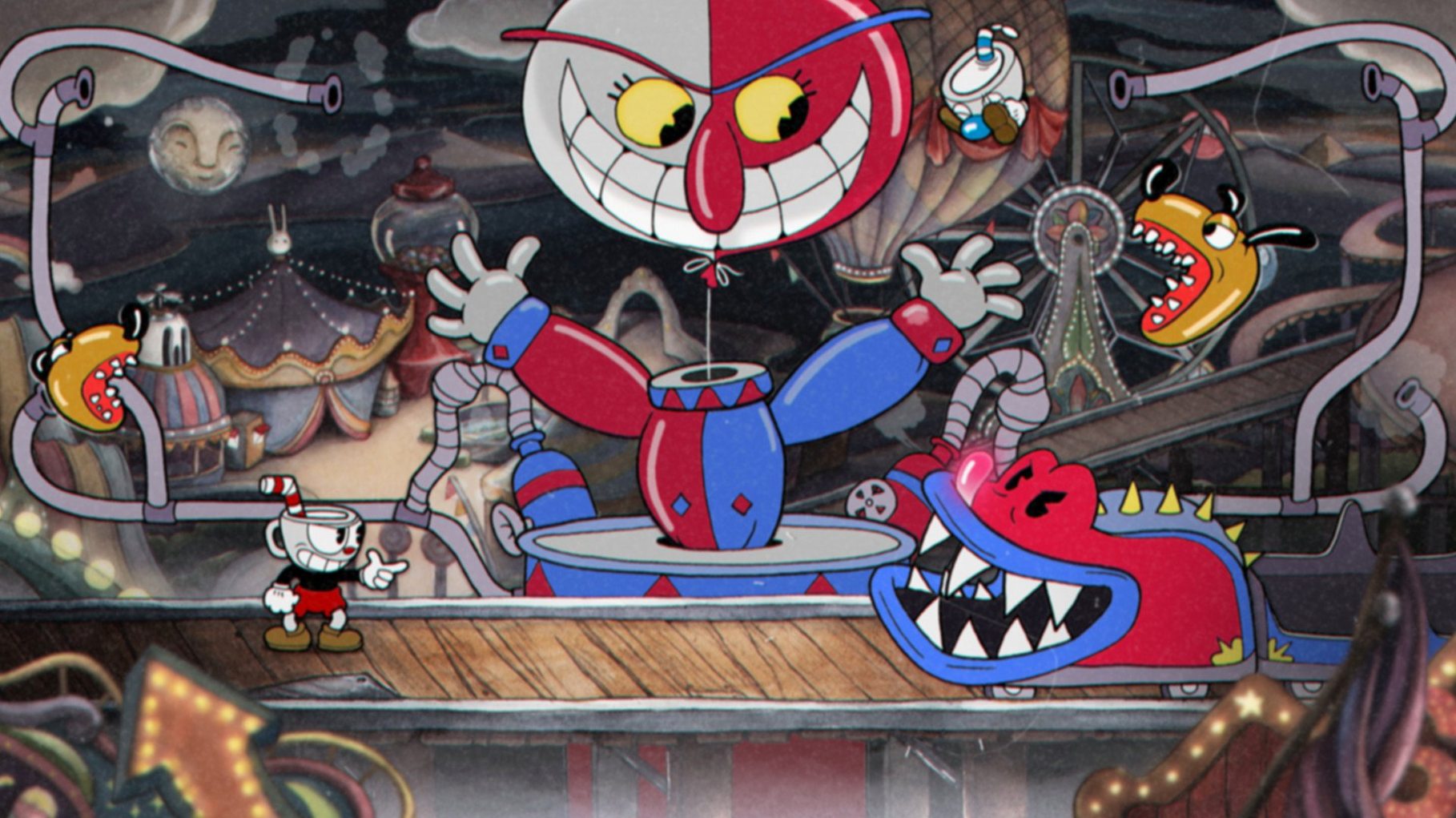
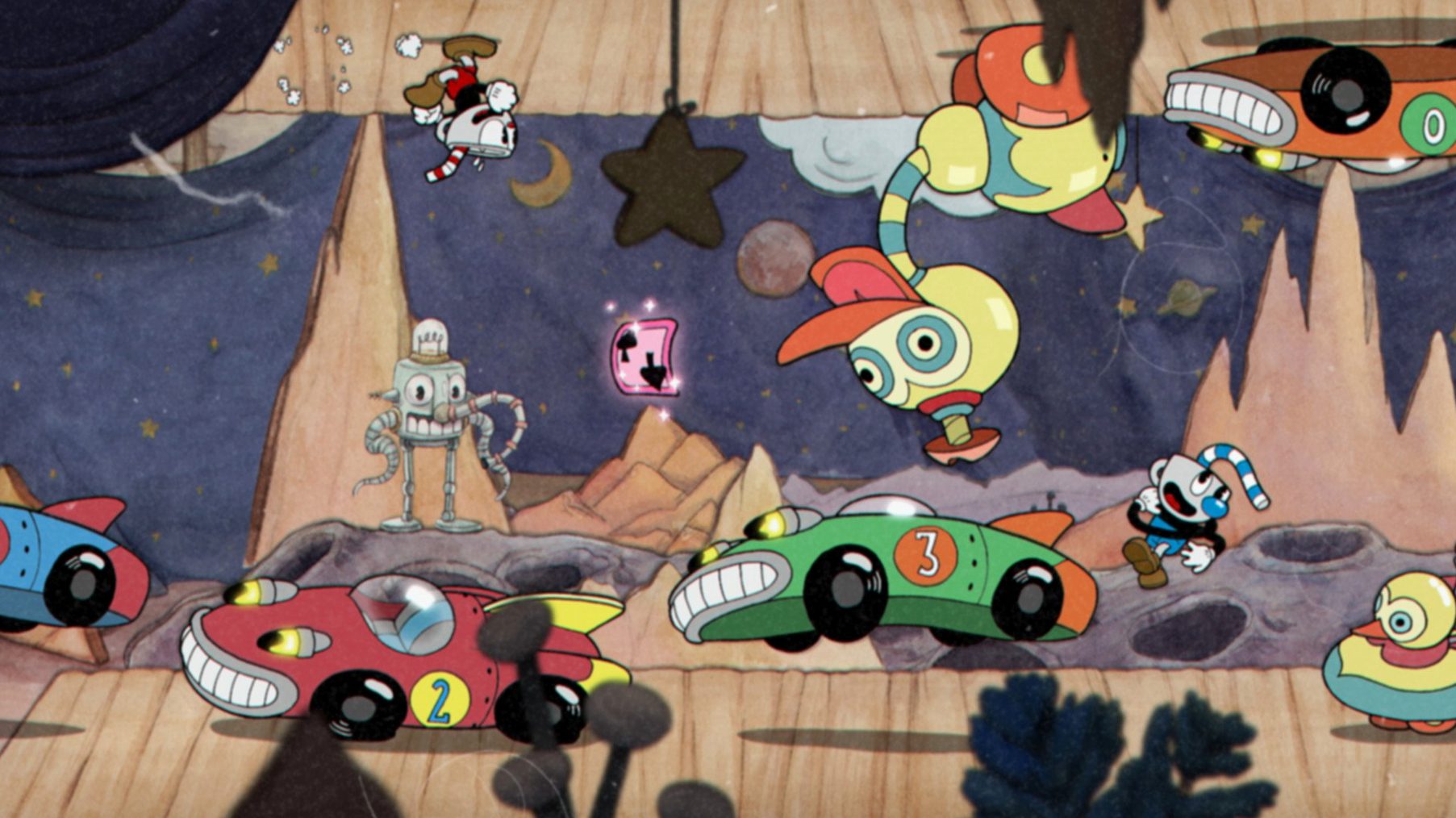
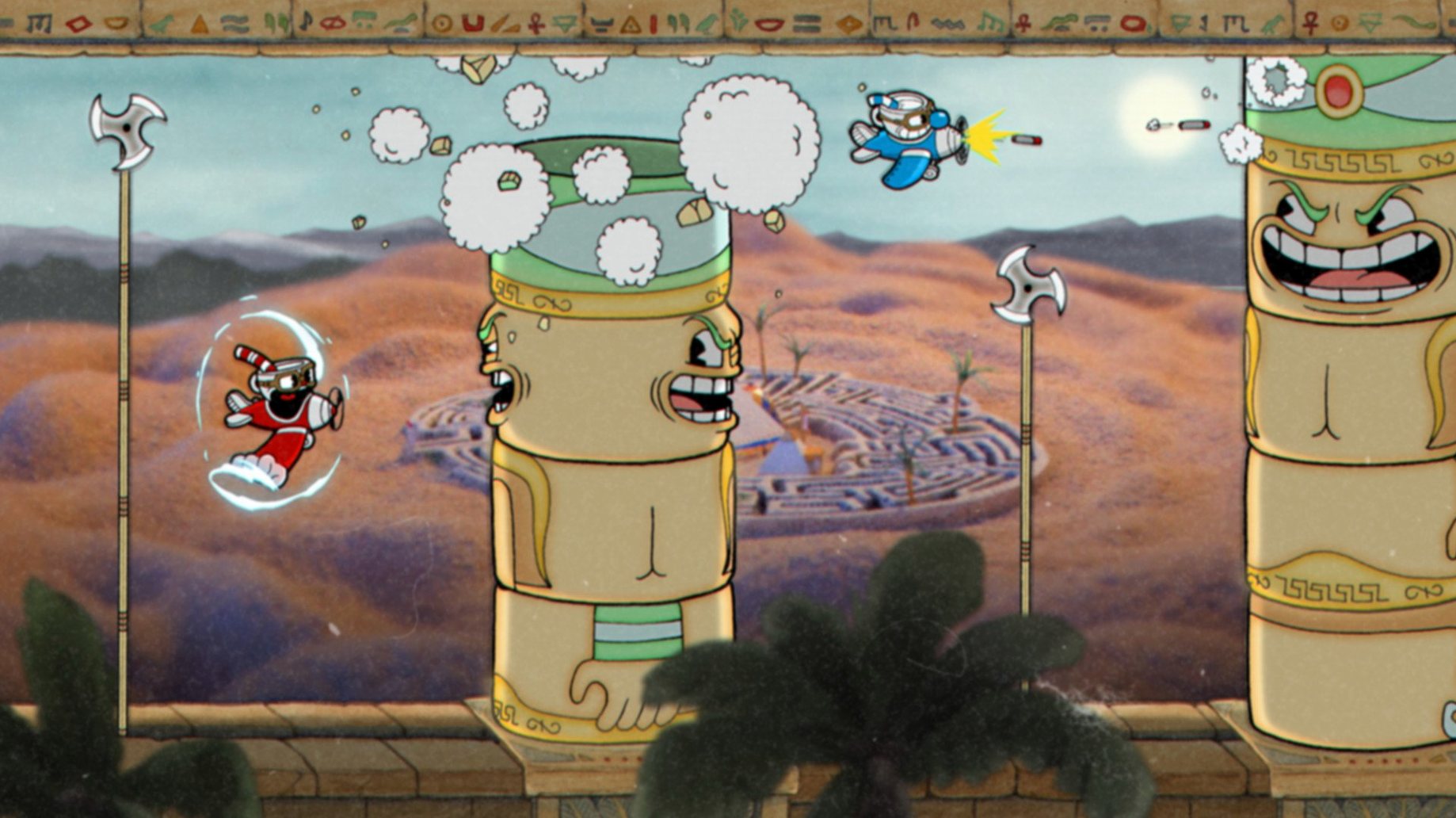
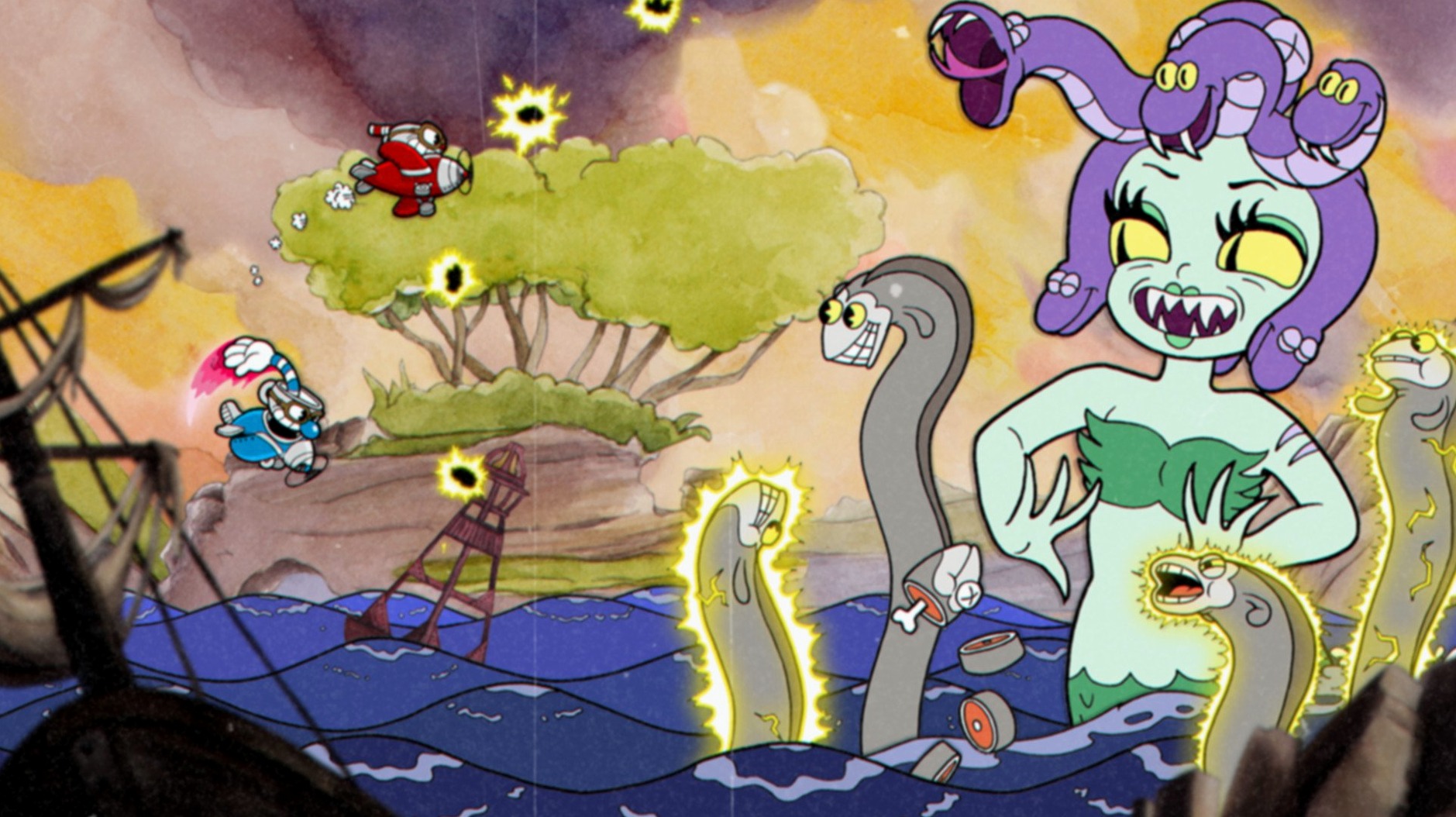
Cuphead runs on Intel-based Macs with macOS Catalina or later. It's an action game built around one idea: throw you into a series of hand-animated boss fights that fill the screen with projectiles, transformations, and original jazz recordings. You play as Cuphead or Mugman, two brothers who lost a bet with the Devil and now have to collect soul contracts from his other debtors.
Phase-shifting bosses that rewrite their own rules mid-fight
You pick a boss from the overworld map, jump into a short level, and spend the next few minutes learning attack patterns. Each boss has multiple phases that change the fight completely—a giant flower might start by swatting at you, then switch to summoning floating seed pods you have to shoot down while dodging thorns. You're constantly firing, dashing, and parrying pink projectiles to build your super meter.
Is it just bosses?
Mostly, yes. There are a handful of run-and-gun side-scrolling stages where you collect coins for weapon upgrades, but the heart of the game is the boss gauntlet. The Delicious Last Course expansion adds a new island with even wilder encounters and the playable Ms. Chalice.
What makes the fights feel different?
The hand-drawn animation gives every enemy a rubbery, exaggerated personality that makes their attacks feel like a theatrical performance rather than a pattern to memorize. The original jazz soundtrack reacts to the action, and dying means starting the fight over—there's no checkpoint mid-boss, so every attempt is a full run.
The dash invincibility window that lets you phase through projectiles
The dash has a tiny invincibility window that a lot of players don't realize is there until they've already put in five or six hours. Tapping dash just as a projectile reaches you lets you slip right through it—pink parryable shots get the full treatment, but regular bullets can be ghosted through with good timing. It turns some of the most cramped bullet patterns into gaps you can just ignore.
The weapon-swap key (default Y or X on a controller) works mid-air and mid-dash. You can fire a charged shot from the Charge weapon, dash through a boss, and swap to the Spread mid-dash so you unload point-blank the moment you land. The game never teaches you this directly, but it cuts down phase lengths in the back half of the Inkwell Isles.
Parrying isn't just for the super meter. A successful parry cancels your current action and gives you a tiny height boost. On fights like the Phantom Express or Grim Matchstick, chaining parries on pink projectiles keeps you airborne long enough to skip entire attack sequences. Master this and those fights feel like a different game.
Sticking to Peashooter while the second island punishes your loadout
Treating every weapon as a sidegrade. The Peashooter is fine for the first island, but the second island punishes you for not experimenting. The Roundabout fires backwards when it returns, which solves fights where enemies chase you from behind. The Lobber arcs over walls and hits enemies from angles they can't defend. Beginners tend to pick one loadout and stick with it through sheer stubbornness.
Ignoring the dash entirely on run-and-gun stages. New players often treat those side-scrolling levels like a standard platformer—jump, shoot, walk forward. That works until the Treetop Trouble level or Rugged Ridge, where enemy placement forces you to dash past threats you can't afford to stop and fight. Your dash cooldown is short enough that you can chain two in a row if you dash off a ledge and immediately dash again in the air.
Holding onto super cards too long. A full super meter is a wasted meter. The single-card super (the beam or the invincibility spin, depending on your charm) recharges quickly enough that you can use it two or three times per boss fight. Beginners hoard it for the final phase and then die with it unused. Spend it the moment you'd otherwise take a hit.
Boss-rush gauntlet stripped of all exploration and backtracking
Hollow Knight shares the hand-drawn aesthetic and the "learn the patterns or die" philosophy, but it's a sprawling metroidvania where combat is only half the game. Cuphead strips out exploration, item collection, backtracking, and NPC dialogue. Where Hollow Knight wants you lost in a ruined kingdom for forty hours, Cuphead wants you locked in a room with a giant carrot for two minutes. The pacing couldn't be more different—one is a novel, the other is a boxing round.
Dead Cells has the same twitch-reflex DNA, but it's a roguelite with procedural levels and permanent character upgrades. You're expected to die constantly while chipping away at a progression tree. Cuphead gives you no stat boosts, no gear unlocks that make you stronger, no procedural layouts to surprise you. It's the same fight every time, and you beat it because you got better, not because your character did.
Enter the Gungeon overlaps in the bullet-hell department—both games fill the screen with projectiles and ask you to dodge-roll (or dash) through the chaos. But Gungeon is a top-down twin-stick shooter with randomized weapons and rooms, while Cuphead is a side-scrolling boss rush with a fixed toolset. If you enjoy the pattern-memorization part of Gungeon bosses and wish the whole game was that, Cuphead is the answer. If you need item variety and discovery, it might feel too rigid.
A cartoonist's weekend with the Devil
Imagine someone who draws for a living—a freelance illustrator who spends their workday in Procreate and Photoshop, obsessing over line weight and color palettes. They download a cuphead mac build on a Friday evening mostly out of professional curiosity, because they've heard about the hand-drawn frames and the watercolor backgrounds.
By Saturday afternoon they're not admiring the animation anymore. They're hunched over a keyboard on Inkwell Isle Two, stuck on Beppi the Clown's third phase, where the rollercoaster carts sweep across the screen while balloon dogs drift up from below. Their artist brain is still taking notes—the squash-and-stretch on that mallet swing is gorgeous—but their gamer brain is in full survival mode, index finger tapping dash on instinct.
Sunday evening they clear the final phase. The satisfaction isn't just that they beat a hard boss. It's that they spent two days inside a piece of art that fights back. Every frame of Beppi's transformation was drawn by hand, and now they've seen all of it up close, frame by frame, because the game made them earn every second of that animation. They walk away with a folder of reference screenshots and a new appreciation for how motion sells personality—and maybe a twitchy dash finger that takes a few hours to calm down.
Version 1.3.3 includes a fix related to The Delicious Last Course DLC.
- macOS Catalina or later
- Intel-based Mac
Questions people ask
Can I play as Mugman from the start?
Yes, both Cuphead and Mugman are available as playable characters, and local co-op lets you tackle every boss together.
What languages does Cuphead support on Mac?
The interface and subtitles are available in English, German, Spanish, Italian, French, Japanese, Korean, Polish, Portuguese, Russian, and Simplified Chinese.
Does the Mac version include The Delicious Last Course?
Yes, the current version 1.3.3 includes The Delicious Last Course expansion, adding a new island and the playable Ms. Chalice.
Also on readers' docks
Sign in or create an account to leave a comment.
No comments yet. Tell me how it got on with your other devices.
More in Games
See all CULTIC
2.02i Rev 1 Games
2.2 GB
CULTIC
2.02i Rev 1 Games
2.2 GB
 Updated Crusader Kings III
1.20.0.4 Native Games
9.4 GB
Updated Crusader Kings III
1.20.0.4 Native Games
9.4 GB
 Cronos: The New Dawn
356600 Games
22 GB
Cronos: The New Dawn
356600 Games
22 GB
 Crimson Desert
2.02.00 Games
101 GB
Crimson Desert
2.02.00 Games
101 GB
 Control Ultimate Edition
1.33.1 Games
26 GB
Control Ultimate Edition
1.33.1 Games
26 GB
 Dead Cells
1.26.0 Games
1.9 GB
Dead Cells
1.26.0 Games
1.9 GB
 Dead Island
1.0.1 Games
77 GB
Dead Island
1.0.1 Games
77 GB
 Company of Heroes 2
1.3.8 Games
30 GB
Company of Heroes 2
1.3.8 Games
30 GB